-
Use Cases
-
Resources
-
Pricing
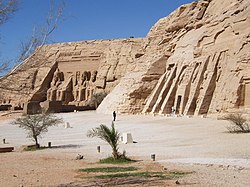
Abu Simbel is a site in southern Egypt featuring two massive rock-cut temples built by Pharaoh Ramesses II during the 13th century BCE. Carved into a sandstone cliff on the west bank of Lake Nasser, the Great Temple honors Ramesses II himself, while the smaller temple is dedicated to his queen Nefertari and the goddess Hathor. The temples are famous for their colossal statues and for the solar alignment that illuminates the inner sanctuary twice a year. In the 1960s, the entire complex was relocated to higher ground to save it from flooding caused by the Aswan High Dam, in one of UNESCO's most celebrated rescue operations. More Less
600 BC
By the 6th century BC, drifting desert sand had already covered the colossal statues of the main temple up to their knees, beginning centuries of partial concealment of the monument.
Image source: Abu Simbel
Mar 1813
The temple remained unknown to Europeans until March 1813, when Swiss researcher Johann Ludwig Burckhardt found the small temple and the top frieze of the main temple, bringing Abu Simbel to Western attention.
1815
In 1815, British politician and explorer William John Bankes, accompanied only by servants and guides, travelled from Cairo up the Nile as far as the Second Cataract, passing through Nubia.
1816
In early 1816, French ex-consul Bernardino Drovetti made an attempt to excavate Abu Simbel, leaving 300 piastres with the local sheikh to pay for digging out the temple entrance before continuing upriver to Wadi Halfa.
Sep 1816
A few months later in early September 1816, Italian explorer Giovanni Belzoni arrived at Abu Simbel, having heard about the site from Burckhardt.
Image source: Giovanni Belzoni

Aug 1, 1817
With the support of Egyptian Consul-General Henry Salt, Belzoni returned in June 1817 accompanied by Henry William Beechey, Royal Navy captains Charles Leonard Irby and James Mangles, two servants, and Giovanni Finati. After 22 days' work, his party entered the Great Temple on 1 August 1817.
Jan 23, 1819 - Feb 18, 1819
In 1819, Bankes, accompanied by Henry Salt, Henry William Beechey, and Giovanni Finati, returned in a flotilla of four boats to undertake a thorough investigation aimed at fully documenting the temples and locating inscriptions that might date them. They stayed from 23 January to 18 February 1819.
Mar 26, 1819 - Apr 2, 1819
After travelling independently, Thomas Hyde revisited Abu Simbel from 26 March until 2 April 1819, continuing the scholarly examination of the site.
1822
Upon returning to Europe, Hyde published his research in 1822 under the title Antiquités de la Nubie, ou Monumens inédits des bords du Nil, documenting monuments between the first and second cataracts as drawn and measured in 1819.
Sep 14, 1822
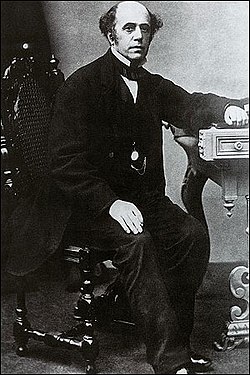
Upon receiving inscriptions on 14 September 1822, Jean-François Champollion was able to decipher the first cartouche he saw and connect it to Ramesses, a milestone in Egyptology.
Image source: Jean-François Champollion

This Abu Simbel timeline was generated with the help of AI, using information found on the internet.
We work hard to keep these timelines accurate, but mistakes do get through. If you spot one, email us at [email protected] and we'll fix it for future visitors.
Generate yours with AI or build it from scratch, for free.