-
Use Cases
-
Resources
-
Pricing
Bertrand Russell (1872–1970) was a British philosopher, logician, mathematician, historian, and social critic. A founder of analytic philosophy, he co-authored Principia Mathematica with Alfred North Whitehead and made groundbreaking contributions to logic and the philosophy of mathematics. He was also a prominent pacifist, anti-war activist, and advocate for nuclear disarmament, winning the Nobel Prize in Literature in 1950. More Less
May 18, 1872
% complete
Bertrand Arthur William Russell was born at Ravenscroft, Trellech, Monmouthshire, Wales, into one of Britain's most prominent aristocratic families. His godfather was the philosopher John Stuart Mill. He would become one of the 20th century's most influential philosophers, logicians, and public intellectuals.
Jan 1, 1874 - Jun 1, 1874
% complete
Russell's mother, Katharine, died of diphtheria in June 1874, followed shortly by his sister Rachel. His father, Viscount Amberley, died of bronchitis in January 1876. The young orphaned Russell was raised by his paternal grandparents.
Image source: Bertrand Russell
Jan 1, 1876
% complete
After being orphaned, Russell was placed in the care of his grandfather Lord John Russell, a former Prime Minister, and grandmother Lady Russell at Pembroke Lodge in Richmond Park. His grandfather died two years later, and his devoutly religious grandmother shaped his early upbringing.
Oct 1, 1890
% complete
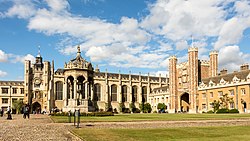
Russell matriculated at Trinity College, Cambridge, to study mathematics. There he befriended G. E. Moore and joined the secret discussion society known as the Cambridge Apostles, beginning his intellectual transformation from mathematics toward philosophy.
Image source: Trinity College, Cambridge
Dec 13, 1894
% complete
Russell married the American Quaker Alys Pearsall Smith against his family's wishes. The marriage lasted until their formal separation in 1921; Russell later described falling out of love with her while cycling, an anecdote he recounted with characteristic candor.
Sep 27, 1921
% complete
Russell married Dora Black shortly after returning from China. Together they had two children, John and Kate, and shared progressive views on education and sexual freedom. Their partnership also led to the founding of an experimental school.
Dec 15, 1952
% complete
At age 80, Russell married his fourth wife, Edith Finch, an American writer who had known his family for years. This final marriage proved happy and stable, providing companionship throughout his last two decades of life and continued political engagement.
Jan 1, 1908
% complete
In recognition of his groundbreaking work in mathematical logic, Russell was elected a Fellow of the Royal Society (FRS) in 1908, cementing his reputation as one of Britain's leading thinkers in philosophy and mathematics.
Image source: Fellow of the Royal Society
Jan 1, 1910
% complete
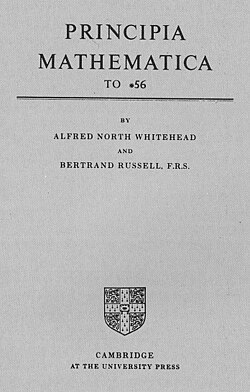
The first volume of Principia Mathematica, written by Russell and Alfred North Whitehead, was published in 1910, with further volumes following in 1912 and 1913. The monumental work attempted to derive all of mathematics from logical axioms and remains one of the most influential texts in logic.
Image source: Principia Mathematica
Jan 1, 1912
% complete
Russell published this accessible introduction to epistemology and metaphysics, which introduced his theory of knowledge by description versus acquaintance. It remains one of the most widely read works of analytic philosophy.
Oct 1, 1920 - Jul 1, 1921
% complete
Russell spent about a year lecturing on philosophy in Beijing, China, where he was warmly received by Chinese intellectuals seeking modernization. His experiences there influenced his views on civilization and education, and he co-authored 'The Problem of China' (1922).
Aug 1, 1914 - Nov 11, 1918
% complete
Throughout World War I, Russell was a prominent pacifist and critic of British involvement in the war. He wrote anti-war pamphlets, helped found anti-conservation movements, and campaigned for peace, actions that made him deeply unpopular with authorities and much of the public.
Jan 1, 1916
% complete
Because of his anti-war activism, Russell was dismissed from his lectureship at Trinity College, Cambridge. His opposition to military conscription led to his dismissal and later legal troubles, marking a turning point in his career as an independent public intellectual.
May 1, 1916
% complete
Russell spent six months in Brixton Prison in 1918 after writing an article advocating peace. During his imprisonment he read widely and began work on 'Introduction to Mathematical Philosophy,' demonstrating his remarkable productivity even under confinement.
May 1, 1920 - Aug 1, 1920
% complete
Russell traveled to Bolshevik Russia as part of a British trade delegation and met Vladimir Lenin. Deeply disillusioned by what he saw of communist rule, he became a lifelong critic of totalitarian communism, recording his impressions in 'The Practice and Theory of Bolshevism' (1920).
Jan 1, 1927
% complete
Russell and Dora founded Beacon Hill School, an experimental school near Petersfield based on progressive educational principles emphasizing freedom, curiosity, and scientific thinking over rote discipline. Russell chronicled the experience in his book 'On Education' (1926).
Jul 9, 1955
% complete
Russell and Albert Einstein issued a joint manifesto calling on scientists to assess the dangers posed by nuclear weapons and urging world leaders to seek peaceful resolution of conflicts. Signed days before Einstein's death, it inspired the Pugwash Conferences on Science and World Affairs.
Image source: Russell–Einstein Manifesto
Jul 7, 1957 - Jul 10, 1957
% complete
Inspired by the Russell-Einstein Manifesto, scientists from East and West gathered in Pugwash, Nova Scotia, to discuss nuclear disarmament. Russell attended the second conference in 1958 and remained closely associated with the movement, which won the Nobel Peace Prize in 1995.
Image source: Pugwash Conferences on Science and World Affairs
Feb 17, 1958
% complete
Russell became president of the Campaign for Nuclear Disarmament (CND), founded in London in 1958. In his late eighties, he led mass demonstrations including the famous Aldermaston marches, becoming the face of the British peace movement against hydrogen bomb testing.
Image source: Campaign for Nuclear Disarmament
Oct 1, 1962 - Oct 31, 1962
% complete
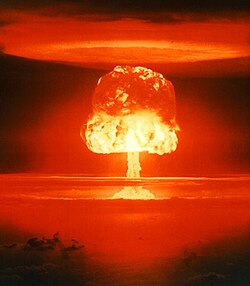
During the Cuban Missile Crisis, the 90-year-old Russell sent telegrams to President Kennedy and Premier Khrushchev urging restraint and publicly criticized Kennedy's stance. His letters generated worldwide headlines and controversy, though historians debate their actual influence on the outcome.
Image source: Cuban Missile Crisis
Jan 1, 1963
% complete
In his final years, Russell became one of the most vocal Western critics of American involvement in Vietnam. Through the Bertrand Russell Peace Foundation, founded in 1963, he condemned U.S. policy, corresponded with leaders like Ho Chi Minh, and helped organize international tribunals on war crimes.
Nov 1, 1966
% complete
Russell initiated the International War Crimes Tribunal, later known as the Russell Tribunal, chaired by Jean-Paul Sartre, to investigate alleged war crimes committed in Vietnam. Though controversial and unofficial, it drew global attention to civilian suffering in the war.
Image source: Russell Tribunal
Jan 1, 1944
% complete
Trinity College, Cambridge re-elected Russell to a Fellowship in 1944, restoring his formal connection to the institution that had dismissed him during World War I. He returned to England after years abroad and continued lecturing and writing.
Jan 1, 1945
% complete
Written during World War II while Russell lived in the United States, this witty survey of Western thought became a massive bestseller and provided him with financial security for the rest of his life, though some philosophers criticized its breezy treatment of technical subjects.
Image source: A History of Western Philosophy
Dec 10, 1950
% complete
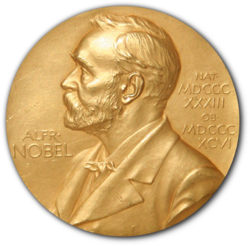
Russell received the Nobel Prize in Literature in 1950 'in recognition of his varied and significant writings in which he champions humanitarian ideals and freedom of thought.' He donated the prize money and used the platform to promote world government and peace.
Image source: Nobel Prize in Literature
Jan 1, 1970
% complete
After his death, Russell's role as a founder of analytic philosophy was increasingly celebrated. His contributions to logic, philosophy of language, and epistemology continue to be studied worldwide, and his advocacy for rational inquiry, peace, and free thought remains influential.
Image source: Analytic philosophy
Feb 2, 1970
% complete
Russell died of influenza at his home in Penrhyndeudraeth, Wales, at age 97. Until the very end he remained politically active, issuing statements condemning Israeli actions in the Middle East. His ashes were scattered in the Welsh hills, closing nearly a century of intellectual life.
Or browse the full history timeline directory, with more than 2,000 topics.
This Bertrand Russell timeline was generated with the help of AI, using information found on the internet.
We work hard to keep these timelines accurate, but mistakes do get through. If you spot one, email us at [email protected] and we'll fix it for future visitors.
Generate yours with AI or build it from scratch, for free.
Export your timeline, add your own events, edit or remove AI-generated events, and much more
No credit card required.
Cancel anytime.
Cancel anytime.
You can create an unlimited number of timelines with up to 10 events on each one, customize how they look, export them to PDF, PNG, PowerPoint, CSV, and Excel, and share them with a link. Paid plans raise the event limit and add features like spreadsheet imports and collaborators.
Yes. You can cancel your subscription from your account page at any time, and you will not be charged again. Your subscription stays active for the rest of the period you already paid for.
Yes. We will email you a reminder before the annual renewal, and we will also email you a receipt.
Yes. You can email us within 15 days of any payment, and we will issue you a full refund.
Check out our pricing docs or send us an email anytime: [email protected].