-
Use Cases
-
Resources
-
Pricing
Calvin Coolidge (1872–1933) was the 30th President of the United States, serving from 1923 to 1929. Known as 'Silent Cal,' he rose from Vermont roots through Massachusetts state politics to the vice presidency and then the presidency after Warren Harding's death. His administration emphasized limited government, tax cuts, and economic prosperity during the Roaring Twenties. More Less
Jul 4, 1872
% complete
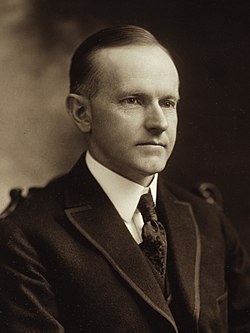
John Calvin Coolidge Jr. was born on July 4, 1872, in Plymouth Notch, Vermont, the elder of two children of John Calvin Coolidge Sr., a storekeeper and farmer, and Victoria Josephine Moor Coolidge. His birthplace, a modest village house, is now a historic site.
Image source: Calvin Coolidge
Mar 14, 1885
% complete
Coolidge's mother died at age 39 when he was twelve years old. He later wrote that the loss was a profound blow, saying she was 'the greatest blessing' of his life. His younger sister Abigail died five years later.
1891 - 1895
% complete
Coolidge attended Amherst College, where he joined Phi Gamma Delta fraternity and developed skills in debate. He graduated cum laude in 1895, having distinguished himself as a member of the debate team and editor of the college newspaper.
1897
% complete
After apprenticing with a law firm in Northampton, Massachusetts rather than attending law school, Coolidge passed the bar examination in 1897 and opened his own law practice in Northampton in 1898.
Oct 4, 1905
% complete
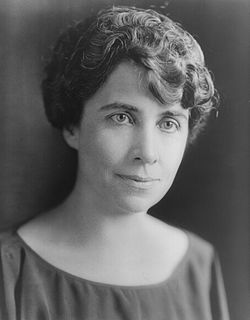
Coolidge married Grace Anna Goodhue, a teacher at the Clarke School for the Deaf in Northampton. The couple had two sons, John and Calvin Jr., and their marriage became known for warmth and mutual devotion.
Image source: Grace Coolidge
1899
% complete
Coolidge began his political career by winning election to the Northampton city council as an independent, marking the start of a steady climb through local Republican politics in Massachusetts.
1900 - 1902
% complete
Coolidge served as Northampton's city solicitor, an appointed position that gave him valuable legal and administrative experience and raised his profile in local politics.
1907 - 1909
% complete
Coolidge served two terms in the Massachusetts House of Representatives, where he built a reputation as a pragmatic conservative who supported women's suffrage and progressive reforms like limits on work hours.
Image source: Massachusetts House of Representatives
1910 - 1912
% complete
Coolidge served two one-year terms as mayor of Northampton, improving roads, expanding municipal services, and strengthening his base for higher office.
Image source: Northampton, Massachusetts
1912 - 1915
% complete
Coolidge represented western Massachusetts in the state Senate, becoming increasingly influential and eventually serving as Senate president during his final term.
Image source: Massachusetts Senate
1916 - 1919
% complete
Coolidge served three terms as lieutenant governor under Governor Samuel W. McCall, gaining statewide visibility and executive experience while remaining active in Republican Party politics.
Image source: Lieutenant Governor of Massachusetts
Jan 2, 1919 - Jan 6, 1921
% complete
Coolidge won the governorship in 1918 and took office in January 1919. He pursued fiscal conservatism, tax cuts, and opposition to some of the more radical proposals of the era.
Image source: Governor of Massachusetts
Sep 1919
% complete
When Boston police went on strike, Coolidge called out the state militia to restore order and famously declared there was 'no right to strike against the public safety by anybody, anywhere, any time.' His firm stance made him a national figure.
Image source: Boston police strike
Jun 1920
% complete
At the 1920 Republican National Convention in Chicago, delegates spontaneously nominated Coolidge for vice president on the ticket with Warren G. Harding after Oregon delegate Wallis McCamant proposed him.
Image source: 1920 United States presidential election
Nov 2, 1920
% complete
The Harding-Coolidge ticket won the 1920 election in a landslide, capturing over 60 percent of the popular vote. Coolidge served as vice president from March 1921, presiding over the Senate and attending cabinet meetings.
Aug 3, 1923
% complete
President Warren G. Harding died suddenly in San Francisco on August 2, 1923. Coolidge, visiting his family home in Plymouth Notch, was sworn in by his father, a notary public, by lamplight in the early morning hours of August 3.
Image source: Warren G. Harding
Dec 6, 1923
% complete
In his first annual message, Coolidge addressed the Teapot Dome scandal and other corruption from the Harding administration, calling for investigations and establishing his reputation for integrity amid the fallout.
Image source: Teapot Dome scandal
May 26, 1924
% complete
Coolidge signed the Johnson-Reed Act, which established national origin quotas sharply limiting immigration, particularly from Southern and Eastern Europe, and barred immigration from Asia. It remained U.S. policy until 1965.
Image source: Immigration Act of 1924
Jun 2, 1924
% complete
Coolidge signed legislation granting U.S. citizenship to all Native Americans born within the territorial limits of the United States, a landmark in Native American civil rights. He also adopted a Sioux boy named Noah Seaboy in 1927.
Jul 7, 1924
% complete
Coolidge's 16-year-old son died of blood poisoning after developing a blister playing tennis on the White House grounds. The president later wrote that the presidency had lost much of its glory for him after the boy's death.
Image source: Calvin Coolidge
Nov 4, 1924
% complete
Coolidge won election in his own right, defeating Democrat John W. Davis and Progressive Robert M. La Follette with over 54 percent of the popular vote, campaigning on prosperity and 'Coolidge prosperity.'
Image source: 1924 United States presidential election
Jan 17, 1925
% complete
Speaking to newspaper editors, Coolidge articulated his pro-business philosophy, declaring that 'the chief business of the American people is business.' His administration championed tax cuts, limited government, and economic growth.
Feb 26, 1926
% complete
The Revenue Act of 1926, championed by Secretary of the Treasury Andrew Mellon, cut income taxes significantly, reduced estate taxes, and lowered surtaxes on high incomes, reflecting Coolidge's commitment to tax reduction.
Image source: Revenue Act of 1926
Feb 23, 1927
% complete
Coolidge signed the Radio Act of 1927, which created the Federal Radio Commission to regulate the airwaves and allocate licenses, laying groundwork for modern broadcast regulation.
Image source: Radio Act of 1927
Feb 25, 1927
% complete
Coolidge twice vetoed the McNary-Haugen bill, which sought to raise agricultural prices through government purchases, arguing it was fiscally irresponsible and would benefit few farmers at great cost to consumers.
Image source: McNary–Haugen Farm Relief Bill
Apr 1927 - May 1927
% complete
The Great Mississippi Flood devastated the lower Mississippi Valley. Coolidge appointed Herbert Hoover to coordinate relief efforts, though he resisted major federal flood control spending until signing the Flood Control Act of 1928.
Image source: Great Mississippi Flood of 1927
May 21, 1927
% complete
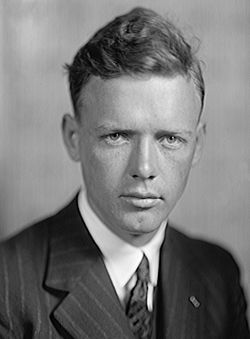
After Charles Lindbergh completed the first solo nonstop transatlantic flight, Coolidge awarded him the Distinguished Flying Cross and welcomed him home, celebrating the spirit of American aviation achievement.
Image source: Charles Lindbergh
Aug 2, 1927
% complete
While vacationing in the Black Hills of South Dakota, Coolidge handed reporters a note stating simply, 'I do not choose to run for President in nineteen twenty-eight,' declining another term despite his popularity.
1929 - 1931
% complete
Coolidge published his autobiography in 1929 and wrote a widely syndicated newspaper column, 'Calvin Coolidge Says,' from 1930 to 1931, sharing his views on current affairs with millions of readers.
Image source: The Autobiography of Calvin Coolidge
Mar 4, 1929
% complete
Coolidge left the White House after five and a half years in office, handing power to Herbert Hoover. He retired to Northampton, Massachusetts, reportedly saying goodbye with characteristic brevity: 'Goodbye, I have enjoyed my stay here.'
Image source: Herbert Hoover
1930 - 1931
% complete
Coolidge chaired the commission investigating the operations of New York City's courts, demonstrating continued engagement in public service during retirement.
1930
% complete
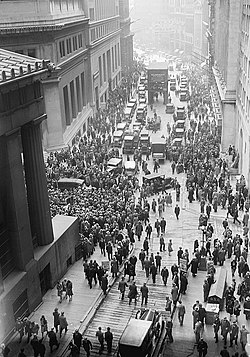
In his writings and speeches, Coolidge expressed concern about economic conditions following the 1929 crash, observing that the country was in a depression and warning against excessive optimism about recovery.
Image source: Wall Street Crash of 1929
Jan 5, 1933
% complete
Calvin Coolidge died suddenly of coronary thrombosis at his home, The Beeches, in Northampton, Massachusetts, at age 60. He was buried in Plymouth Notch, Vermont, beside his wife Grace, who survived him until 1957.
Or browse the full history timeline directory, with more than 2,000 topics.
This Calvin Coolidge timeline was generated with the help of AI, using information found on the internet.
We work hard to keep these timelines accurate, but mistakes do get through. If you spot one, email us at [email protected] and we'll fix it for future visitors.
Generate yours with AI or build it from scratch, for free.
Export your timeline, add your own events, edit or remove AI-generated events, and much more
No credit card required.
Cancel anytime.
Cancel anytime.
You can create an unlimited number of timelines with up to 10 events on each one, customize how they look, export them to PDF, PNG, PowerPoint, CSV, and Excel, and share them with a link. Paid plans raise the event limit and add features like spreadsheet imports and collaborators.
Yes. You can cancel your subscription from your account page at any time, and you will not be charged again. Your subscription stays active for the rest of the period you already paid for.
Yes. We will email you a reminder before the annual renewal, and we will also email you a receipt.
Yes. You can email us within 15 days of any payment, and we will issue you a full refund.
Check out our pricing docs or send us an email anytime: [email protected].