
-
Resources
-
Pricing
The Court-Packing Plan was President Franklin D. Roosevelt’s 1937 proposal to expand the Supreme Court after several New Deal laws were declared unconstitutional. More Less
Build a timeline like this one in minutes, for free. Start Yours →
1900 - 1920
From approximately 1900 to 1920, formalist and realist legal thinkers debated the nature and legitimacy of judicial authority in common-law fields, where precedent and accumulated judicial decisions served as the primary governing authority.
1929
In the fall of 1929, Chief Justice William Howard Taft wrote to Justice Pierce Butler that his most fervent hope was for enough of the existing Court membership to remain to prevent what he regarded as disastrous reversals of its prevailing constitutional positions.
Image source: William Howard Taft
1929
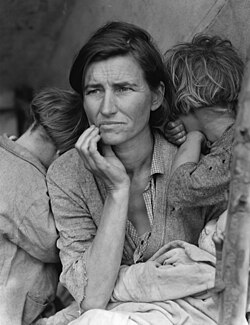
Following the Wall Street Crash of 1929 and the onset of the Great Depression, Franklin Roosevelt campaigned for the presidency on a promise to deliver a New Deal aimed at national economic recovery.
Image source: Great Depression
Mar 4, 1929
After March 4, 1929, Republicans controlled the executive and legislative branches and, in the political view later expressed by Roosevelt, also effectively controlled the Supreme Court through the justices appointed to it.
Image source: 1928 United States presidential election
1932
After Associate Justice Oliver Wendell Holmes Jr. retired in 1932, his annual pension was reduced from $20,000 to $10,000, illustrating the retirement conditions that later influenced debates about judicial tenure and pensions.
Image source: Oliver Wendell Holmes Jr.
Nov 8, 1932
Franklin D. Roosevelt won the 1932 presidential election after presenting the New Deal as a program for addressing the economic crisis and promoting national recovery.
Image source: 1932 United States presidential election
Nov 8, 1932
The 1932 election produced a new Democratic majority in both houses of Congress, giving Roosevelt substantial legislative support for his reform program.
1933
As early as the autumn of 1933, Roosevelt began anticipating reform of a federal judiciary composed at every level of a strong majority of Republican appointees.
Image source: Franklin D. Roosevelt
1934
Early victories for New Deal supporters came in Home Building & Loan Association v. Blaisdell and Nebbia v. New York at the beginning of 1934, indicating that the Court could uphold important forms of economic regulation.
Jan 1, 1935 - Mar 31, 1935
Biggs resigned in early 1935, but his successor, Stanley Forman Reed, proved to be little better from the perspective of administration officials seeking more favorable judicial treatment of New Deal measures.
Image source: Stanley Forman Reed
May 27, 1935
Three weeks after the administration lost the railroad pension case, the Roosevelt administration suffered its most severe setback on May 27, 1935, a day remembered as Black Monday because of a series of decisions against major New Deal initiatives.
Image source: United States v. Butler
1937
The Court's change in direction came to be known as the switch in time that saved nine. Recent legal-historical scholarship has questioned that explanation because Justice Owen Roberts's decision and vote in Parrish predated the public announcement and introduction of the bill.
Image source: The switch in time that saved nine
Mar 29, 1937
On March 29, 1937, the Court handed down three decisions upholding New Deal legislation: West Coast Hotel Co. v. Parrish, Wright v. Vinton Branch, and Virginia Railway v. Federation. Two of the decisions were unanimous.
Image source: West Coast Hotel Co. v. Parrish
Mar 29, 1937
The Court reversed its previous stance on the constitutionality of state minimum-wage laws for women, while also upholding the Railroad Labor Act, a revised Frazier-Lemke Farm Mortgage Moratorium Act, and the Wagner Labor Relations Act.
1935
An autumn 1935 Gallup Poll found that a majority of Americans disapproved of attempts to limit the Supreme Court's power to declare acts of Congress unconstitutional.
Image source: Gallup, Inc.
Nov 3, 1936
Roosevelt won a sweeping reelection victory in November 1936, strengthening his political confidence and encouraging the administration to pursue a more aggressive response to the Supreme Court's constitutional decisions.
Image source: 1936 United States presidential election
Dec 16, 1936
Attorney General Homer Cummings received novel advice from Princeton University professor Edward S. Corwin in a letter dated December 16, 1936, during the administration's consideration of judicial reform.
Image source: Edward Samuel Corwin
1937
James Clark McReynolds had been in his early fifties when he wrote his 1914 proposal concerning the Court, but he was well over seventy when Roosevelt's plan was introduced in 1937, making judicial age a prominent feature of the debate.
Image source: James Clark McReynolds
1937
The United States Senate, described as a political body defending judicial independence, ultimately rejected the court-packing plan. The failed initiative did not add justices to the Supreme Court.
Feb 1937
Reaction against the court-packing bill helped produce the National Committee to Uphold Constitutional Government, launched in February 1937 by three leading opponents of the New Deal.
Feb 2, 1937 - Feb 8, 1937
Roosevelt wanted to present the legislation before the Supreme Court began hearing oral arguments in the Wagner Act cases on February 8, 1937, but waited until after the annual White House dinner for the Court on February 2.
Image source: Judicial Procedures Reform Bill of 1937
Feb 5, 1937
The Judicial Procedures Reform Bill of 1937 was unveiled on February 5. Commonly called the court-packing plan, it proposed adding justices to the Supreme Court in order to obtain more favorable rulings on New Deal legislation.
Mar 9, 1937
Roosevelt addressed the court-packing plan in his ninth fireside chat on March 9, 1937, presenting the proposal to the public as a measure intended to improve the functioning of the federal judiciary.
Image source: Fireside chats
Mar 10, 1937
The administration began making its case for the bill before the Senate Judiciary Committee on March 10, 1937, opening a prolonged legislative battle over the proposal.
May 18, 1937 - Jun 2, 1937
On May 18, 1937, Associate Justice Willis Van Devanter announced that he would retire on June 2, encouraged by restoration of full-salary pensions under the Supreme Court Retirement Act of March 1, 1937.
Image source: Willis Van Devanter
Jul 14, 1937
On July 14, 1937, a housemaid found Senate Majority Leader Joseph Robinson dead of a heart attack in his apartment, with the Congressional Record at his side. His death removed a leading congressional supporter of the proposal.
Image source: Joseph T. Robinson
Jul 29, 1937
By July 29, 1937, the Senate Judiciary Committee, acting at the behest of new Senate Majority Leader Alben Barkley, had produced a revised Judicial Procedures Reform Act.
1937 - 1938
The protracted legislative battle blunted momentum for additional reforms, divided the New Deal coalition, squandered Roosevelt's political advantage after the 1936 election, and supplied critics with fresh accusations of dictatorship, tyranny, and fascism.
1937
With Willis Van Devanter's retirement in 1937, the composition of the Supreme Court began moving in support of Roosevelt's legislative agenda, even though the court-packing bill itself failed.
1938 - 1941
By the end of 1941, deaths and retirements had transformed the Court Roosevelt inherited in 1933. Only Chief Justice Harlan Fiske Stone and Associate Justice Owen Roberts remained from that original group after the deaths of Benjamin Cardozo and Pierce Butler and the retirements of George Sutherland, Louis Brandeis, James Clark McReynolds, and Charles Evans Hughes.
Nov 8, 1938
In the 1938 midterm elections, the Democratic Party lost a net of eight Senate seats and 81 House seats, weakening Roosevelt's political position after the court-packing controversy.
Image source: 1938 United States elections
Build a timeline like this one in minutes, for free. Start Yours →
Or browse the full history timeline directory, with more than 3,000 topics.
This Court-Packing Plan timeline was generated with the help of AI, using information found on the internet.
We work hard to keep these timelines accurate, but mistakes do get through. If you spot one, email us at [email protected] and we'll fix it for future visitors.
Generate yours with AI or build it from scratch, for free.
Export your timeline, add your own events, edit or remove AI-generated events, and much more
No credit card required.
15-day money-back guarantee.
You can create an unlimited number of timelines with up to 10 events on each one, customize how they look, export them to PDF, PNG, PowerPoint, CSV, and Excel, and share them with a link. Timelines made with Timeline Maker AI keep every event the generator created, and you can add up to 5 events of your own. Paid plans remove the event limit, add spreadsheet imports and hide Preceden's branding, and the higher-priced plan also adds collaborators, a custom logo and a custom domain.
Yes. You can cancel your subscription from your account page at any time, and you will not be charged again. Your subscription stays active for the rest of the period you already paid for.
Yes. We email you a reminder 15 days before your annual renewal, and we email you a receipt after every payment.
Yes. You can email us within 15 days of any payment, and we will issue you a full refund.
Check out our pricing docs or send us an email anytime: [email protected].