-
Use Cases
-
Resources
-
Pricing
Easter Island, known to its indigenous people as Rapa Nui, is a remote Chilean island in the southeastern Pacific Ocean famous for its nearly 900 monumental moai statues carved by early Polynesian settlers. The island's history spans over a millennium of remarkable cultural achievement, ecological transformation, European colonization, and modern efforts to preserve its unique heritage and identity. More Less
1250
% complete
Rapa Nui may have developed rongorongo, one of the few indigenous writing systems in Oceania. The undeciphered glyphs were carved on wooden tablets, though the dating of its origins remains debated among scholars.
Image source: Rongorongo
1250
% complete
The Rapa Nui began carving the iconic moai statues from volcanic tuff at Rano Raraku quarry. Nearly 900 moai were eventually created, most standing on ceremonial platforms called ahu facing inland over villages.
Image source: Moai
1400 - 1600
% complete
Between roughly 1400 and 1600 CE, statue construction reached its height, with some moai weighing up to 82 tons and reaching nearly 10 meters tall. Transport methods likely involved teams using ropes, sleds, or a 'walking' rocking technique.
1500
% complete
As the moai tradition waned, the tangata manu (birdman) competition rose to prominence. Competitors raced to retrieve the first sooty tern egg from the islet Motu Nui, with the winner's sponsor becoming sacred leader for the year.
Image source: Tangata manu
1960 - 1996
% complete
The massive 1960 Chilean earthquake tsunami had swept fifteen moai at Ahu Tongariki far inland. A Japanese-funded restoration completed in 1996 re-erected all fifteen, creating the island's largest restored ceremonial platform.
1978
% complete
Archaeologists, working with Rapa Nui descendants, restored the ahu at Anakena beach, reerecting fallen moai and discovering coral eyes that revealed how the statues originally appeared when completed.
Image source: Ahu Tongariki
1500 - 1700
% complete
The island's native palm forests disappeared by around 1600-1700, due to a combination of tree felling, rat predation on seeds, and possibly drought. Deforestation contributed to soil erosion, resource competition, and social upheaval, though some scholars dispute the severity of this narrative.
Image source: Ecocide
1550 - 1722
% complete
Traditional accounts describe growing conflict between rival clans, including toppling of rival groups' moai statues. Society reorganized around warrior chiefs as resources grew scarcer before European arrival.
Image source: History of Easter Island
Apr 5, 1722
% complete
Dutch explorer Jacob Roggeveen became the first recorded European to sight the island on Easter Sunday 1722, giving it its modern name. His crew spent about a week ashore, noting the giant statues and the islanders' use of fire.
Image source: Jacob Roggeveen
Nov 15, 1770 - Nov 20, 1770
% complete
A Spanish expedition under Felipe González de Ahedo landed on the island, conducted the first detailed survey, and signed an 'annexation' document whose meaning was almost certainly misunderstood by the Rapa Nui signatories.
Image source: Felipe González de Ahedo
Mar 1774 - Mar 17, 1774
% complete
Captain James Cook visited for four days aboard HMS Resolution, accompanied by Polynesian interpreter Mai. Cook observed toppled statues and a population diminished from earlier estimates, documenting the island's culture and hardships.
Image source: Second voyage of James Cook
Apr 1786
% complete
French explorer Jean-François de La Pérouse spent a brief time on the island and estimated the population at around 2,000 people, a sharp decline from pre-contact numbers, reflecting the toll of disease and internal conflict.
Image source: Jean-François de Galaup, comte de Lapérouse
1805 - 1862
% complete
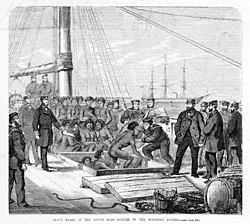
Throughout the early 19th century, whalers and raiders kidnapped islanders, and in December 1862 Peruvian slave ships carried away around 1,500 Rapa Nui, including much of the leadership class.
Image source: Blackbirding
1863
% complete
A small group of survivors returned from Peru, bringing smallpox that triggered devastating epidemics. Combined with tuberculosis and other diseases, the population collapsed to just 111 people by 1877.
1864
% complete
Lay missionary Eugène Eyraud became the first non-Polynesian resident, followed by Catholic missionaries who converted most of the remaining population to Christianity and discouraged traditional practices including the birdman cult.
Image source: Eugène Eyraud
1868 - 1877
% complete
Adventurer Jean-Baptiste Dutrou-Bornier acquired land, married into a chiefly family, and effectively ruled much of the island as his personal domain, driving many islanders to flee to Tahiti and contributing to the population crash.
Image source: Jean-Baptiste Dutrou-Bornier
1871
% complete
Englishman John Brander and Alexander Salmon Jr. developed ranching and trade operations on the island, further concentrating land ownership in foreign hands and reshaping the local economy toward pastoralism.
Image source: Alexander Ariʻipaea Salmon
Sep 9, 1888
% complete
Chilean naval captain Policarpo Toro formally annexed Easter Island through the 'Agreement of Wills' (Acuerdo de Voluntades), signed by Chile and Rapa Nui chiefs, integrating the island into Chilean territory.
Image source: Chile
1903 - 1953
% complete
The Williamson-Balfour Company leased the island as a vast sheep ranch, confining Rapa Nui to the village of Hanga Roa behind a perimeter fence and restricting their access to traditional lands until the lease ended in 1953.
Image source: Balfour Williamson
1914 - 1915
% complete
British archaeologist Katherine Routledge led the Mana Expedition, conducting systematic documentation of moai, ahu, and oral histories, laying the foundation for modern Easter Island scholarship.
Image source: Patricia Routledge
1935
% complete
Chile designated Rapa Nui National Park covering much of the island, protecting its archaeological heritage. The park was later added to UNESCO's World Heritage List in 1995, recognizing its outstanding cultural value.
Apr 28, 1947 - Aug 7, 1947
% complete
Norwegian explorer Thor Heyerdahl sailed the Kon-Tiki raft from Peru to Polynesia to argue for South American contact with the islands. Though scientifically disputed, the voyage drew global attention to Rapa Nui's archaeology.
Image source: Kon-Tiki expedition
1953 - 1966
% complete
After the sheep lease expired, the Chilean Navy administered the island directly, gradually improving services but still restricting movement of the islanders until broader civil rights reforms came later in the decade.
Image source: Chilean Navy
1955 - 1956
% complete
Heyerdahl organized an international team that excavated key sites, tested moai transport theories, and published findings that stimulated worldwide fascination with Easter Island's monumental heritage.
Image source: Thor Heyerdahl
1965 - 1967
% complete
An airstrip was built near Hanga Roa, later extended under NASA's space shuttle contingency program. It opened regular air service in 1967, transforming access to the once extremely isolated island.
Image source: Mataveri International Airport
1966
% complete
Chile passed the Pascua Law, granting islanders citizenship rights, allowing free movement off the island, establishing a school and municipal governance, and ending decades of confinement to Hanga Roa.
Dec 1995
% complete
UNESCO inscribed Rapa Nui National Park as a World Heritage Site, acknowledging the extraordinary moai and cultural landscape and boosting international tourism and conservation efforts.
Image source: Rapa Nui National Park
2010 - 2011
% complete
Rapa Nui activists occupied government buildings and hotels demanding return of ancestral lands and greater self-determination, prompting dialogue with Chile and renewed debate over indigenous rights.
2019
% complete
Growing international discussions focused on returning Rapa Nui artifacts held in foreign museums, including the moai Hoa Hakananai'a in the British Museum, highlighting ongoing questions of cultural restitution.
Image source: Repatriation (cultural property)
Or browse the full history timeline directory, with more than 2,000 topics.
This Easter Island timeline was generated with the help of AI, using information found on the internet.
We work hard to keep these timelines accurate, but mistakes do get through. If you spot one, email us at [email protected] and we'll fix it for future visitors.
Generate yours with AI or build it from scratch, for free.
Export your timeline, add your own events, edit or remove AI-generated events, and much more
No credit card required.
Cancel anytime.
Cancel anytime.
You can create an unlimited number of timelines with up to 10 events on each one, customize how they look, export them to PDF, PNG, PowerPoint, CSV, and Excel, and share them with a link. Paid plans raise the event limit and add features like spreadsheet imports and collaborators.
Yes. You can cancel your subscription from your account page at any time, and you will not be charged again. Your subscription stays active for the rest of the period you already paid for.
Yes. We will email you a reminder before the annual renewal, and we will also email you a receipt.
Yes. You can email us within 15 days of any payment, and we will issue you a full refund.
Check out our pricing docs or send us an email anytime: [email protected].