-
Resources
-
Pricing
The Greensboro sit-ins were a series of nonviolent civil rights protests that began at a segregated Woolworth lunch counter in Greensboro, North Carolina, in 1960. Organized primarily by Black college students, the demonstrations helped inspire similar protests nationwide and contributed to the desegregation of public facilities. More Less
Build a timeline like this one in minutes, for free. Start Yours →
Aug 1939
African-American attorney Samuel Wilbert Tucker organized a sit-in at the Alexandria Library in Virginia, now the Alexandria Black History Museum.
Image source: Alexandria Library sit-in
1942
The Congress of Racial Equality sponsored sit-ins in Chicago, establishing an earlier organized precedent for challenging segregation through nonviolent direct action.
Image source: Congress of Racial Equality
1949
The Congress of Racial Equality sponsored sit-ins in St. Louis, continuing the use of nonviolent protests against racial segregation.
1952
The Congress of Racial Equality sponsored sit-ins in Baltimore as part of its campaign against segregated public facilities.
1955
College students led a successful sit-in at Read's Drug Store in Baltimore. Although it ended segregation there, it received less widespread attention than the Greensboro protests.
Image source: Read's Drug Store
1958
The Dockum Drug Store sit-in in Wichita, Kansas, successfully ended segregation at every Dockum Drug Store in Kansas.
1958
A sit-in at a Katz Drug Store in Oklahoma City led the Katz Drug Stores to end their segregation policy.
Image source: Katz Drug Store
1958 - 1960
The Wichita and Oklahoma City demonstrations employed a strategy similar to the Greensboro sit-ins: protesters occupied store lunch counters and sought to desegregate them.
Image source: Sit-in movement
1958 - 1964
Between 1958 and 1964, Oklahoma City served as a hotspot for sit-ins.
Dec 1959
During Christmas vacation, Joseph A. McNeil attempted to buy a hot dog at the Greensboro Greyhound Lines bus station but was refused service.
Feb 1, 1960
At 4:30 p.m. Eastern Time, the four protesters sat at the 66-seat, L-shaped stainless-steel lunch counter inside the F. W. Woolworth Company store at 132 South Elm Street in Greensboro, North Carolina.
Feb 2, 1960
Joseph A. McNeil and Franklin E. McCain were joined at the Woolworth lunch counter by William Smith and Clarence Henderson.
Feb 3, 1960
The number of demonstrators grew to more than 60, including students from Dudley High School.
Image source: Greensboro sit-ins
Feb 4, 1960
More than 300 people took part in the Greensboro sit-in movement.
Feb 5, 1960
A high-tension environment emerged when 50 white men sat at the counter in opposition to the protesters. The protest movement now also included white college students.
Feb 6, 1960
More than 1,400 North Carolina A&T students met in Richard B. Harrison Auditorium on campus.
Image source: North Carolina A&T State University
Jul 25, 1960
After nearly $200,000 in losses and a salary reduction for failing to meet sales goals, store manager Clarence Harris asked four Black employees—Geneva Tisdale, Susie Morrison, Anetha Jones, and Charles Bess—to change out of their work clothes and order meals at the counter.
Jul 25, 1960
The employees’ orders marked the desegregation of the Greensboro Woolworth lunch counter after months of protest.
1960 - 1965
In Jackson, Tennessee, Woolworth’s continued to be segregated until around 1965 despite multiple protests.
1960
Most Woolworth stores were soon desegregated following the Greensboro demonstrations and related protests.
Image source: Woolworth
Mar 16, 1960
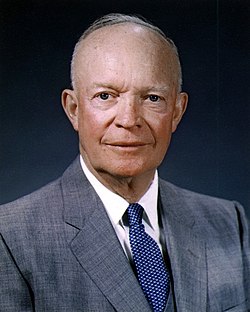
President Dwight D. Eisenhower expressed concern for people fighting for their human and civil rights, saying he was deeply sympathetic to efforts to enjoy the equality guaranteed by the Constitution.
Image source: Dwight D. Eisenhower
May 1960
The Nashville sit-ins attained desegregation of downtown department-store lunch counters.
Image source: Nashville sit-ins
May 28, 1960
Students from Tougaloo College staged a sit-in in Jackson, Mississippi. Participant Anne Moody later recounted the event in her autobiography.
1964
The Civil Rights Act of 1964 mandated desegregation in public accommodations, providing federal legal support for the goals pursued by the sit-in movement.
Image source: Civil Rights Act of 1964
1990
The street south of the Greensboro Woolworth site was renamed February One Place to commemorate the date of the first Greensboro sit-in.
1993
The Smithsonian Institution acquired a four-seat portion of the Greensboro lunch counter, later displayed in the National Museum of American History.
Image source: National Museum of American History
1993
A six-seat portion of the lunch counter was donated to the Greensboro History Museum, where it is on display.
Image source: Greensboro History Museum
1993
When Woolworth’s and its lunch counter closed in 1993, Geneva Tisdale was still working there and was the last remaining store employee who had been present on February 1, 1960.
2002
The February One monument and sculpture by James Barnhill, depicting the Greensboro Four, was erected on the campus of North Carolina Agricultural and Technical State University.
2003
February One: The Story of the Greensboro Four, a documentary film about the protest leaders and movement, was shown on PBS.
2010
Seizing Justice: The Greensboro 4, a documentary about the Greensboro Four, was produced for the Smithsonian Channel.
2016
The International Civil Rights Center & Museum donated part of the Greensboro lunch counter to the Smithsonian’s National Museum of African American History and Culture.
Image source: National Museum of African American History and Culture
Feb 1, 2020
Google displayed a Google Doodle featuring a diorama made by Karen Collins to commemorate the 60th anniversary of the Greensboro sit-in.
Image source: Google Doodle
Apr 12, 2022
The Guilford County Board of Education voted to rename The Middle College at N.C. A&T, a high school for boys on the N.C. A&T campus, A&T Four Middle College at North Carolina A&T State University, effective July 1, 2022.
Build a timeline like this one in minutes, for free. Start Yours →
Or browse the full history timeline directory, with more than 3,000 topics.
This Greensboro sit-ins timeline was generated with the help of AI, using information found on the internet.
We work hard to keep these timelines accurate, but mistakes do get through. If you spot one, email us at [email protected] and we'll fix it for future visitors.
Generate yours with AI or build it from scratch, for free.
Export your timeline, add your own events, edit or remove AI-generated events, and much more
No credit card required.
15-day money-back guarantee.
You can create an unlimited number of timelines with up to 10 events on each one, customize how they look, export them to PDF, PNG, PowerPoint, CSV, and Excel, and share them with a link. Timelines made with Timeline Maker AI keep every event the generator created, and you can add up to 5 events of your own. Paid plans remove the event limit, add spreadsheet imports and hide Preceden's branding, and the higher-priced plan also adds collaborators, a custom logo and a custom domain.
Yes. You can cancel your subscription from your account page at any time, and you will not be charged again. Your subscription stays active for the rest of the period you already paid for.
Yes. We email you a reminder 15 days before your annual renewal, and we email you a receipt after every payment.
Yes. You can email us within 15 days of any payment, and we will issue you a full refund.
Check out our pricing docs or send us an email anytime: [email protected].