-
Use Cases
-
Resources
-
Pricing
Charlotte, North Carolina, founded in 1768 and named after Queen Charlotte of Mecklenburg-Strelitz, grew from a small colonial town into one of the largest cities in the United States. Its history includes the Mecklenburg Resolves, an early gold rush that spurred banking, Civil War-era events, and its transformation in the late 20th century into the nation's second-largest financial center. More Less
1985
% complete
In 1985, the NBA, with 23 teams, was planning to expand by four teams by the 1988–89 season. This set in motion the process that would eventually bring an NBA franchise to Charlotte.
Apr 5, 1987
% complete
On April 5, 1987, NBA Commissioner David Stern called George Shinn to award him the NBA's 24th franchise, to begin play in 1988 in Charlotte.
1988
% complete
In 1988, the Hornets and the Miami Heat were part of the 1988 NBA expansion draft as they assembled their initial rosters. The team also held three draft picks at the 1988 NBA draft.
Nov 4, 1988
% complete
Charlotte played its first NBA game on November 4, 1988, losing 133–93 to the Cleveland Cavaliers, and finished the 1988–89 season with a 20–62 record.
1989
% complete
Head coach Dick Harter was fired during the 1989–90 season and replaced on an interim basis by assistant Gene Littles.
Image source: Dick Harter
1990
% complete
The Hornets selected guard Kendall Gill with the fifth pick in the 1990 NBA draft, adding a key building block to the young franchise.
Image source: Kendall Gill
1991
% complete
The Hornets improved to 26–56 in 1990–91 and hosted the 1991 NBA All-Star Game, after which Gene Littles was replaced by general manager Allan Bristow.
Image source: 1991 NBA All-Star Game
1991
% complete
With the first pick in the 1991 NBA draft, the Hornets selected Larry Johnson from UNLV, a cornerstone of the franchise's rise.
1992
% complete
Johnson won the 1992 NBA Rookie of the Year Award, and Charlotte improved to 31–51 in the 1991–92 season.
1992
% complete
Charlotte selected center Alonzo Mourning with the second pick in the 1992 NBA draft, pairing him with Larry Johnson and Kendall Gill.
Image source: Alonzo Mourning
1993
% complete
The Hornets finished the 1992–93 season 44–38, their first winning record, and qualified for the playoffs for the first time. They became one of the league's attendance leaders.
1994
% complete
Charlotte missed the playoffs in the 1993–94 season after its breakthrough postseason appearance the year before.
1995
% complete
The team won 50 games and returned to the postseason in the 1994–95 season.
1995
% complete
Before the 1995–96 season, the Hornets traded Alonzo Mourning to the Miami Heat for Glen Rice, Matt Geiger, and Khalid Reeves.
Image source: Glen Rice
1996
% complete
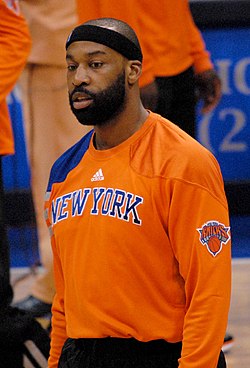
Charlotte traded Larry Johnson to the New York Knicks in 1996 and sent the draft rights to Kobe Bryant to the Los Angeles Lakers for center Vlade Divac.
Image source: Vlade Divac
1997
% complete
The reshaped team set a franchise record with 54 wins in the 1996–97 season. Glen Rice made the All-NBA Second Team and was named MVP of the 1997 NBA All-Star Game.
1997
% complete
In 1997, a Charlotte woman claimed that owner George Shinn had raped her, and the subsequent trial severely tarnished his reputation in the community.
1998
% complete
The Hornets followed their 54-win season with a 51–31 record in 1997–98, continuing their run among the Eastern Conference's stronger teams.
1999
% complete
During the lockout-shortened 1998–99 season, Charlotte traded Glen Rice to the Los Angeles Lakers for Eddie Jones and Elden Campbell. The Hornets then selected point guard Baron Davis with the third pick in the 1999 NBA draft.
Image source: Baron Davis
2000
% complete
During the 1999–2000 season, guard Bobby Phills was killed in an automobile accident, and the team retired his No. 13 jersey in his honor.
2001
% complete
The 2000–01 team finished 46–36, swept the Miami Heat in the first round, and lost to the Milwaukee Bucks in seven games.
2001 - 2002
% complete
Shinn was discontented with the Charlotte Coliseum, which despite being state-of-the-art when it opened in 1988 had limited luxury boxes. Arena disputes and declining attendance preceded the team's relocation after the 2001–02 season.
Image source: Charlotte Coliseum
2001
% complete
The city council refused to remove a statement Shinn objected to, leading the Hornets to request a move to New Orleans — returning pro basketball there after the Jazz moved to Salt Lake City in 1979.
Mar 26, 2001
% complete
On March 26, 2001, both the Hornets and the Vancouver Grizzlies applied for relocation to Memphis, Tennessee, which was ultimately won by the Grizzlies.
2002
% complete
In 2001–02, the Hornets went 44–38, defeated the Orlando Magic, and lost to the New Jersey Nets in five games — the franchise's final season in Charlotte before relocating to New Orleans.
2002
% complete
The NBA approved the move and, to avoid a Cleveland Browns-like lawsuit, promised Charlotte would get a new expansion franchise, while allowing Shinn to take the extant franchise's name, history and records to New Orleans.
Dec 18, 2002
% complete
On December 18, 2002, a group led by Black Entertainment Television founder Robert L. Johnson was awarded Charlotte's new expansion franchise. The league said it would be receptive to placing the team in Charlotte for the 2004–05 season if an arena deal could be reached.
Jun 2003
% complete
In June 2003, the team was named the Bobcats. During the summer of 2003, at a street festival crowd of 7,000 fans, the franchise unveiled 'Bobcats' as the team name.
Jul 2003
% complete
A new arena to host the Bobcats at uptown Charlotte began construction in July 2003, and the team played its home games at the Coliseum until the new building was ready.
Image source: Spectrum Center
2004
% complete
A separate expansion franchise, the Charlotte Bobcats, began play in 2004. The Bobcats assembled their first roster through the 2004 expansion draft, which brought Gerald Wallace to Charlotte, and acquired the second pick in the 2004 NBA draft, selecting center Emeka Okafor.
2005
% complete
The team moved into the new Charlotte Bobcats Arena during the 2005–06 season and improved to 26–56.
Image source: Spectrum Center
2007
% complete
Charlotte improved to 33–49 in 2006–07, the final season of Bernie Bickerstaff's tenure as head coach. Sam Vincent replaced him but was dismissed after the Bobcats went 32–50 in 2007–08.
Image source: Bernie Bickerstaff
Apr 2008
% complete
The Bobcats hired Hall of Fame coach Larry Brown in April 2008. Charlotte improved to 35–47 in the 2008–09 season, narrowly missing the playoffs.
Image source: Larry Brown (basketball)
2010
% complete
The 2009–10 Bobcats finished 44–38, their first winning record, and qualified for the playoffs for the first time. In February 2010, Robert Johnson agreed to sell the Bobcats to Michael Jordan, who became the first former NBA player to serve as majority owner of a league franchise.
2010
% complete
Brown left the team after a 9–19 start to the 2010–11 season, and former Hornets coach Paul Silas returned as his replacement.
Image source: Paul Silas
2011
% complete
In the 2011 NBA draft, the Bobcats selected Kemba Walker with the ninth pick, who would become the face of the franchise for years.
Image source: Kemba Walker
2012
% complete
The lockout-shortened 2011–12 season ended with a 7–59 record, giving Charlotte an NBA-record .106 winning percentage.
2013
% complete
The Bobcats finished 21–61 in the 2012–13 season, after which Dunlap was dismissed and replaced by Steve Clifford. The Bobcats signed center Al Jefferson during the 2013 offseason.
Image source: Steve Clifford
May 21, 2013
% complete
On May 21, 2013, Michael Jordan announced that the franchise had applied to adopt the Charlotte Hornets name beginning with the 2014–15 season.
May 20, 2014
% complete
On May 20, 2014, the Bobcats officially adopted the Charlotte Hornets name. The renamed franchise was assigned the history and records of the 1988–2002 Charlotte teams, while the New Orleans organization retained its records from 2002 onward.
2015
% complete
Charlotte reshaped its roster before the 2015–16 season, most notably acquiring Nicolas Batum and signing Jeremy Lin. The Hornets finished 48–34, their highest win total since 1999–2000, earning the sixth seed in the Eastern Conference.
2016
% complete
After the Hornets name was restored, Charlotte returned to the playoffs in 2016, defeating the Miami Heat in Game 3 for its first playoff victory since 2002 and extending the series to seven games before being eliminated.
2017
% complete
Kemba Walker was selected for his first NBA All-Star Game in 2017. Charlotte finished the 2016–17 season 36–46 and missed the playoffs.
Mar 28, 2018
% complete
Walker made a second consecutive All-Star appearance in 2018 and, on March 28, surpassed Dell Curry as the franchise's career scoring leader. The Hornets finished the 2017–18 season 36–46 and missed the playoffs for a second consecutive season.
Feb 2019
% complete
Charlotte hosted the 2019 NBA All-Star Game, with Kemba Walker selected as a starter. The Hornets were eliminated from playoff contention on the final day of the regular season, their third consecutive season outside the postseason.
Image source: 2019 NBA All-Star Game
Jul 2019
% complete
In July 2019, Charlotte sent Walker and a future second-round pick to the Boston Celtics in a sign-and-trade for Terry Rozier and a future second-round pick, ending Walker's eight-season tenure with the franchise.
Image source: Terry Rozier
2020
% complete
With the third pick in the 2020 NBA draft, the Hornets selected guard LaMelo Ball, who won the NBA Rookie of the Year Award in 2021. The Hornets finished the shortened 2020–21 season with a 33–39 record and qualified for the play-in tournament, where the Indiana Pacers eliminated them, 144–117.
Image source: LaMelo Ball
Mar 2020
% complete
The Hornets were 23–42 when the NBA suspended the 2019–20 season in March 2020 because of the COVID-19 pandemic. Charlotte was one of eight teams not invited to the league's restart at the 2020 NBA Bubble, ending the franchise's season.
Image source: 2020 NBA Bubble
2022
% complete
Charlotte improved to 43–39 in the 2021–22 season but again finished tenth in the Eastern Conference. The Hornets rehired Steve Clifford as head coach on June 24, 2022, beginning his second tenure with the team.
2023
% complete
During the 2022–23 season, Charlotte's players missed a combined 258 games because of injuries, and the team finished 27–55. The Hornets received the second pick in the 2023 NBA draft and selected forward Brandon Miller.
Image source: Brandon Miller (basketball, born 2002)
Aug 3, 2023
% complete
On August 3, 2023, the sale of Jordan's majority stake to a group led by Gabe Plotkin and Rick Schnall was finalized; Jordan retained a minority interest.
May 9, 2024
% complete
The Hornets finished the 2023–24 season with a 21–61 record. After Steve Clifford announced that the season would be his last as head coach, Charlotte hired Charles Lee on May 9, 2024. Miller was named to the All-Rookie First Team, and Charlotte selected Tidjane Salaün with the sixth pick in the 2024 NBA draft.
2025
% complete
In Lee's first season, injuries again affected the roster, including season-ending injuries to Ball and Miller, and Charlotte finished the 2024–25 season with a 19–63 record. The Hornets selected Kon Knueppel with the fourth pick in the 2025 NBA draft.
2026
% complete
Under the new ownership group, Charlotte improved from 19–63 in 2024–25 to 44–38 in 2025–26, finishing ninth in the Eastern Conference and returning to the play-in tournament.
Apr 2026
% complete
In the 2026 play-in tournament, the Hornets defeated the Miami Heat 127–126 in overtime before losing 121–90 to the Orlando Magic in the game for the Eastern Conference's eighth playoff seed.
Jun 2026
% complete
In the 2026 NBA draft, Charlotte selected Hannes Steinbach and Christian Anderson Jr. Charlotte subsequently traded Miles Bridges and two draft picks to the Phoenix Suns for Grayson Allen, Royce O'Neale, and a 2033 first-round pick.
Or browse the full history timeline directory, with more than 2,000 topics.
This History of Charlotte timeline was generated with the help of AI, using information found on the internet.
We work hard to keep these timelines accurate, but mistakes do get through. If you spot one, email us at [email protected] and we'll fix it for future visitors.
Generate yours with AI or build it from scratch, for free.
Export your timeline, add your own events, edit or remove AI-generated events, and much more
No credit card required.
Cancel anytime.
Cancel anytime.
You can create an unlimited number of timelines with up to 10 events on each one, customize how they look, export them to PDF, PNG, PowerPoint, CSV, and Excel, and share them with a link. Paid plans raise the event limit and add features like spreadsheet imports and collaborators.
Yes. You can cancel your subscription from your account page at any time, and you will not be charged again. Your subscription stays active for the rest of the period you already paid for.
Yes. We will email you a reminder before the annual renewal, and we will also email you a receipt.
Yes. You can email us within 15 days of any payment, and we will issue you a full refund.
Check out our pricing docs or send us an email anytime: [email protected].