
-
Use Cases
-
Resources
-
Pricing
Chicago's history spans from its origins as a Potawatomi settlement and fur trading post on Lake Michigan to its transformation into a major American metropolis. Incorporated as a city in 1837, Chicago grew rapidly due to its strategic location connecting the Great Lakes to the Mississippi River watershed. The city was famously destroyed by the Great Chicago Fire of 1871 but rebuilt quickly, becoming a hub for architecture, industry, immigration, and culture. Key moments include the 1893 World's Columbian Exposition, the Prohibition-era gangster era, the Civil Rights Movement, and its modern role as a global center of commerce and culture. More Less
1780
% complete
Haitian-born trader Jean Baptiste Point du Sable established a permanent settlement at the mouth of the Chicago River, becoming the first non-indigenous resident of the area and earning recognition as the founder of Chicago.
Image source: Jean Baptiste Point du Sable
1803
% complete
The United States Army constructed Fort Dearborn on the south bank of the Chicago River, establishing a military presence that would anchor early development and become central to the city's founding story.
Image source: Fort Dearborn
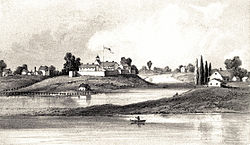
Aug 15, 1812
% complete
During the War of 1812, Potawatomi warriors attacked evacuating American soldiers and settlers near Fort Dearborn, killing dozens in a conflict remembered as one of the most violent episodes in early Chicago history.
Image source: Battle of Fort Dearborn
Aug 12, 1833
% complete
With a population of about 350, Chicago was officially incorporated as a town, marking its formal beginning as a civic entity on the southwestern shore of Lake Michigan.
Image source: History of Chicago
Mar 4, 1837
% complete
Just four years after incorporation as a town, Chicago was chartered as a city with a population nearing 4,000, electing William B. Ogden as its first mayor and setting the stage for explosive growth.
Image source: Chicago
1848
% complete
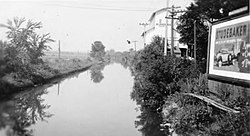
The completion of the Illinois and Michigan Canal connected the Great Lakes to the Mississippi River watershed, transforming Chicago into a critical transportation hub and fueling rapid commercial expansion.
Image source: Illinois and Michigan Canal
1848
% complete
The Galena and Chicago Union Railroad began operations, making Chicago the western terminus of an expanding rail network that would soon make it the nation's foremost rail center.
Image source: Chicago, Burlington and Quincy Railroad
Oct 8, 1871 - Oct 10, 1871
% complete
A catastrophic fire destroyed roughly three square miles of downtown Chicago, killed about 300 people, and left more than 100,000 homeless, yet the city rebuilt rapidly and emerged stronger than before.
Image source: Great Chicago Fire
1865
% complete
The consolidation of Chicago's meatpacking industry into the massive Union Stock Yards made the city the center of America's meatpacking trade, employing tens of thousands and inspiring Upton Sinclair's The Jungle.
Image source: Union Stock Yards
1885
% complete
William Le Baron Jenney's Home Insurance Building, widely considered the world's first skyscraper, pioneered steel-frame construction and launched the Chicago School of architecture.
Image source: Home Insurance Building
May 1, 1893 - Oct 30, 1893
% complete
Chicago hosted a spectacular world's fair in Jackson Park celebrating the 400th anniversary of Columbus's voyage, drawing over 27 million visitors and showcasing the 'White City' of Beaux-Arts architecture.
Image source: World's Columbian Exposition
Jun 21, 1893
% complete
George Washington Gale Ferris Jr.'s 264-foot rotating wheel premiered at the World's Columbian Exposition, thrilling fairgoers and giving birth to an amusement park icon.
Image source: Ferris Wheel (1893)
Apr 23, 1914
% complete
Weeghman Park opened as home of the Chicago Whales; it later became Wrigley Field, the beloved home of the Chicago Cubs and one of baseball's oldest and most iconic ballparks.
Image source: Wrigley Field
Sep 28, 1920
% complete
Eight members of the Chicago White Sox were indicted for conspiring to throw the 1919 World Series, a scandal that rocked professional sports and led to the creation of the office of baseball commissioner.
Image source: Black Sox Scandal
May 27, 1933 - Oct 31, 1934
% complete
Chicago hosted a second world's fair along the lakefront celebrating technological progress during the Depression, featuring futuristic architecture and introducing millions to modern science and design.
Image source: Century of Progress
Dec 2, 1942
% complete
Under the leadership of Enrico Fermi, scientists at the University of Chicago produced the first self-sustaining nuclear chain reaction beneath Stagg Field, launching the atomic age as part of the Manhattan Project.
Image source: Chicago Pile-1
1955
% complete
Chicago's new airport on the city's northwest side quickly became one of the busiest aviation hubs in the world, cementing the city's role as a national transportation crossroads.
Image source: O'Hare International Airport
1973
% complete
The 110-story Sears Tower opened as the tallest building in the world, a title it held for nearly 25 years, and became the defining feature of Chicago's skyline.
Image source: Willis Tower
Jun 12, 1991
% complete
Led by Michael Jordan, the Chicago Bulls defeated the Los Angeles Lakers for their first NBA title, beginning a dynasty that would win six championships in eight years.
Image source: 1991 NBA Finals
Jul 16, 2004
% complete
Chicago unveiled Millennium Park in Grant Park, featuring Anish Kapoor's Cloud Gate sculpture ('the Bean') and Frank Gehry's Pritzker Pavilion, quickly becoming one of the city's top attractions.
Image source: Millennium Park
Nov 2, 2016
% complete
The Chicago Cubs defeated the Cleveland Indians in seven games to win their first World Series since 1908, ending a 108-year championship drought and igniting massive celebrations across the city.
Image source: 2016 World Series
May 4, 1886
% complete
A labor rally in Haymarket Square turned deadly when a bomb exploded among police, sparking a national backlash against organized labor and becoming a landmark event in the international workers' movement.
Image source: Haymarket affair
May 11, 1894 - Jul 20, 1894
% complete
Workers at George Pullman's company town struck over wage cuts and high rents, triggering a nationwide railroad boycott that was crushed by federal troops and reshaped American labor relations.
Image source: Pullman Strike
Jan 2, 1900
% complete
Engineers completed the Sanitary and Ship Canal, reversing the flow of the Chicago River away from Lake Michigan to protect the city's drinking water from sewage contamination — a monumental public works achievement.
Image source: Chicago Sanitary and Ship Canal
Dec 30, 1903
% complete
A fire during a matinee performance at the Iroquois Theatre killed at least 602 people, mostly women and children, prompting sweeping reforms in building codes and theater safety standards nationwide.
Image source: Iroquois Theatre fire
1925
% complete
Prohibition-era gangster Al Capone built a criminal empire in Chicago through bootlegging and gambling, symbolizing the lawlessness of the Roaring Twenties until his conviction for tax evasion in 1931.
Image source: Al Capone
Feb 14, 1929
% complete
Seven members of Bugs Moran's North Side Gang were gunned down by men disguised as police officers in a Lincoln Park garage, an infamous hit attributed to Al Capone's organization.
Image source: Saint Valentine's Day Massacre
Apr 12, 1955
% complete
Richard J. Daley began a two-decade tenure as mayor, dominating Chicago politics through his powerful Democratic machine while overseeing massive urban renewal projects and expressway construction.
Image source: Richard J. Daley
Apr 12, 1983
% complete
Harold Washington won election as Chicago's first African American mayor, breaking the machine's grip on City Hall and ushering in an era of reform and coalition politics.
Image source: Harold Washington
Nov 4, 2008
% complete
President-elect Barack Obama addressed hundreds of thousands of supporters in Chicago's Grant Park on election night, a defining moment for the city he called home.
Image source: Barack Obama 2008 presidential campaign
Or browse the full history timeline directory, with more than 2,000 topics.
This History of Chicago timeline was generated with the help of AI, using information found on the internet.
We work hard to keep these timelines accurate, but mistakes do get through. If you spot one, email us at [email protected] and we'll fix it for future visitors.
Generate yours with AI or build it from scratch, for free.
Export your timeline, add your own events, edit or remove AI-generated events, and much more
No credit card required.
Cancel anytime.
Cancel anytime.
You can create an unlimited number of timelines with up to 10 events on each one, customize how they look, export them to PDF, PNG, PowerPoint, CSV, and Excel, and share them with a link. Paid plans raise the event limit and add features like spreadsheet imports and collaborators.
Yes. You can cancel your subscription from your account page at any time, and you will not be charged again. Your subscription stays active for the rest of the period you already paid for.
Yes. We will email you a reminder before the annual renewal, and we will also email you a receipt.
Yes. You can email us within 15 days of any payment, and we will issue you a full refund.
Check out our pricing docs or send us an email anytime: [email protected].