-
Use Cases
-
Resources
-
Pricing
Cleveland, Ohio was founded in 1796 by General Moses Cleaveland near the mouth of the Cuyahoga River. It grew rapidly into a major industrial and commercial hub during the 19th century thanks to the Ohio and Erie Canal and railroads. The city flourished in the early 20th century as a manufacturing powerhouse, then faced economic decline and population loss after the 1950s, including the infamous Cuyahoga River fires. In recent decades, Cleveland has undergone significant revitalization with investments in healthcare, education, and downtown development. More Less
Sep 1796 - Oct 1796
% complete
General Moses Cleaveland led a surveying party of the Connecticut Land Company to the mouth of the Cuyahoga River, laying out the plan for a town that would bear his name. The site was chosen for its potential harbor on Lake Erie.
Image source: History of Cleveland
Dec 23, 1814
% complete
Cleveland was formally incorporated as a village in Cuyahoga County. At the time it was a small frontier settlement of a few hundred residents, dependent on trade with nearby Native American communities and early settlers.
Image source: Cleveland
1836
% complete
Cleveland was incorporated as a city with John W. Willey serving as its first mayor. The city soon became embroiled in a rivalry with the neighboring settlement of Ohio City over the Columbia Street bridge.
Jul 4, 1827
% complete
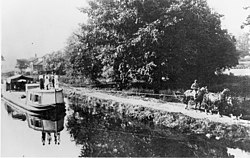
The completion of the Ohio and Erie Canal linked the Ohio River to Lake Erie at Cleveland, making the city a vital transshipment point. The canal triggered explosive population growth and established Cleveland as a commercial hub.
Image source: Ohio and Erie Canal
1851
% complete
The Cleveland, Columbus and Cincinnati Railroad connected Cleveland to inland markets, cementing its role as a transportation center and fueling industrial expansion throughout the mid-nineteenth century.
1870
% complete
John D. Rockefeller established Standard Oil in Cleveland, which grew into the world's largest oil refinery operation. Rockefeller's fortune helped shape the city through philanthropy, including the founding of the University of Chicago's endowment and numerous Cleveland institutions.
Apr 1899 - Jun 1899
% complete
Workers of the Cleveland Electric Railway Company went on strike demanding union recognition and higher wages. The violent strike drew national attention and highlighted growing labor tensions in America's industrial cities.
1867
% complete
Founded to preserve the history of the Western Reserve region, the society grew into one of Ohio's most important cultural institutions, maintaining archives, museums, and historic sites documenting Cleveland's past.
Image source: Western Reserve Historical Society
1880
% complete
Leonard Case Jr.'s endowment created the Case School of Applied Science, later Case Institute of Technology. It merged with Western Reserve University in 1967 to form Case Western Reserve University, a leading research institution.
Image source: Case Western Reserve University
Jun 7, 1916
% complete
Funded by industrialists including Jeptha Wade's heirs, the Cleveland Museum of Art opened in University Circle with an endowment that allowed it to build one of the most distinguished art collections in the United States.
Image source: Cleveland Museum of Art
Oct 5, 1920 - Oct 12, 1920
% complete
The Cleveland Indians defeated the Brooklyn Robins in the World Series, aided by second baseman Bill Wambsganss' unassisted triple double play, the only one in World Series history. The season also saw the death of star shortstop Ray Chapman.
Image source: 1920 World Series
Jun 27, 1936 - Sep 1937
% complete
Held along Cleveland's lakefront during the Great Depression, the exposition attracted millions of visitors with exhibits celebrating industry, science, and culture, boosting civic pride and local morale.
Image source: Great Lakes Exposition
Sep 6, 1946
% complete
Coached by Paul Brown, the new Cleveland Browns won all four All-America Football Conference championships from 1946 to 1949, then joined the NFL and captured league titles in 1950, 1954, and 1955.
Image source: History of the Cleveland Browns
1970
% complete
The Cleveland Cavaliers began NBA play as an expansion team, giving the city a professional basketball franchise that would later become central to the city's sports identity, especially after drafting LeBron James in 2003.
Image source: Cleveland Cavaliers
Apr 4, 1994
% complete
The new home of the Cleveland Indians opened alongside Gateway Arena (later Quicken Loans Arena). It sold out 455 consecutive games and coincided with a championship-caliber team, sparking a downtown renaissance.
Image source: Progressive Field
Sep 2, 1995
% complete
After a campaign highlighting Cleveland disc jockey Alan Freed's role in popularizing rock and roll, the I.M. Pei-designed museum opened on Lake Erie, anchoring downtown revitalization and celebrating music history.
Image source: Rock and Roll Hall of Fame
Jun 26, 2003
% complete
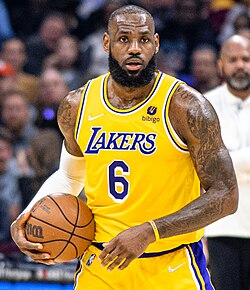
Akron native LeBron James was selected first overall by the Cavaliers, instantly reviving the franchise. His career in Cleveland, including departures and returns, profoundly shaped the city's sports narrative.
Image source: LeBron James
Jun 19, 2016
% complete
Led by LeBron James, the Cavaliers rallied from a 3–1 deficit against the record-setting Golden State Warriors to win Game 7 and deliver Cleveland its first major professional sports title since 1964, ending a 52-year drought.
Image source: 2016 NBA Finals
Jul 23, 2021
% complete
After years of criticism regarding the team's former logo and name, the Cleveland baseball club announced it would adopt the Guardians name beginning in 2022, honoring the Guardians of Traffic statues on the Hope Memorial Bridge.
Image source: Cleveland Guardians
1901 - 1909
% complete
Tom L. Johnson, a reform-minded businessman, served four terms as mayor and championed municipal ownership of utilities, fair taxation, and public improvements, making Cleveland a model of Progressive-era urban governance.
Image source: Tom L. Johnson
1902
% complete
Inspired by the City Beautiful movement, Daniel Burnham and other architects developed a comprehensive plan for Cleveland's civic center around the Mall, producing landmark government buildings and public spaces.
Image source: Forest City Cleveland
1930
% complete
The Van Sweringen brothers completed the Terminal Tower and Union Terminal complex, then among the tallest buildings in the world. It anchored Cleveland's rail transit system and dominated the city skyline for decades.
Image source: Terminal Tower
1934 - Aug 1938
% complete
An unidentified serial killer murdered and dismembered at least twelve victims, many of them drifters living in shantytowns near Kingsbury Run. Safety Director Eliot Ness conducted raids but the killer was never caught.
Image source: Cleveland Torso Murderer
1935 - 1942
% complete
Famous for his role in taking down Al Capone, Eliot Ness came to Cleveland to reform a corrupt police department. He modernized policing, fought corruption, and worked to improve traffic safety before an unsuccessful mayoral bid.
Image source: Eliot Ness
1950
% complete
Postwar interstate highway construction, including routes cutting through neighborhoods, accelerated suburbanization and contributed to population decline within city limits while spurring growth in surrounding communities.
Image source: Interstate 71
Nov 7, 1967
% complete
Carl Stokes made history when Cleveland voters elected him mayor, making him the first African American elected mayor of a major American city. His administration focused on urban renewal, housing, and police-community relations.
Image source: Carl Stokes
Jul 23, 1968 - Jul 24, 1968
% complete
A gun battle between Black nationalists and police in the Glenville neighborhood sparked three days of rioting that left multiple dead, strained race relations, and tested Mayor Carl Stokes' administration.
Image source: Glenville shootout
Jun 22, 1969
% complete
Oil-slicked debris on the heavily polluted Cuyahoga River caught fire, drawing national media attention. Though not the first river fire, it became a symbol of industrial pollution and helped galvanize support for the Clean Water Act and the EPA.
Image source: Cuyahoga River
Feb 26, 1971
% complete
A gravel pit wall collapsed onto a road crew on Kinsman Road, killing several workers. The disaster prompted scrutiny of municipal infrastructure and workplace safety practices in the declining industrial city.
Nov 8, 1977 - Nov 1979
% complete
At age 31, Dennis Kucinich became mayor of Cleveland. His refusal to sell the city-owned electric utility, Muny Light, amid a financial crisis led to Cleveland becoming the first major U.S. city since the Depression to default on its debts in 1978.
Image source: Dennis Kucinich
Jul 18, 2016 - Jul 21, 2016
% complete
Cleveland hosted the Republican National Convention at Quicken Loans Arena, where Donald Trump accepted the party's nomination. The event brought international attention and investment to the city's revitalized downtown.
Image source: 2016 Republican National Convention
Or browse the full history timeline directory, with more than 2,000 topics.
This History of Cleveland timeline was generated with the help of AI, using information found on the internet.
We work hard to keep these timelines accurate, but mistakes do get through. If you spot one, email us at [email protected] and we'll fix it for future visitors.
Generate yours with AI or build it from scratch, for free.
Export your timeline, add your own events, edit or remove AI-generated events, and much more
No credit card required.
Cancel anytime.
Cancel anytime.
You can create an unlimited number of timelines with up to 10 events on each one, customize how they look, export them to PDF, PNG, PowerPoint, CSV, and Excel, and share them with a link. Paid plans raise the event limit and add features like spreadsheet imports and collaborators.
Yes. You can cancel your subscription from your account page at any time, and you will not be charged again. Your subscription stays active for the rest of the period you already paid for.
Yes. We will email you a reminder before the annual renewal, and we will also email you a receipt.
Yes. You can email us within 15 days of any payment, and we will issue you a full refund.
Check out our pricing docs or send us an email anytime: [email protected].