
-
Use Cases
-
Resources
-
Pricing
El Salvador's history spans thousands of years, beginning with indigenous civilizations such as the Maya and Pipil peoples. Spanish conquistadors arrived in the 16th century, establishing colonial rule until independence in 1821. The country experienced political turmoil, economic inequality dominated by coffee elites, a devastating civil war (1979-1992), and a fragile but ongoing democratic transition. Today, El Salvador continues to navigate challenges of development, migration, and governance while preserving its rich cultural heritage. More Less
1524
% complete
The first Spanish attempt to control El Señorío of Cuzcatlán failed when Pedro de Alvarado was forced to retreat by Pipil warriors led by King Atlácatl and Prince Atonal at the Battle of Acajutla. The indigenous resistance delayed but could not ultimately prevent Spanish conquest.
Image source: Battle of Acajutla
1525
% complete
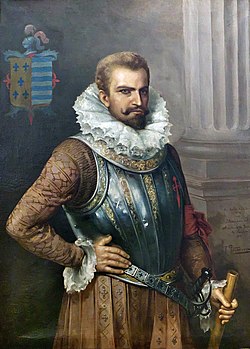
Pedro de Alvarado returned in 1525 and succeeded in bringing the district under the control of the Audiencia of Mexico, incorporating the territory into the Spanish Empire and beginning centuries of colonial rule.
1525 - 1541
% complete
Pedro de Alvarado served as the first governor of the conquered territory, a position he held until his death in 1541. His rule established the framework of Spanish colonial administration in the region.
Image source: Pedro de Alvarado
1538 - 1543
% complete
The area was briefly placed under the authority of a short-lived Real Audiencia of Panama from 1538 to 1543, after which most of Central America was transferred to a new Real Audiencia of Guatemala.
1579
% complete
In 1579, the province of San Salvador became an alcaldía mayor (great mayor's office), formalizing its administrative status within the colonial structure of New Spain.
Image source: History of El Salvador
1580
% complete
Beginning in the late sixteenth century, the cultivation of indigo became a major part of the Salvadoran economy, spreading particularly in the center, east, and along the coast, along with other cash crops such as sugar.
1786
% complete
In 1786, San Salvador was elevated to an intendancy within the colonial administration. In 1821 it would become a province with a provincial council as Spanish authority crumbled.
Image source: Intendancy of San Salvador
1810
% complete
Napoleon's occupation of Spain led to the outbreak of revolts across Spanish America, setting in motion the independence movements that would eventually reach Central America.
Image source: Spanish American wars of independence
1810 - 1821
% complete
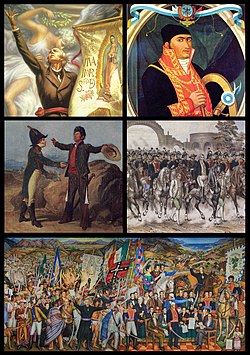
All of the fighting by those seeking independence from Spain occurred in the center of New Spain from 1810 to 1821, in what is currently central Mexico, while Central American territories awaited the outcome.
Image source: Mexican War of Independence
1821 - 1823
% complete
El Salvador achieved independence from Spain as part of the First Mexican Empire in 1821. Parliament proclaimed Agustín de Iturbide emperor of New Spain on May 19, 1822, renaming it the Mexican Empire.
Image source: First Mexican Empire
Sep 15, 1821
% complete
After the viceroy was defeated in Mexico City in 1821, news of independence spread to all territories of New Spain including the former Captaincy General of Guatemala. The public proclamation was made through the 1821 Act of Independence of Central America.
Image source: Act of Independence of Central America
1823
% complete
A revolution in Mexico ousted Emperor Agustín de Iturbide, and a new Mexican congress voted to allow the Central American intendancies to decide their own fate, opening the path to regional federation.
Image source: Agustín de Iturbide
1824
% complete
San Salvador and Sonsonate were united into the State of Salvador, joining the Federal Republic of Central America two years after seceding from Mexico with the other Central American states.
Image source: Federal Republic of Central America
1832
% complete
Anastasio Aquino led an indigenous revolt against criollos and mestizos in Santiago Nonualco, a small town in the province of La Paz, protesting the exploitation of indigenous communities in the new republic.
Feb 18, 1841
% complete
The Federal Republic of Central America dissolved in February 1841, and El Salvador gained recognition as an independent republic on February 18, 1841, becoming a fully sovereign state.
1855 - 1886
% complete
The constitution was amended repeatedly in favor of the oligarchs in 1855, 1864, 1871, 1872, 1880, 1883, and 1886, though several elements remained constant, such as seats reserved for landowners.
1895 - 1898
% complete
El Salvador formed a short-lived union with Honduras and Nicaragua called the Greater Republic of Central America, which lasted only three years before dissolving in 1898, returning each country to sovereignty.
Image source: Greater Republic of Central America
1880
% complete
In the late 19th century, natural indigo—long El Salvador's dominant export—was replaced by synthetic chemical dyes, devastating the traditional economy and accelerating the shift toward coffee cultivation.
Image source: Indigo dye
1890
% complete
The coffee industry gave birth to an oligarchy in the late 19th century that controlled most of the land and wealth of El Salvador thereafter. By the early 20th century, coffee accounted for 90 percent of export earnings.
Image source: Coffee production in El Salvador
1931
% complete
General Maximiliano Hernández Martínez seized power in 1931, beginning an era of military rule. Historians describe the coup as a watershed event in Salvadoran history, marking decades of authoritarian governance.
Image source: Maximiliano Hernández Martínez
Jan 1932
% complete
The 1932 Salvadoran peasant uprising was headed by Farabundo Martí, Chief Feliciano Ama, and Chief Francisco "Chico" Sanchez. The regime responded with La Matanza, a January 1932 massacre that killed up to 40,000 peasants—a landmark in the country's history.
Image source: La Matanza
1944
% complete
Between 1931 and 1944, Hernández Martínez brutally suppressed rural resistance. He was deposed in 1944, though military-backed authoritarian rule continued in various forms for decades afterward.
1972
% complete
In the 1972 presidential election, opponents of military rule united under José Napoleón Duarte, leader of the Christian Democratic Party, challenging the entrenched military-dominated political system.
Image source: José Napoleón Duarte
1979
% complete
In 1979, the reformist Revolutionary Government Junta took power amid growing civil conflict. The period was marked by chronic political instability characterized by coups, revolts, and successive authoritarian rulers.
Image source: Revolutionary Government Junta of El Salvador
Dec 1981
% complete
The initially poorly trained Armed Forces of El Salvador engaged in repression and indiscriminate killings during the civil war, the most notorious being the El Mozote massacre in December 1981, one of the worst atrocities of the conflict.
Image source: El Mozote massacre
1992 - 1999
% complete
By 1993—nine months ahead of schedule—the military cut personnel from a wartime high of 63,000 to the required level of 32,000. By 1999, ESAF strength stood at less than 15,000 uniformed and non-uniformed personnel.
Image source: Armed Forces of El Salvador
Jan 16, 1992
% complete
The Chapultepec Peace Accords marked the end of El Salvador's civil war through a negotiated settlement that established a multiparty constitutional republic. The FMLN transformed into one of the country's major political parties.
Image source: Chapultepec Peace Accords
1993
% complete
A purge of military officers accused of human rights abuses and corruption was completed in 1993 in compliance with the Ad Hoc Commission's recommendations, fulfilling a key provision of the peace accords.
1994
% complete
The FMLN participated in the 1994 presidential election as a legal political party for the first time since transforming from a guerrilla coalition into an electoral force following the peace accords.
Jan 1997
% complete
More than 35,000 eligible beneficiaries among former guerrillas and soldiers received land under the peace accord–mandated land transfer program, which concluded in January 1997.
Image source: Salvadoran Civil War
1997
% complete
The FMLN emerged strengthened from the legislative and municipal elections of 1997, where they won the mayoralty of San Salvador, consolidating its role as a major opposition party.
Image source: Farabundo Martí National Liberation Front
Mar 7, 1999
% complete
ARENA again won the presidency in the election of March 7, 1999, with its candidate Francisco Flores Pérez, continuing right-wing dominance of post-war Salvadoran politics.
Image source: Francisco Flores Pérez
Mar 21, 2004
% complete
In the presidential elections of March 21, 2004, ARENA was victorious with candidate Antonio Saca, securing the party's third consecutive term in office.
2009
% complete
In the 2009 presidential elections, FMLN candidate Mauricio Funes, a former journalist, won the presidency. He took office on June 1, 2009, together with vice president Salvador Sánchez Cerén, ending two decades of ARENA rule.
2014
% complete
Former President Mauricio Funes fled to Nicaragua in 2014 after being charged with illicit enrichment and money laundering. A court ruled in 2017 that he and one of his sons had illegally enriched themselves, and he remained in Nicaragua as of 2019.
Image source: Mauricio Funes
2014
% complete
In 2014, Salvador Sánchez Cerén took office as president after winning the election as the candidate of the left-wing FMLN, becoming the first former guerrilla commander to lead the country.
Image source: Salvador Sánchez Cerén
2018
% complete
Former President Antonio Saca was sentenced to 10 years in prison after pleading guilty to diverting more than US$300 million in state funds to his own businesses and third parties.
Image source: Antonio Saca
Feb 2019
% complete
Nayib Bukele, a Millennial not aligned with either of the major parties that had dominated the country since the Civil War, was elected president of El Salvador in February 2019, taking office in June 2019.
Image source: Nayib Bukele
2020
% complete
According to a 2020 report by the International Crisis Group, the homicide rate in El Salvador declined by as much as 60 percent since Bukele became president in June 2019.
Image source: Crime in El Salvador
2021
% complete
Under Bukele's direction, El Salvador adopted Bitcoin as its legal tender in 2021, becoming the first country in the world to do so. In January 2022, the IMF urged El Salvador to reverse the decision.
Image source: Bitcoin in El Salvador
Feb 2021
% complete
El Salvador's legislative elections in February 2021 were an important breakthrough for President Bukele, whose Nuevas Ideas party won a supermajority in the Legislative Assembly.
Image source: 2021 Salvadoran legislative election
Sep 2021
% complete
In September 2021, El Salvador's Supreme Court decided to allow Bukele to run for a second term in 2024, despite the constitution prohibiting the president from serving two consecutive terms.
2022
% complete
In 2022, the Salvadoran government initiated a massive fight against criminal gangs and gang-related violence, leading to mass arrests and a dramatic transformation of public security.
Image source: Salvadoran gang crackdown
Jan 2024
% complete
In January 2024, it was announced that the homicide rate dropped nearly 70% year over year, with 495 homicides in 2022 compared to just 154 in 2023. In 2024, homicides reached a record low.
Feb 4, 2024
% complete
On February 4, 2024, President Nayib Bukele won re-election with 84% of the vote in the presidential election, and he was sworn in for his second five-year term on June 1, 2024.
Feb 2025
% complete
As of February 2025, El Salvador had the highest prisoner rate worldwide, with over 1,600 prisoners per 100,000 of the national population, a consequence of the sweeping anti-gang policies.
Image source: List of countries by incarceration rate
Mar 2025
% complete
In March 2025, the United States transferred more than 200 immigrants, alleged members of a Venezuelan gang, to be imprisoned in El Salvador, highlighting the country's new role in international security cooperation.
Image source: March 2025 American deportations of Venezuelans
Or browse the full history timeline directory, with more than 2,000 topics.
This History of El Salvador timeline was generated with the help of AI, using information found on the internet.
We work hard to keep these timelines accurate, but mistakes do get through. If you spot one, email us at [email protected] and we'll fix it for future visitors.
Generate yours with AI or build it from scratch, for free.
Export your timeline, add your own events, edit or remove AI-generated events, and much more
No credit card required.
Cancel anytime.
Cancel anytime.
You can create an unlimited number of timelines with up to 10 events on each one, customize how they look, export them to PDF, PNG, PowerPoint, CSV, and Excel, and share them with a link. Paid plans raise the event limit and add features like spreadsheet imports and collaborators.
Yes. You can cancel your subscription from your account page at any time, and you will not be charged again. Your subscription stays active for the rest of the period you already paid for.
Yes. We will email you a reminder before the annual renewal, and we will also email you a receipt.
Yes. You can email us within 15 days of any payment, and we will issue you a full refund.
Check out our pricing docs or send us an email anytime: [email protected].