-
Use Cases
-
Resources
-
Pricing
The history of Italy spans thousands of years, beginning with ancient civilizations such as the Etruscans and Romans, continuing through the Middle Ages with powerful city-states like Venice and Florence, flourishing during the Renaissance, achieving national unification in 1861 under figures like Garibaldi and Cavour, enduring Fascism and World War II, and emerging as a modern democratic republic and founding member of the European Union. More Less
Apr 21, 753 BC
% complete
According to Roman legend, the city of Rome was founded on the Palatine Hill by Romulus, who became its first king. Archaeological evidence suggests settlements on the site date back even earlier. This event marks the traditional beginning of Roman history and the eventual rise of one of history's greatest civilizations.
Image source: Founding of Rome
509 BC
% complete
The Romans overthrew their last king, Tarquin the Proud, and established a republic governed by elected magistrates, including consuls, and representative assemblies. The Republic's constitution and institutions would shape Roman society for nearly five centuries and influence later democratic governments.
Image source: Roman Republic
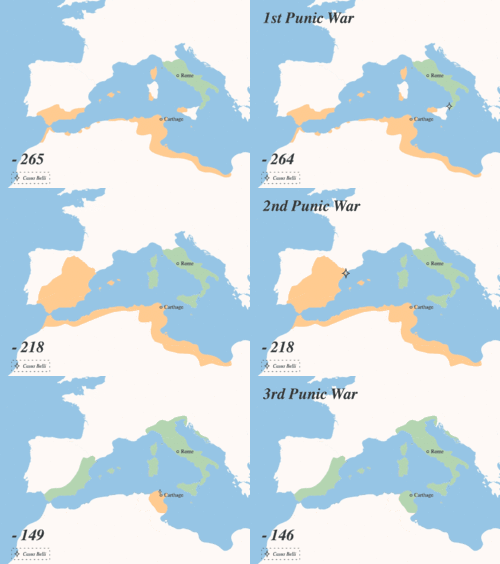
264 BC - 146 BC
% complete
The three Punic Wars between Rome and Carthage were fought for control of the western Mediterranean. Rome emerged victorious after legendary struggles against Hannibal, destroying Carthage in 146 BC and establishing itself as the dominant Mediterranean power.
Image source: Punic Wars
Mar 15, 44 BC
% complete
Julius Caesar was stabbed to death by a group of senators led by Brutus and Cassius on the Ides of March. His assassination ended his dictatorship but triggered a series of civil wars that ultimately destroyed the Republic and paved the way for imperial rule.
Image source: Assassination of Julius Caesar
27 BC
% complete
Octavian defeated Mark Antony at Actium and became Augustus, the first Roman emperor. His reign inaugurated the Pax Romana, a long period of relative peace and stability during which Roman art, architecture, and law flourished across the empire.
Image source: Augustus
79 AD
% complete
The catastrophic eruption of Mount Vesuvius buried the cities of Pompeii and Herculaneum under ash and pumice. The preserved ruins later provided an unparalleled window into daily life in the Roman Empire.
Image source: Eruption of Mount Vesuvius in 79 AD
313 AD
% complete
Emperors Constantine I and Licinius issued the Edict of Milan, legalizing Christianity throughout the Roman Empire. This pivotal decree transformed Christianity from a persecuted faith into a dominant force in European civilization.
Image source: Edict of Milan
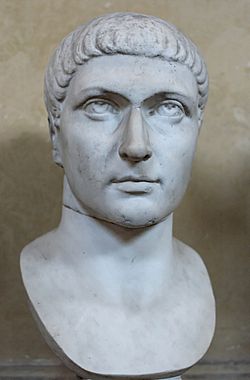
Sep 4, 476
% complete
Odoacer deposed the last Western Roman emperor, Romulus Augustulus, marking the conventional end of the Western Roman Empire. Italy subsequently came under barbarian rule, beginning centuries of political fragmentation.
Image source: Fall of the Western Roman Empire
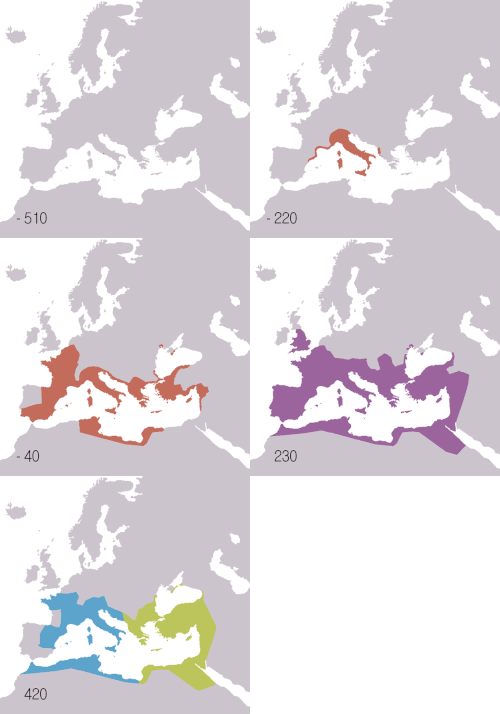
535 - 554
% complete
Emperor Justinian I launched the Gothic War to reclaim Italy from the Ostrogoths. The devastating conflict restored Byzantine rule but left Italy ravaged, weakening it before the Lombard invasion.
Image source: Gothic War (535–554)
568
% complete
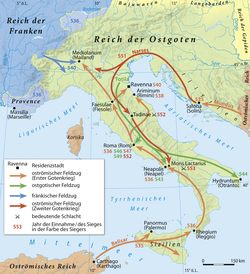
The Lombards, a Germanic people, invaded Italy and established a kingdom with its capital at Pavia. Their rule lasted over two centuries and contributed to the lasting regional divisions within the Italian peninsula.
Image source: Kingdom of the Lombards
Dec 25, 800
% complete
Pope Leo III crowned Charlemagne as Emperor of the Romans in St. Peter's Basilica, reviving the imperial title in the West and forging a lasting connection between Italian papacy and northern European power.
Image source: The Coronation of Charlemagne
1016 - 1130
% complete
Norman adventurers gradually conquered southern Italy and Sicily, culminating in Roger II's establishment of the Kingdom of Sicily in 1130, one of Europe's most cosmopolitan and prosperous states.
Image source: Norman conquest of southern Italy
1096 - 1204
% complete
Venice, Genoa, Pisa, and Amalfi flourished as independent trading powers during the Crusades, dominating Mediterranean commerce and amassing wealth that would fuel Italy's later cultural flowering.
Image source: Maritime republics
Nov 22, 1220
% complete
Frederick II, based in Sicily, was crowned Holy Roman Emperor and pursued ambitious policies in Italy, clashing repeatedly with the papacy and the northern communes during the Guelph-Ghibelline conflicts.
Image source: Frederick II, Holy Roman Emperor
Mar 30, 1282
% complete
The people of Palermo rose up against French Angevin rule, massacring French inhabitants. The revolt led to Sicily passing to the Aragonese crown and reshaped Mediterranean politics for decades.
Image source: Sicilian Vespers
1347 - 1351
% complete
The bubonic plague arrived in Sicily in 1347 and swept through the peninsula, killing perhaps half the population. The demographic catastrophe transformed Italian economy and society in profound ways.
Image source: Black Death in Italy
1320
% complete
Dante Alighieri completed his epic poem the Divine Comedy, written in Tuscan vernacular rather than Latin. Its immense influence helped establish Italian as a literary language and heralded the Renaissance.
Image source: Divine Comedy
1400 - 1500
% complete
Florence became the cradle of the Renaissance, with figures like Brunelleschi, Donatello, Botticelli, and Leonardo da Vinci revolutionizing art, architecture, and humanist thought, transforming European culture.
Image source: Italian Renaissance
May 29, 1453
% complete
The Ottoman capture of Constantinople disrupted eastern trade routes and brought Greek scholars fleeing to Italy with classical manuscripts, accelerating Renaissance humanism while eventually diminishing Italian commercial dominance.
Image source: Fall of Constantinople
1494 - 1559
% complete
France and Spain fought a series of wars for control of Italy, drawing in virtually every Italian state. Spain emerged dominant, controlling much of the peninsula and ending the independence of many Italian states.
Image source: Italian Wars
1508 - 1512
% complete
Michelangelo Buonarroti painted the Sistine Chapel ceiling for Pope Julius II, creating one of the most celebrated artistic achievements in history, including the iconic Creation of Adam fresco.
Image source: Sistine Chapel ceiling
1796 - 1814
% complete
Napoleon Bonaparte's campaigns swept away old regimes across Italy, creating satellite republics and kingdoms. Though French rule was exploitative, it spread revolutionary ideals and administrative reforms that inspired Italian nationalism.
Image source: Italian campaigns of the French Revolutionary Wars
1815
% complete
After Napoleon's defeat, the Congress of Vienna restored pre-Napoleonic rulers and placed much of northern Italy under Austrian control. The restoration fueled resentment and gave impetus to the Risorgimento movement.
Image source: Congress of Vienna
Jan 1848 - 1849
% complete
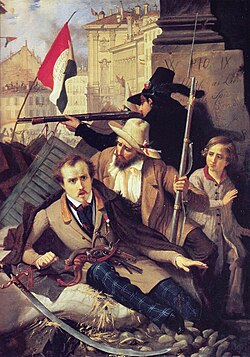
Widespread uprisings against Austrian and local absolutist rule broke out across Italy, including the short-lived Roman Republic led by Mazzini and Garibaldi. Despite failure, the revolutions energized the unification movement.
Image source: Revolutions of 1848 in the Italian states
1852 - 1861
% complete
Count Camillo di Cavour, prime minister of Piedmont-Sardinia, modernized the state and skillfully maneuvered diplomatically, securing French support to expel Austria from northern Italy and laying groundwork for national unification.
Image source: Camillo Benso, Count of Cavour
May 11, 1860
% complete
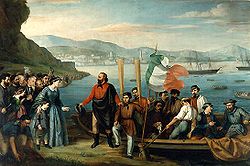
Giuseppe Garibaldi landed in Sicily with roughly a thousand volunteers and conquered the Kingdom of the Two Sicilies. His spectacular campaign enabled the annexation of southern Italy to the emerging unified kingdom.
Image source: Expedition of the Thousand
Mar 17, 1861
% complete
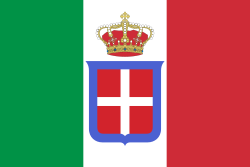
The first Italian parliament proclaimed Victor Emmanuel II King of Italy in Turin, formally uniting most of the peninsula. Venetia was added in 1866 and Rome in 1870, completing unification.
Image source: Kingdom of Italy
1610 - 1642
% complete
Galileo Galilei, working in Padua and Florence, made groundbreaking astronomical discoveries and championed the scientific method. His trial by the Inquisition in 1633 made him a symbol of the conflict between science and authority.
Image source: Galileo Galilei
May 23, 1915 - Nov 4, 1918
% complete
Despite being allied with Germany and Austria-Hungary, Italy joined the Entente, fighting brutal campaigns along the Isonzo and Piave rivers. Victory brought territorial gains but at enormous human cost and social strain.
Image source: Italian front (World War I)
Oct 28, 1922
% complete
Benito Mussolini and his Fascist Party seized power when thousands of Blackshirts marched on Rome and King Victor Emmanuel III appointed Mussolini prime minister. Fascism soon dismantled democracy and established a totalitarian state.
Image source: March on Rome
Feb 11, 1929
% complete
Mussolini's government signed the Lateran Treaty with the Holy See, resolving the 'Roman Question' by recognizing Vatican City as a sovereign state and establishing Catholicism as Italy's state religion.
Image source: Lateran Treaty
Oct 3, 1935 - May 1936
% complete
Fascist Italy invaded Ethiopia, using chemical weapons and overwhelming force to conquer the African nation. The war drew international condemnation, isolated Italy diplomatically, and pushed Mussolini closer to Nazi Germany.
Image source: Second Italo-Ethiopian War
Jul 10, 1943 - Aug 17, 1943
% complete
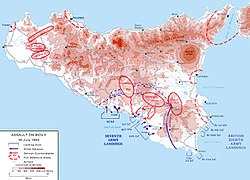
Operation Husky saw Allied forces land in Sicily, capturing the island within weeks. The invasion triggered the fall of Mussolini's regime and began the Allied campaign up the Italian peninsula.
Image source: Allied invasion of Sicily
Sep 3, 1943
% complete
Italy signed an armistice with the Allies, prompting German occupation of northern and central Italy and the rescue of Mussolini, who established the puppet Italian Social Republic. Italy descended into civil war alongside the Allied advance.
Image source: Armistice of Cassibile
Jun 2, 1946
% complete
In a nationwide referendum, Italians voted to abolish the monarchy and establish a republic. Victor Emmanuel III abdicated, and the new Italian Republic was proclaimed, with women voting nationally for the first time.
Image source: 1946 Italian institutional referendum
Mar 25, 1957
% complete
Italy signed the Treaty of Rome as a founding member of the European Economic Community, anchoring the country in European integration and supporting its postwar economic recovery and democratization.
Image source: Treaty of Rome
1958 - 1963
% complete
Italy experienced rapid industrial growth, transforming from a largely agrarian society into a major industrial power. Mass migration from south to north reshaped the country and created enduring regional disparities.
Image source: Italian economic miracle
1969 - 1989
% complete
A period of intense political violence marked by terrorism from both far-left and far-right groups, including the Piazza Fontana bombing and the kidnapping of Aldo Moro by the Red Brigades in 1978, destabilized Italian democracy.
Image source: Years of Lead (Italy)
Feb 17, 1992 - 1994
% complete
Judges in Milan uncovered massive political corruption, triggering investigations that toppled the postwar party system. The scandal, known as Tangentopoli, led to the collapse of the First Republic and political realignment.
Image source: Mani pulite
Jan 1, 1999
% complete
Italy qualified as a founding member of the eurozone, adopting the euro as its currency in 1999, with euro banknotes and coins entering circulation in 2002, deepening its integration into the European Union.
Image source: Euro
Or browse the full history timeline directory, with more than 2,000 topics.
This History of Italy timeline was generated with the help of AI, using information found on the internet.
We work hard to keep these timelines accurate, but mistakes do get through. If you spot one, email us at [email protected] and we'll fix it for future visitors.
Generate yours with AI or build it from scratch, for free.
Export your timeline, add your own events, edit or remove AI-generated events, and much more
No credit card required.
Cancel anytime.
Cancel anytime.
You can create an unlimited number of timelines with up to 10 events on each one, customize how they look, export them to PDF, PNG, PowerPoint, CSV, and Excel, and share them with a link. Paid plans raise the event limit and add features like spreadsheet imports and collaborators.
Yes. You can cancel your subscription from your account page at any time, and you will not be charged again. Your subscription stays active for the rest of the period you already paid for.
Yes. We will email you a reminder before the annual renewal, and we will also email you a receipt.
Yes. You can email us within 15 days of any payment, and we will issue you a full refund.
Check out our pricing docs or send us an email anytime: [email protected].