-
Use Cases
-
Resources
-
Pricing
The history of Jordan spans thousands of years, encompassing ancient kingdoms such as Ammon, Moab, and Edom, the Nabataean civilization centered at Petra, Roman and Byzantine rule, and later Islamic caliphates. After centuries under Ottoman control, the region became the Emirate of Transjordan in 1921 under British mandate, led by Emir Abdullah I. Jordan gained full independence in 1946 and became the Hashemite Kingdom of Jordan, navigating regional conflicts, including the 1948 Arab-Israeli War and the 1967 Six-Day War, while developing into a stable modern monarchy under King Hussein and later King Abdullah II. More Less
1000 BC
% complete
The Ammonites established a kingdom centered on Rabbath Ammon (modern Amman), becoming one of several Iron Age states in the southern Levant alongside Moab and Edom.
800 BC
% complete
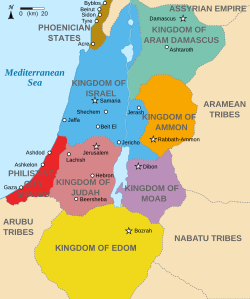
The Edomite kingdom prospered in the rugged terrain south of the Dead Sea, controlling trade routes between Arabia and the Mediterranean and profiting from copper production.
Image source: Edom
312 BC
% complete
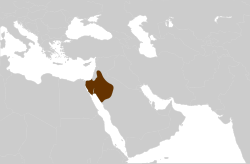
The Nabataeans carved a wealthy trading empire from the rose-red cliffs of Petra, dominating caravan routes for incense, spices, and silk across the Arabian desert.
Image source: Nabataean Kingdom
63 BC
% complete
Cities such as Gerasa (Jerash), Gadara (Umm Qais), and Philadelphia (Amman) joined the Decapolis league, becoming centers of Greco-Roman culture with theaters, temples, and colonnaded streets.
Image source: Decapolis
106 AD
% complete
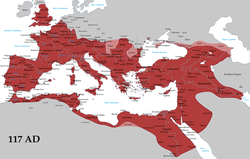
Emperor Trajan annexed the Nabataean Kingdom, creating the Roman province of Arabia Petraea. Petra declined as trade routes shifted, while cities like Jerash flourished under Roman rule.
Image source: Roman Empire
330 AD - 636 AD
% complete
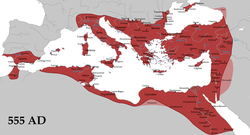
After Christianity became the Roman state religion, churches and monasteries spread across Jordan, including the mosaic-rich Church of Saint George in Madaba with its famous map of the Holy Land.
Image source: Byzantine Empire
Aug 15, 636 AD - Aug 20, 636 AD
% complete
A decisive victory by Arab Muslim forces over the Byzantine army near the Yarmouk River ended Byzantine rule in the region and brought Jordan under Islamic control.
Image source: Battle of the Yarmuk
661 AD - 750 AD
% complete
The Umayyad caliphs constructed palatial complexes such as Qasr Amra and Qasr Hiran al-Sharqi in Jordan's eastern desert, adorned with remarkable frescoes and mosaics.
Image source: Desert castles
1250 AD - 1516 AD
% complete
Under Mamluk rule, castles like Ajloun and Karak were expanded to protect pilgrimage routes and defend against Crusader incursions from the west.
Image source: Mamluk Sultanate
1516
% complete
Following the Ottoman conquest of the Mamluk Sultanate, Transjordan became part of the Ottoman Empire, administered loosely for centuries as a frontier region.
Image source: Ottoman Syria
1900 - 1908
% complete
Sultan Abdul Hamid II ordered the railway from Damascus toward Medina, passing through Transjordan to facilitate pilgrimages to Mecca and project Ottoman authority into the region.
Image source: Hejaz railway
Jun 1916 - Oct 1918
% complete
Sharif Hussein of Mecca launched an uprising against Ottoman rule, supported by Britain and famously aided by T.E. Lawrence, paving the way for Arab self-rule ambitions in the Levant.
Image source: Arab Revolt
Sep 1918
% complete
British and Arab forces took Amman during the final offensive of World War I in the Middle East, ending four centuries of Ottoman control over Transjordan.
Image source: Capture of Damascus (1918)
Apr 1920
% complete
The Allied powers assigned the Palestine Mandate, which initially included Transjordan east of the Jordan River, to British administration under League of Nations auspices.
Image source: San Remo conference
Oct 22, 1920
% complete
The Arab Legion was established as a small police force under British command, later growing under John Bagot Glubb ('Glubb Pasha') into one of the most effective armies in the Middle East.
Image source: Arab Legion
Nov 1920
% complete
Emir Abdullah, son of Sharif Hussein, arrived in Ma'an with a small force intending to advance on Damascus; instead he stayed and became the founder of the Emirate of Transjordan.
Image source: Abdullah I of Jordan
Apr 11, 1921
% complete
Britain recognized Abdullah as Emir of Transjordan, creating a semi-autonomous polity east of the Jordan River under British supervision, separate from Palestine proper.
Image source: Emirate of Transjordan
May 25, 1946
% complete
Transjordan achieved full independence from Britain, and Abdullah was proclaimed King, transforming the emirate into the Hashemite Kingdom of Transjordan.
Image source: History of Jordan
Jul 20, 1951
% complete
King Abdullah was shot by a Palestinian gunman at the Al-Aqsa Mosque in Jerusalem, reportedly due to anger over his alleged negotiations with Israel. His son Talal briefly succeeded him.
Image source: Assassination of Abdullah I of Jordan
Aug 11, 1952
% complete
After his father Talal abdicated due to illness, seventeen-year-old Hussein bin Talal ascended the throne, beginning a reign that would last nearly half a century.
Image source: Hussein of Jordan
Jan 26, 1958
% complete
Jordan formally adopted its current name, reflecting the expansion of the kingdom after 1949 to include territory west of the Jordan River captured in the 1948 war.
Image source: Jordan
Sep 16, 1970 - Jul 1971
% complete
Clashes erupted between King Hussein's government and armed Palestinian organizations based in Jordan, resulting in thousands of deaths and the expulsion of the PLO leadership to Lebanon.
Sep 22, 1970
% complete
Syrian armored forces entered northern Jordan in support of Palestinian fighters but withdrew after Jordanian air strikes and international pressure, including American and Israeli warnings.
Image source: Black September
Jul 31, 1988
% complete
In response to the First Intifada and Palestinian aspirations for statehood, King Hussein severed administrative and legal ties with the West Bank, ceding claims to the PLO.
Image source: Jordanian annexation of the West Bank
Nov 8, 1989
% complete
King Hussein restored parliamentary democracy amid economic crisis, holding multiparty elections that produced a strong Islamist bloc and launched a period of political liberalization.
Image source: 1989 Jordanian general election
Oct 26, 1994
% complete
King Hussein and Israeli Prime Minister Yitzhak Rabin signed a comprehensive peace treaty at Wadi Araba, normalizing relations, settling border disputes, and establishing water-sharing arrangements.
Image source: Israel–Jordan peace treaty
Feb 7, 1999
% complete
King Hussein died after a long battle with cancer, and his son Abdullah II succeeded him, continuing Jordan's pro-Western orientation and economic reform agenda.
Image source: Abdullah II of Jordan
Jul 7, 2007
% complete
Petra was named one of the New Seven Wonders of the World in a global poll, boosting tourism and cementing the ancient city's status as Jordan's most iconic landmark.
Image source: New 7 Wonders of the World
Jan 2011 - 2012
% complete
Inspired by regional uprisings, Jordanians demonstrated for political reform. King Abdullah II responded by dismissing governments, amending the constitution, and initiating gradual reforms.
Image source: 2011–2012 Jordanian protests
2011
% complete
Hundreds of thousands of Syrians fled to Jordan, with the Zaatari camp becoming one of the world's largest refugee settlements, placing significant strain on Jordanian resources.
Image source: Zaatari refugee camp
Feb 3, 2015
% complete
ISIS released a video showing the burning alive of captured Jordanian pilot Muath al-Kasasbeh, prompting Jordan to intensify airstrikes against the group and rally national unity.
Image source: Muath al-Kasasbeh
Or browse the full history timeline directory, with more than 2,000 topics.
This History of Jordan timeline was generated with the help of AI, using information found on the internet.
We work hard to keep these timelines accurate, but mistakes do get through. If you spot one, email us at [email protected] and we'll fix it for future visitors.
Generate yours with AI or build it from scratch, for free.
Export your timeline, add your own events, edit or remove AI-generated events, and much more
No credit card required.
Cancel anytime.
Cancel anytime.
You can create an unlimited number of timelines with up to 10 events on each one, customize how they look, export them to PDF, PNG, PowerPoint, CSV, and Excel, and share them with a link. Paid plans raise the event limit and add features like spreadsheet imports and collaborators.
Yes. You can cancel your subscription from your account page at any time, and you will not be charged again. Your subscription stays active for the rest of the period you already paid for.
Yes. We will email you a reminder before the annual renewal, and we will also email you a receipt.
Yes. You can email us within 15 days of any payment, and we will issue you a full refund.
Check out our pricing docs or send us an email anytime: [email protected].