-
Use Cases
-
Resources
-
Pricing
Major League Baseball (MLB) is the oldest major professional sports league in North America. Its history spans from early amateur clubs in the mid-1800s through the formation of the National League in 1876 and the American League in 1901, the integration of baseball with Jackie Robinson in 1947, decades of westward expansion, labor disputes, the steroid era, and today's game featuring instant replay, rule changes, and global talent. More Less
Mar 15, 1869
% complete
The Cincinnati Red Stockings became the first openly all-professional baseball team in 1869, going undefeated in their inaugural season. Their success demonstrated the viability of professional baseball and inspired the formation of other professional clubs across the country.
Image source: Cincinnati Red Stockings
Feb 2, 1876
% complete
The National League of Professional Base Ball Clubs was founded in 1876 with eight teams, establishing the first enduring major league. It introduced standardized rules, schedules, and contracts, bringing order to the previously chaotic world of professional baseball.
Jan 28, 1901
% complete
Ban Johnson's Western League rebranded itself as the American League in 1901, declaring major league status and placing teams in cities already served by the National League. This launched a fierce rivalry between the two leagues that would shape baseball for decades.
Image source: American League
Oct 13, 1903
% complete
The Boston Americans defeated the Pittsburgh Pirates five games to three in the first modern World Series in 1903, establishing an annual championship between the National and American Leagues that became baseball's defining tradition.
Image source: 1903 World Series
Jan 1, 1907
% complete
Ty Cobb won the first of his record twelve batting titles in 1907, beginning a dominant era for the Detroit Tigers star whose aggressive style and remarkable hitting made him one of baseball's first superstars.
Image source: Ty Cobb
Oct 2, 1908
% complete
Cleveland Naps pitcher Addie Joss threw a perfect game against the Chicago White Sox on October 2, 1908, one of the earliest and most celebrated feats of pitching perfection in major league history.
Image source: Addie Joss
Sep 28, 1920
% complete
Eight Chicago White Sox players were accused of intentionally losing the 1919 World Series in exchange for money from gamblers. The scandal severely damaged baseball's reputation and led to lifetime bans for the implicated players.
Image source: Black Sox Scandal
Nov 12, 1920
% complete
Federal judge Kenesaw Mountain Landis was appointed as baseball's first commissioner in 1920 with sweeping powers to restore public trust after the Black Sox Scandal. He ruled the sport with an iron fist until his death in 1944.
Image source: Kenesaw Mountain Landis
Sep 30, 1927
% complete
Babe Ruth hit 60 home runs in 1927 for the legendary 'Murderers' Row' Yankees, a record that stood for 34 years and cemented his status as baseball's greatest drawing card during the live-ball era.
Image source: 1927 New York Yankees season
Jul 6, 1933
% complete
The first All-Star Game was held at Comiskey Park in Chicago in 1933 as part of the World's Fair, featuring the best players from both leagues. Babe Ruth hit the first All-Star home run, and the midsummer classic became an annual tradition.
Image source: Major League Baseball All-Star Game
Jul 4, 1939
% complete
Forced to retire by amyotrophic lateral sclerosis, Lou Gehrig told a Yankee Stadium crowd he considered himself 'the luckiest man on the face of the earth.' His dignified farewell became one of sports' most iconic moments.
Image source: Lou Gehrig
May 15, 1941 - Jul 17, 1941
% complete
Yankees center fielder Joe DiMaggio hit safely in 56 consecutive games in 1941, a record widely regarded as unbreakable and one of the most celebrated achievements in American sports history.
Image source: Joe DiMaggio's 56-game hitting streak
Sep 28, 1941
% complete
Ted Williams finished the 1941 season with a .406 batting average, the last player to hit over .400 in a season, accomplishing the feat despite declining to sit out games to protect his average.
Image source: Ted Williams
Apr 15, 1947
% complete
Jackie Robinson debuted for the Brooklyn Dodgers on April 15, 1947, becoming the first African American player in modern Major League Baseball. His courage and excellence ended decades of segregation and transformed the sport and American society.
Image source: Jackie Robinson
Oct 3, 1951
% complete
Giants outfielder Bobby Thomson hit a dramatic three-run home run off Ralph Branca in the bottom of the ninth inning of a playoff game, lifting New York over Brooklyn for the pennant in one of baseball's most famous moments.
Image source: Shot Heard 'Round the World (baseball)
Oct 1, 1961
% complete
Roger Maris hit 61 home runs in 1961, surpassing Babe Ruth's single-season record of 60 in a longer 162-game schedule, sparking debates about record legitimacy that foreshadowed later controversies.
Image source: 1961 New York Yankees season
Sep 9, 1965
% complete
Dodgers ace Sandy Koufax pitched a perfect game against the Chicago Cubs in 1965, his fourth no-hitter, capping a stretch of dominance that included four Cy Young Awards before his early retirement at age 30.
Image source: Sandy Koufax's perfect game
Apr 18, 1958
% complete
The Brooklyn Dodgers and New York Giants relocated to Los Angeles and San Francisco in 1958, marking baseball's westward expansion and signaling the end of New York's dominance as the sport's center.
Image source: 1958 Los Angeles Dodgers season
Oct 18, 1960
% complete
Major League Baseball announced its first expansion in 1961-62, adding the Los Angeles Angels and Washington Senators in the American League and the Houston Colt .45s and New York Mets in the National League, beginning the growth to today's 30 teams.
Image source: 1960 Major League Baseball expansion draft
Oct 4, 1969
% complete
After expanding to four divisions in 1969, MLB introduced the League Championship Series, creating a multi-round postseason. The 'Miracle Mets' won the World Series that year, stunning the heavily favored Baltimore Orioles.
Jan 11, 1973
% complete
The American League adopted the designated hitter rule in 1973, allowing a player to bat in place of the pitcher. The rule created a lasting structural difference between the leagues until it was fully unified in 2022.
Image source: Designated hitter
Apr 8, 1974
% complete
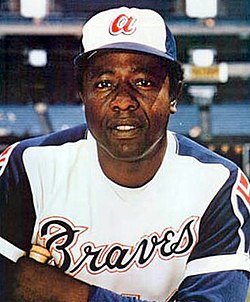
Hank Aaron hit his 715th career home run at Atlanta-Fulton County Stadium, surpassing Babe Ruth's record. Aaron endured racist threats during his pursuit but finished with 755 home runs, a mark that stood for over three decades.
Image source: Hank Aaron
Dec 23, 1975
% complete
An arbitrator's decision in the Andy Messersmith and Dave McNally cases effectively ended the reserve clause, ushering in free agency. The ruling revolutionized player salaries and team economics across professional sports.
Sep 11, 1985
% complete
Pete Rose collected his 4,192nd career hit in 1985, surpassing Ty Cobb's long-standing record. Rose finished with 4,256 hits, though his lifetime ban for gambling has kept him out of the Hall of Fame.
Image source: Pete Rose
Oct 15, 1988
% complete
A hobbled Kirk Gibson pinch-hit a walk-off two-run homer off Dennis Eckersley in Game 1 of the 1988 World Series, propelling the Dodgers to an upset title over the Oakland Athletics in one of baseball's most replayed moments.
Image source: 1988 World Series
Sep 6, 1995
% complete
Cal Ripken Jr. played in his 2,131st consecutive game, breaking Lou Gehrig's record thought untouchable. His durability and dedication earned him admiration as baseball returned from the devastating 1994 strike.
Image source: Cal Ripken Jr.
Jun 12, 1997
% complete
MLB introduced interleague play in 1997, allowing American and National League teams to face each other during the regular season for the first time, ending a tradition dating back more than a century.
Image source: Interleague play
Sep 8, 1998
% complete
Mark McGwire hit 70 home runs and Sammy Sosa hit 66 in 1998, both shattering Roger Maris's record and revitalizing fan interest after the strike, though the era was later shadowed by performance-enhancing drug revelations.
Image source: 1998 Major League Baseball home run record chase
Nov 4, 2001
% complete
Just four years into their existence, the Arizona Diamondbacks defeated the Yankees in seven games, winning on Luis Gonzalez's bloop single against Mariano Rivera in a Series that helped heal the nation after September 11.
Image source: 2001 World Series
Oct 27, 2004
% complete
The Red Sox swept the Cardinals to win their first World Series since 1918, coming back from a 3-0 deficit against the Yankees in the ALCS along the way and ending the fabled 'Curse of the Bambino.'
Image source: 2004 World Series
Aug 7, 2007
% complete
Barry Bonds hit his 756th career home run in 2007, breaking Hank Aaron's record amid widespread controversy over alleged steroid use. Bonds retired with 762 home runs, the most in major league history.
Image source: Barry Bonds
Aug 28, 2008
% complete
MLB began using instant replay to review boundary calls in 2008, and expanded the system dramatically in 2014 with a challenge system managed from a central replay headquarters in New York.
Image source: Instant replay in Major League Baseball
Nov 2, 2016
% complete
The Cubs defeated Cleveland in a thrilling seven-game Series, winning 8-7 in ten innings in Game 7 to capture their first championship since 1908 and end the longest title drought in North American pro sports.
Image source: 2016 World Series
Nov 12, 2019
% complete
An investigation confirmed the Astros used cameras and banging schemes to steal signs en route to their 2017 title. Commissioner Rob Manfred suspended executives and stripped draft picks, prompting league-wide outrage.
Image source: Houston Astros sign stealing scandal
Mar 10, 2022
% complete
Following a 99-day lockout, the new collective bargaining agreement instituted the designated hitter in both leagues, ending nearly five decades of the AL-only rule and standardizing gameplay across MLB.
Or browse the full history timeline directory, with more than 2,000 topics.
This History of MLB timeline was generated with the help of AI, using information found on the internet.
We work hard to keep these timelines accurate, but mistakes do get through. If you spot one, email us at [email protected] and we'll fix it for future visitors.
Generate yours with AI or build it from scratch, for free.
Export your timeline, add your own events, edit or remove AI-generated events, and much more
No credit card required.
Cancel anytime.
Cancel anytime.
You can create an unlimited number of timelines with up to 10 events on each one, customize how they look, export them to PDF, PNG, PowerPoint, CSV, and Excel, and share them with a link. Paid plans raise the event limit and add features like spreadsheet imports and collaborators.
Yes. You can cancel your subscription from your account page at any time, and you will not be charged again. Your subscription stays active for the rest of the period you already paid for.
Yes. We will email you a reminder before the annual renewal, and we will also email you a receipt.
Yes. You can email us within 15 days of any payment, and we will issue you a full refund.
Check out our pricing docs or send us an email anytime: [email protected].