-
Use Cases
-
Resources
-
Pricing
Montreal, located on an island in the St. Lawrence River, has a history spanning thousands of years. Originally inhabited by Indigenous peoples, it was founded as Ville-Marie by French colonists in 1642 and became a major center of the fur trade. After passing to British control in 1760, Montreal grew into a leading industrial, financial, and cultural hub of Canada, shaped by waves of immigration and the dynamic relationship between French- and English-speaking communities. More Less
Oct 2, 1535
% complete
French explorer Jacques Cartier became the first European to visit the Iroquoian village of Hochelaga on Mount Royal's slopes, describing a fortified town surrounded by cornfields and naming the mountain 'Mont Royal'.
Image source: Hochelaga (village)
1611
% complete
Samuel de Champlain built a temporary trading post on the island in 1611, establishing an early French presence that would serve as a base for the growing fur trade with Indigenous nations.
Image source: History of Montreal
May 17, 1642
% complete
Paul Chomedey de Maisonneuve, Jeanne Mance, and a group of French settlers founded Ville-Marie as a missionary colony dedicated to the Virgin Mary. The settlement would grow into the city of Montreal.
Image source: Ville-Marie, Quebec
1645
% complete
Nurse Jeanne Mance established North America's first hospital in Ville-Marie, providing critical care to settlers and Indigenous people alike and cementing healthcare as central to the young colony.
Image source: Jeanne Mance
1658
% complete
Marguerite Bourgeoys founded the Congrégation de Notre-Dame and opened Montreal's first school, pioneering education for girls and children of settlers and Indigenous communities.
Image source: Marguerite Bourgeoys
1700
% complete
By the early 18th century, Montreal had become the hub of the French fur trade, with coureurs des bois and merchants like the La Vérendrye family expanding trade networks deep into the continental interior.
Image source: North American fur trade
Aug 4, 1701
% complete
New France's governor Louis-Hector de Callière negotiated a landmark peace treaty with representatives of 39 Indigenous nations, ending decades of warfare between the Iroquois Confederacy and the French and their allies.
Image source: Great Peace of Montreal
Sep 8, 1760
% complete
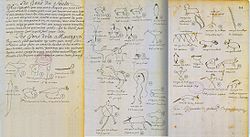
After General Jeffery Amherst's three-pronged advance down the St. Lawrence, French governor Vaudreuil surrendered Montreal to British forces, effectively ending New France's rule in North America.
Image source: Articles of Capitulation of Montreal
Feb 10, 1763
% complete
The Treaty of Paris formally transferred Canada, including Montreal, from France to Great Britain, beginning a new era under British rule while guaranteeing certain religious rights to French Catholics.
Image source: Treaty of Paris (1763)
Nov 13, 1775 - Jun 1776
% complete
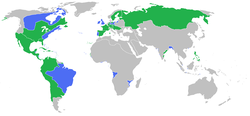
During the American invasion of Quebec, Continental Army troops led by Richard Montgomery captured Montreal without resistance. The occupation lasted until British reinforcements forced the Americans to retreat in mid-1776.
Image source: Invasion of Quebec (1775)
1784 - 1821
% complete
The North West Company, based in Montreal, rivaled the Hudson's Bay Company and pushed fur trading into western and northern Canada, making Montreal the commercial capital of the continent's interior trade.
Image source: North West Company
Nov 23, 1837 - Nov 10, 1838
% complete
Patriote rebels, seeking responsible government, rose against British rule in Lower Canada. The uprisings were suppressed by British troops, leading to executions, exile, and eventually political reform.
Image source: Lower Canada Rebellion
Aug 24, 1824
% complete
The Lachine Canal allowed ships to bypass the treacherous Lachine Rapids, transforming Montreal into a major port and attracting industries along its banks, fueling the city's industrial revolution.
Image source: Lachine Canal
1833
% complete
Montreal was formally incorporated as a city, gaining its own municipal government and electing Jacques Viger as its first mayor, marking its transition from colonial outpost to self-governing urban center.
Jul 21, 1836
% complete
The Champlain and St. Lawrence Railroad, backed by Montreal businessmen, opened as the first public railway in British North America, heralding the transportation boom that would define the city.
Image source: Champlain and St. Lawrence Railroad
1844 - 1849
% complete
Montreal was chosen as the capital of the united Province of Canada. Its status ended when rioters burned the Parliament building in 1849 after the passage of the Rebellion Losses Bill.
Image source: Province of Canada
1854
% complete
Construction began on the Victoria Bridge over the St. Lawrence River, completed in 1859 as the world's longest bridge at the time. It cemented Montreal's role as the railway capital of Canada.
Image source: Victoria Bridge (Montreal)
1876
% complete
Frederick Law Olmsted, famed designer of New York's Central Park, created Mount Royal Park, giving Montrealers a grand green space on their iconic mountain.
Image source: Mount Royal
1881
% complete
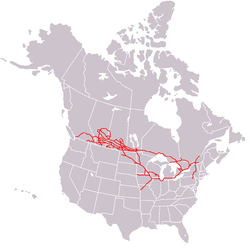
Canadian Pacific Railway made Montreal its corporate home, driving the completion of the transcontinental railway in 1885 and reinforcing the city's dominance as Canada's financial and business metropolis.
Image source: Canadian Pacific Railway
1883 - 1910
% complete
Over several decades Montreal annexed surrounding villages such as Hochelaga, Saint-Henri, and Maisonneuve, dramatically expanding the city's territory and population during its industrial boom.
1901
% complete
At the turn of the century, Montreal was Canada's largest and wealthiest city, known as the 'Paris of North America', with booming industry, finance, and a vibrant cultural life.
Dec 4, 1909
% complete
The founding of the Montreal Canadiens gave the city one of the most storied franchises in professional sports, becoming a symbol of Francophone pride and winning more Stanley Cups than any other NHL team.
Image source: Montreal Canadiens
May 14, 1930
% complete
The Jacques Cartier Bridge linked Montreal to the South Shore, easing traffic across the St. Lawrence River and spurring suburban growth on both banks.
Image source: Jacques Cartier Bridge
Sep 10, 1939 - 1945
% complete
During World War II, Montreal was a key industrial and port city supporting the Allied war effort, while the issue of overseas conscription sharply divided English and French Canadian opinion in the city.
Image source: Conscription Crisis of 1944
1954
% complete
Jean Drapeau's election began an ambitious era of civic projects, including the Metro system, Expo 67, and the Olympic Games, reshaping Montreal's modern identity.
Image source: Jean Drapeau
Oct 14, 1966
% complete
The Montreal Metro inaugurated its first line just before Expo 67, featuring rubber-tired trains and distinctive station architecture, becoming an essential part of daily life in the city.
Image source: Montreal Metro
Apr 27, 1967 - Oct 29, 1967
% complete
Expo 67 drew over 50 million visitors and was hailed as one of the most successful world's fairs ever held. It transformed Île Sainte-Hélène and Île Notre-Dame and marked a high point of Canadian confidence and international prestige.
Image source: Expo 67
Oct 5, 1970 - Dec 28, 1970
% complete
The Front de libération du Québec kidnapped British diplomat James Cross and murdered Quebec minister Pierre Laporte. Prime Minister Trudeau invoked the War Measures Act, deploying troops in Montreal and suspending civil liberties.
Image source: October Crisis
Jul 17, 1976 - Aug 1, 1976
% complete
Montreal hosted the Summer Olympics, highlighted by Nadia Comăneci's perfect scores and the opening of the striking Olympic Stadium. Cost overruns left the city debt for decades but gave it enduring landmarks.
Image source: 1976 Summer Olympics
Aug 26, 1977
% complete
Quebec's Bill 101 made French the official language of government and commerce, profoundly affecting Montreal's schools, signage, and business culture amid ongoing debates about language rights.
Dec 6, 1989
% complete
A gunman murdered 14 women at École Polytechnique in Montreal, targeting them because of their gender. The tragedy spurred national mourning and lasting changes in gun control and awareness of violence against women.
Image source: École Polytechnique massacre
Jun 23, 1990
% complete
The failure of the Meech Lake constitutional accord, negotiated partly in Montreal, deepened Quebec nationalism and set the stage for the 1995 referendum on sovereignty.
Image source: Meech Lake Accord
Oct 30, 1995
% complete
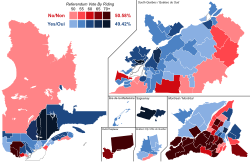
Quebec voters rejected sovereignty by the narrowest of margins, 50.58% to 49.42%. Montreal, with its large federalist-leaning electorate, was pivotal in keeping Canada united.
Image source: 1995 Quebec referendum
Jan 1, 2002
% complete
The provincial government amalgamated 27 suburban municipalities into an expanded City of Montreal, though several demerged after referenda in 2004, creating today's agglomeration structure.
2011
% complete
Major restorations and the popular AURA light show revitalized the Old Port and Old Montreal districts, helping tourism flourish and reaffirming the city's rich architectural heritage.
Image source: Notre-Dame Basilica (Montreal)
Nov 5, 2017
% complete
Valérie Plante defeated incumbent Denis Coderre to become Montreal's first woman mayor, campaigning on transit expansion, cycling infrastructure, and neighborhood-friendly policies.
Image source: Valérie Plante
Jul 31, 2023
% complete
The Réseau express métropolitain, a fully automated light metro network connecting downtown Montreal with suburbs and the airport, opened its first segment, the largest public transit expansion in the region in decades.
Image source: Réseau express métropolitain
Or browse the full history timeline directory, with more than 2,000 topics.
This History of Montreal timeline was generated with the help of AI, using information found on the internet.
We work hard to keep these timelines accurate, but mistakes do get through. If you spot one, email us at [email protected] and we'll fix it for future visitors.
Generate yours with AI or build it from scratch, for free.
Export your timeline, add your own events, edit or remove AI-generated events, and much more
No credit card required.
Cancel anytime.
Cancel anytime.
You can create an unlimited number of timelines with up to 10 events on each one, customize how they look, export them to PDF, PNG, PowerPoint, CSV, and Excel, and share them with a link. Paid plans raise the event limit and add features like spreadsheet imports and collaborators.
Yes. You can cancel your subscription from your account page at any time, and you will not be charged again. Your subscription stays active for the rest of the period you already paid for.
Yes. We will email you a reminder before the annual renewal, and we will also email you a receipt.
Yes. You can email us within 15 days of any payment, and we will issue you a full refund.
Check out our pricing docs or send us an email anytime: [email protected].