-
Use Cases
-
Resources
-
Pricing
The history of Pittsburgh traces the transformation of a strategic frontier outpost at the confluence of the Allegheny, Monongahela, and Ohio rivers into America's 'Steel City' during the Industrial Revolution. Home to figures like Andrew Carnegie and Henry Clay Frick, Pittsburgh became the world's leading producer of steel before facing economic decline in the late 20th century. The city reinvented itself in the 21st century as a center for technology, robotics, medicine, and higher education, exemplified by institutions like Carnegie Mellon University and the University of Pittsburgh Medical Center. More Less
Apr 1754
% complete
The French built Fort Duquesne at the confluence of the Allegheny and Monongahela rivers, claiming the strategic point where they form the Ohio River. Its presence sparked conflict with British colonists and helped ignite the French and Indian War.
Image source: Fort Duquesne
May 28, 1754
% complete
Near present-day Uniontown, a young George Washington led Virginia militia in an ambush of a French scouting party, killing Ensign Joseph Coulon de Villiers de Jumonville. This skirmish was the opening engagement of the French and Indian War.
Image source: Battle of Jumonville Glen
Nov 1758
% complete
After General John Forbes's expedition forced the French to abandon and burn Fort Duquesne, the British built Fort Pitt at the site, naming it after Prime Minister William Pitt. The fort became the nucleus around which Pittsburgh grew.
Image source: Fort Pitt (Pennsylvania)
Jun 1763 - Aug 1763
% complete
During Pontiac's Rebellion, Native American forces besieged Fort Pitt for roughly two months. The siege ended when British relief forces under Colonel Henry Bouquet defeated Native warriors at the Battle of Bushy Run.
1764
% complete
Surveyor John Campbell laid out the plan for the town of Pittsburgh outside Fort Pitt, establishing the street grid that still forms the core of Downtown Pittsburgh today.
Image source: History of Pittsburgh
1791 - 1794
% complete
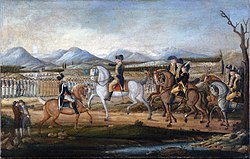
Western Pennsylvania farmers, including many around Pittsburgh, protested a federal excise tax on whiskey, which was vital to their frontier economy. President Washington led a large militia force to suppress the uprising, asserting federal authority in the new nation.
Image source: Whiskey Rebellion
1794
% complete
Pittsburgh was officially incorporated as a borough, formalizing its governance as it grew from a frontier outpost into a commercial center serving settlers moving west along the Ohio River.
1816
% complete
Pittsburgh was incorporated as a city in 1816, reflecting its rapid growth into a manufacturing and transportation hub with iron works, glass factories, and river trade.
Apr 10, 1845
% complete
A catastrophic fire swept through Pittsburgh, destroying over a thousand buildings and leaving thousands homeless. The city rebuilt quickly, using the opportunity to modernize its infrastructure during a period of industrial expansion.
Image source: Great Fire of Pittsburgh
1852
% complete
The arrival of the Pennsylvania Railroad linked Pittsburgh to Philadelphia and eastern markets, fueling explosive growth in coal, iron, and steel and cementing the city's role as a gateway to the West.
Image source: Pennsylvania Railroad
Sep 17, 1862
% complete
An explosion at the Allegheny Arsenal in Lawrenceville killed 78 workers, mostly young women and girls producing munitions for the Union Army. It remains one of the deadliest civilian disasters of the Civil War era.
Image source: Allegheny Arsenal
1870
% complete
Andrew Carnegie entered steelmaking with the Edgar Thomson Works in nearby Braddock, adopting the Bessemer process. His Carnegie Steel Company would make Pittsburgh the center of American steel production.
Image source: Andrew Carnegie
Jul 6, 1892 - Nov 1892
% complete
A violent labor dispute at Carnegie Steel's Homestead Works saw armed Pinkerton agents clash with striking workers, leaving several dead. The defeat of the union set back organized labor in the steel industry for decades.
Image source: Homestead strike
Mar 2, 1901
% complete
J.P. Morgan bought out Andrew Carnegie and consolidated his holdings into U.S. Steel, the world's first billion-dollar corporation, headquartered in Pittsburgh and dominating the global steel industry.
Image source: U.S. Steel
Nov 2, 1920
% complete
Westinghouse station KDKA in East Pittsburgh aired the Harding-Cox election results in what is generally regarded as the world's first commercially licensed radio broadcast, launching the broadcasting age.
Image source: KDKA (AM)
1930
% complete
By the 1930 census, Pittsburgh's population reached its historic peak, driven by waves of immigrants from Eastern and Southern Europe who came to work in the mills, making the city one of America's largest.
1941 - 1945
% complete
Pittsburgh mills ran around the clock to produce steel for ships, tanks, and weapons during World War II. The city produced a huge share of Allied steel, earning it the nickname the 'Arsenal of Victory.'
Image source: Pittsburgh
1945 - 1959
% complete
Led by Mayor David L. Lawrence and financier Richard King Mellon, Renaissance I cleared smoke and pollution, built Point State Park and Gateway Center, and launched flood control projects that transformed the city's image.
Image source: Renaissance (Renaissance album)
Aug 1950
% complete
The city reclaimed the tip of Downtown, demolishing industrial structures to create Point State Park with its iconic fountain marking the confluence of the three rivers, symbolizing the city's renewal.
Image source: Point State Park
Apr 12, 1955
% complete
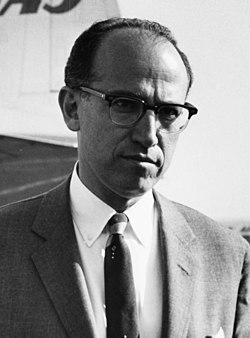
Dr. Jonas Salk, working at the University of Pittsburgh, developed the first safe and effective polio vaccine, announced on April 12, 1955, launching mass vaccination campaigns worldwide.
Image source: Jonas Salk
Sep 1961
% complete
The Civic Arena, home of the NHL's Penguins, opened in the Lower Hill District as the world's first major indoor stadium with a retractable roof, though its construction displaced thousands of residents.
Image source: Civic Arena (Pittsburgh)
Jul 16, 1970
% complete
The multi-purpose Three Rivers Stadium became home to the Pirates and Steelers. The 1970s brought glory as the Steelers won four Super Bowls and the Pirates won the 1971 World Series behind Roberto Clemente and the 1979 Series.
Image source: Three Rivers Stadium
1980 - 1987
% complete
Foreign competition, outdated facilities, and economic shifts caused massive mill closures throughout the Monongahela Valley, eliminating tens of thousands of jobs and triggering decades of population loss and economic restructuring.
Image source: Steel mill
1977
% complete
Mayor Richard Caliguiri's Renaissance II initiative added office towers like One Mellon Bank Center and PPG Place, cultural amenities, and downtown development to diversify the economy beyond heavy industry.
Oct 1, 1992
% complete
The airport's innovative X-shaped terminal, designed with local architects, opened and briefly served as a hub for US Airways, becoming a symbol of the region's post-industrial ambitions.
Image source: Pittsburgh International Airport
2001
% complete
New stadiums for the Steelers and Pirates replaced Three Rivers Stadium, anchoring waterfront redevelopment on the North Shore and reconnecting residents with the rivers that once defined industry rather than recreation.
Image source: Acrisure Stadium
2010
% complete
Google opened an office in Pittsburgh's redeveloped Bakery Square, drawn by talent from Carnegie Mellon University, signaling the city's emergence as a technology and robotics hub.
Image source: Bakery Square
Sep 2016
% complete
Uber launched the first public self-driving taxi pilot in Pittsburgh, partnering with Carnegie Mellon researchers and making the city a proving ground for autonomous vehicle technology.
Image source: Death of Elaine Herzberg
Oct 27, 2018
% complete
A gunman attacked worshippers at the Tree of Life synagogue in Squirrel Hill, killing 11 people in the deadliest antisemitic attack in U.S. history, prompting nationwide mourning and solidarity vigils.
Image source: Pittsburgh synagogue shooting
Oct 11, 2021
% complete
As plans advanced to transform the Tree of Life building into a memorial and education center honoring the victims, the site was enclosed while the city continued to reckon with the tragedy's legacy.
Image source: Tree of Life – Or L'Simcha Congregation
Or browse the full history timeline directory, with more than 2,000 topics.
This History of Pittsburgh timeline was generated with the help of AI, using information found on the internet.
We work hard to keep these timelines accurate, but mistakes do get through. If you spot one, email us at [email protected] and we'll fix it for future visitors.
Generate yours with AI or build it from scratch, for free.
Export your timeline, add your own events, edit or remove AI-generated events, and much more
No credit card required.
Cancel anytime.
Cancel anytime.
You can create an unlimited number of timelines with up to 10 events on each one, customize how they look, export them to PDF, PNG, PowerPoint, CSV, and Excel, and share them with a link. Paid plans raise the event limit and add features like spreadsheet imports and collaborators.
Yes. You can cancel your subscription from your account page at any time, and you will not be charged again. Your subscription stays active for the rest of the period you already paid for.
Yes. We will email you a reminder before the annual renewal, and we will also email you a receipt.
Yes. You can email us within 15 days of any payment, and we will issue you a full refund.
Check out our pricing docs or send us an email anytime: [email protected].