
-
Use Cases
-
Resources
-
Pricing
Tetris is a tile-matching puzzle video game created in 1984 by Soviet software engineer Alexey Pajitnov. Originally developed on an Electronika 60 computer in Moscow, Tetris became one of the first video games exported from the USSR to the West. Its addictive falling-block gameplay led to worldwide success across countless platforms, including the iconic Game Boy version and record-breaking mobile releases. More Less
Jun 6, 1984
% complete
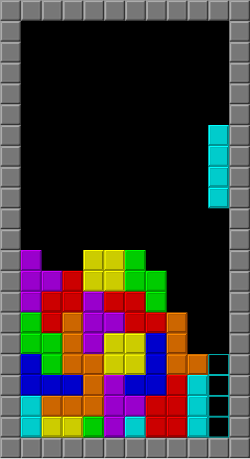
Soviet engineer Alexey Pajitnov created Tetris while working at the Dorodnitsyn Computing Centre of the Soviet Academy of Sciences in Moscow. Inspired by the pentomino puzzle game and his love of tetrominoes, he built a simple falling-block game on an Electronika 60 computer, unaware he had created one of the most popular video games of all time.
Image source: Tetris
1985
% complete
Teenage programmer Vadim Gerasimov ported Tetris from the Electronika 60 to the IBM PC, adding color graphics and making it playable on more widely available hardware. The game quickly spread through Moscow's computing community and beyond, as copies circulated freely across the Eastern Bloc.
1986
% complete
A copy of Tetris reached Hungary's Institute of Computer Science in Budapest, where programmers enhanced it for Apple II and Commodore 64. This exposure brought Tetris to the attention of Western companies, setting the stage for international licensing negotiations.
Nov 1989
% complete
Alexey Pajitnov co-developed Welltris, a three-dimensional successor to Tetris where pieces fall down the inside walls of a glass well. Published by Spectrum HoloByte, the sequel achieved moderate success but never matched the original's universal appeal.
Image source: Welltris
1991
% complete
Following the collapse of the Soviet Union, Alexey Pajitnov emigrated to the United States and co-founded AnimaTek International, a game development company. Freed from Soviet restrictions, he could finally pursue game design as a career, though Tetris royalties remained with ELORG.
Image source: Alexey Pajitnov
Jun 1986
% complete
Hungarian-born British entrepreneur Robert Stein saw Tetris during a visit to Budapest and recognized its commercial potential. He sent a telex to Pajitnov offering licensing terms before securing rights from the Soviet state, beginning a decade-long tangle of competing claims.
Jan 1988
% complete
Dutch-American game developer Henk Rogers played Tetris at the Consumer Electronics Show in Las Vegas and became obsessed with bringing it to Japan. He secured Japanese rights through Bullet-Proof Software, laying groundwork that would later prove pivotal in resolving global licensing disputes.
Image source: Henk Rogers
1988
% complete
As Tetris spread globally, Pajitnov signed an agreement granting the Soviet state, through ELORG, the rights to his creation for ten years. He received no royalties from the game's massive commercial success during this period, though it earned him recognition within the USSR.
Feb 1989 - Mar 1989
% complete
Henk Rogers traveled to Moscow and persuaded ELORG, the Soviet foreign trade organization that held Tetris rights, to license handheld and console versions directly to Nintendo, bypassing earlier agreements. The deal granted Nintendo worldwide rights to Tetris for consoles and handhelds.
May 1989
% complete
Atari's Tengen division had released an unlicensed two-player NES version of Tetris based on rights obtained through Mirrorsoft. After Nintendo secured superior rights from ELORG, courts sided with Nintendo, forcing Tengen to recall roughly 268,000 cartridges from stores.
Image source: Tetris (Atari Games)
1996
% complete
When ELORG's rights reverted to Pajitnov after the ten-year Soviet-era agreement expired, he partnered with Henk Rogers to form The Tetris Company. For the first time, the creator of Tetris would profit directly from his invention, and the company began enforcing trademark standards worldwide.
Image source: The Tetris Company
Nov 1988
% complete
After negotiating with Stein, Mirrorsoft released Tetris in the United Kingdom and Spectrum HoloByte published it in the United States for home computers. The Spectrum HoloByte version, marketed with Russian-themed packaging, became a hit and introduced Western audiences to the puzzle phenomenon.
Image source: Tetris (Spectrum HoloByte)
1989
% complete
At the height of Tetris mania, magazines and critics hailed it as one of the greatest games ever made. Its blend of simplicity, escalating tension, and the famous 'Korobeiniki' theme music made it instantly recognizable around the world.
May 1989
% complete
Nintendo released its own NES version of Tetris, featuring two-player competition, after winning the legal battle over console rights. Tengen's rival unlicensed NES version was pulled from shelves following litigation, cementing Nintendo's control of the console market for the game.
Image source: Tetris (NES video game)
Jun 14, 1989
% complete
The Game Boy version of Tetris launched alongside Nintendo's handheld in Japan and later in North America and Europe. Packaged with the system, it sold over 35 million copies and transformed Tetris into a cultural phenomenon, proving that simple, addictive gameplay was perfect for portable gaming.
Image source: Tetris (Game Boy video game)
1991
% complete
The early 1990s saw numerous Tetris variants across platforms, including Super Tetris for DOS with power-ups, Tetris on the Sega Genesis and Master System, and various licensed and unlicensed clones, reflecting the game's enduring popularity despite murky rights situations in some markets.
Dec 1994
% complete
Nintendo bundled Tetris with its popular puzzle game Dr. Mario on the SNES, giving players two classics in one cartridge. It demonstrated Tetris's continued relevance on newer 16-bit hardware even as gaming moved toward more graphically ambitious titles.
Image source: Tetris & Dr. Mario
Aug 1997
% complete
Developed by H2O Interactive and published by Nintendo, Tetrisphere reimagined block-clearing gameplay on a spherical surface for the Nintendo 64. Though not a traditional Tetris title, it showcased how far the concept could be stretched in three dimensions.
Image source: Tetrisphere
Jan 1999
% complete
Capcom released Magical Tetris Challenge for the Game Boy Color and arcade, featuring Mickey Mouse and Disney characters alongside new 'magical' piece shapes and asymmetric versus modes, demonstrating Tetris's flexibility as a crossover franchise.
Jun 1999
% complete
Published by Hasbro Interactive for PlayStation and Windows, The Next Tetris added multi-colored pieces that split apart according to physics rules, plus online play on Dreamcast, marking one of the first attempts to modernize core Tetris mechanics.
Image source: The Next Tetris
Oct 2001
% complete
THQ's Tetris Worlds for Game Boy Advance, GameCube, PlayStation 2, and PC established the 'Tetris Guideline,' a standardized set of modern rules including the SRS rotation system, hold queue, ghost piece, and infinite spin, which now governs most official Tetris releases.
Image source: Tetris
Mar 2006
% complete
Nintendo's Tetris DS offered six themed modes wrapped in classic Nintendo aesthetics and supported online play via Nintendo Wi-Fi Connection, letting up to four players compete worldwide and revitalizing competitive Tetris for a new generation.
Image source: Tetris DS
Jul 2006
% complete
Electronic Arts secured mobile rights to Tetris and released it on feature phones, eventually bringing it to iOS, Android, BlackBerry, and Windows Phone. EA's mobile Tetris became one of the best-selling mobile games of all time, extending the franchise into the smartphone era.
Oct 2007
% complete
With casual and web gaming booming, official Tetris versions appeared on browsers and download services such as Tetris Zone for Mac and PC, keeping the game visible to audiences who played primarily outside traditional consoles.
Oct 2008
% complete
Hudson Soft's Tetris Party for WiiWare introduced modes like shadow, co-op, and balance board support, using the Wii Balance Board to let players physically lean to steer pieces — a novel body-controlled take on the classic formula.
Image source: Tetris Party
Aug 2010
% complete
Organizers including Robin Mihara and Dr. Hank Chien hosted the first Classic Tetris World Championship at the Downtown Independent theater in Los Angeles, using the original NES Tetris. The annual event sparked a competitive scene and later a streaming boom around NES Tetris records.
Image source: Classic Tetris World Championship
2014
% complete
Competitive player Joseph Achorn (known as Joseph) pushed NES Tetris past previously unbeatable levels using hyper-tapping techniques, reaching the fabled level 30 'kill screen' and inspiring a wave of technique innovation in the classic Tetris speedrunning and competition community.
Feb 6, 2014
% complete
Sega released Puyo Puyo Tetris in Japan for the Nintendo 3DS, Wii U, and PlayStation Vita, blending Sega's Puyo Puyo with Tetris in crossover versus modes. Its 2017 Western launch on PS4, Switch, and PC introduced many Western players to both franchises.
Nov 9, 2018
% complete
Enhance Games, led by Rez creator Tetsuya Mizuguchi, launched Tetris Effect on PlayStation 4 with optional PlayStation VR support, synchronizing visuals, sound, and haptics to player actions. Its acclaimed 'Zone' mechanic let players slow time to escape dangerous boards.
Image source: Tetris effect
Feb 13, 2019
% complete
Nintendo and Arika released Tetris 99 for Nintendo Switch Online, pitting 99 players against each other in a Tetris battle royale. The free-to-play surprise hit won awards and proved the 35-year-old formula could thrive in modern online formats.
Image source: Tetris 99
Mar 31, 2023
% complete
Apple TV+ released Tetris, a biographical comedy-drama starring Taron Egerton as Henk Rogers, dramatizing the Cold War-era struggle to secure the game's global rights and Rogers' friendship with Alexey Pajitnov. The film brought the remarkable behind-the-scenes story of Tetris to mainstream audiences.
Or browse the full history timeline directory, with more than 2,000 topics.
This History of Tetris timeline was generated with the help of AI, using information found on the internet.
We work hard to keep these timelines accurate, but mistakes do get through. If you spot one, email us at [email protected] and we'll fix it for future visitors.
Generate yours with AI or build it from scratch, for free.
Export your timeline, add your own events, edit or remove AI-generated events, and much more
No credit card required.
Cancel anytime.
Cancel anytime.
You can create an unlimited number of timelines with up to 10 events on each one, customize how they look, export them to PDF, PNG, PowerPoint, CSV, and Excel, and share them with a link. Paid plans raise the event limit and add features like spreadsheet imports and collaborators.
Yes. You can cancel your subscription from your account page at any time, and you will not be charged again. Your subscription stays active for the rest of the period you already paid for.
Yes. We will email you a reminder before the annual renewal, and we will also email you a receipt.
Yes. You can email us within 15 days of any payment, and we will issue you a full refund.
Check out our pricing docs or send us an email anytime: [email protected].