
-
Use Cases
-
Resources
-
Pricing
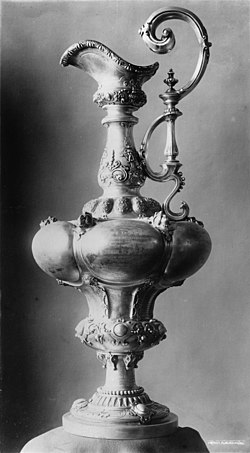
The America's Cup is the oldest international sporting trophy, first awarded in 1851 when the yacht America defeated British competitors around the Isle of Wight. The New York Yacht Club famously defended it for 132 years until Australia II won in 1983, beginning an era of global competition among syndicates from Australia, New Zealand, Switzerland, and beyond. Today the competition features cutting-edge foiling monohulls and multihulls, making it a showcase of sailing innovation and national pride. More Less
Aug 22, 1851
% complete
The Royal Yacht Squadron of England issued a challenge for a regatta around the Isle of Wight, offering the Cup of One Hundred Sovereigns. The New York Yacht Club accepted, sending the schooner America to compete in what would become the first America's Cup race.
Image source: America's Cup
Aug 22, 1851
% complete
The black-hulled schooner America, skippered by Richard Brown, defeated 15 British yachts around the Isle of Wight. The victory gave rise to the famous phrase that there is 'hardly any second place' and launched the longest winning streak in sports history.
Image source: America (yacht)
Oct 24, 1857
% complete
The New York Yacht Club formally accepted the trophy as a perpetual challenge cup under a Deed of Gift. This document set the rules by which foreign yacht clubs could challenge for the Cup, shaping the competition for over 150 years.
Aug 8, 1870
% complete
In the first formal defense of the Cup, the New York Yacht Club's Magic defeated the British challenger Cambria in stormy conditions off Staten Island, beginning a long era of American dominance.
Image source: 1870 America's Cup
Aug 11, 1881
% complete
Throughout the 1870s and 1880s, challengers like Livonia, Atalanta, Genesta, Galatea, Thistle, and Valkyrie were repeatedly beaten by American defenders including Mischief, Volunteer, Puritan, Mayflower, and Vigilant, cementing the NYYC's legendary streak.
Sep 7, 1895
% complete
British challenger Valkyrie III was disqualified after fouling Defender in the second race and withdrew after colliding in the third, ending the match amid bitter disputes between Lord Dunraven and the American defenders.
Aug 20, 1903
% complete
Herreshoff-designed Reliance, a massive 144-foot waterline sloop with enormous sail area, crushed Sir Thomas Lipton's Shamrock III, prompting rule changes to limit the size of future Cup yachts.
Image source: Reliance (yacht)
Sep 15, 1930
% complete
After five unsuccessful challenges between 1899 and 1930, tea magnate Sir Thomas Lipton saw Enterprise defeat his Shamrock V off Newport, Rhode Island, ending his famously gracious quest for the 'auld mug.'
Sep 15, 1934 - Oct 13, 1934
% complete
T.O.M. Sopwith's beautifully built Endeavour won the first two races before Rainbow, skippered by Harold Vanderbilt, rallied to win four straight, one of the most celebrated comebacks in Cup history.
Jul 31, 1937
% complete
The Vanderbilt-skippered Ranger, considered perhaps the fastest J-Class ever built, defeated Endeavour II four races to nil, completing the final all-J-Class America's Cup match.
Image source: Ranger (yacht)
Sep 19, 1958
% complete
After World War II halted the event, the Cup resumed with smaller 12 Metre yachts. Columbia beat Britain's Sceptre four races to none off Newport, beginning the modern 12 Metre period.
Image source: 1958 America's Cup
Sep 12, 1962 - Sep 21, 1964
% complete
Australia's Gretel, skippered by Jock Sturrock, became the first challenger since the 1930s to win a race, but Weatherly held on; two years later Constellation swept Britain's Sovereign, keeping the Cup American.
Image source: 1962 America's Cup
Sep 12, 1967 - Sep 16, 1970
% complete
Olin Stephens' Intrepid, featuring an innovative trim tab rudder, defeated Dame Pattie in 1967 and returned to defend against Australia's Gretel II in 1970, marking the last successful defense by the same yacht.
Image source: Intrepid (yacht)
Sep 10, 1974 - Sep 18, 1977
% complete
Ted Hood's Courageous beat Southern Cross in 1974 and, rebuilt and re-rigged with Ted Turner at the helm, defeated Australia in 1977, earning the nickname 'the grand old lady.'
Sep 13, 1980 - Sep 27, 1980
% complete
Dennis Conner skippered Freedom to a four-race sweep of Alan Bond's Australia, extending the New York Yacht Club's winning streak to 132 years in what would be its final defense of the Cup.
Image source: 1980 America's Cup
Sep 26, 1983
% complete
Alan Bond's Australia II, featuring Ben Lexcen's radical winged keel, came back from 3–1 down to defeat Dennis Conner's Liberty 4–3 off Newport, ending the longest winning streak in sporting history and taking the Cup to Australia.
Jan 31, 1987
% complete
Dennis Conner redeemed his 1983 loss by sweeping Kookaburra III 4–0 off Fremantle, Australia, bringing the America's Cup back to the United States and to the San Diego Yacht Club.
Image source: 1987 America's Cup
May 9, 1988 - Apr 28, 1990
% complete
Mercury Bay Boating Club challenged with the 90-foot trimaran New Zealand, while Conner defended with the catamaran Stars & Stripes. After litigation reached the New York courts, Conner won both races, and the Deed of Gift dispute reshaped the event's rules.
May 9, 1992 - May 16, 1992
% complete
Bill Koch's America³ (Young America) defeated Raul Gardini's Il Moro di Venezia 4–1 off San Diego in the first match with the new International America's Cup Class boats, and the first with an Italian challenger.
May 13, 1995 - May 14, 1995
% complete
Team New Zealand's Black Magic, skippered by Russell Coutts, demolished Young America 5–0 off San Diego, delivering the Auld Mug to the Royal New Zealand Yacht Squadron for the first time.
Image source: 1995 America's Cup
Feb 19, 2000 - Mar 2, 2000
% complete
Defending on home waters on the Hauraki Gulf, Team New Zealand, now led by Peter Blake and skipper Dean Barker aboard NZL60, swept Italy's Luna Rossa 5–0, the first defense outside the United States.
Feb 15, 2003 - Mar 2, 2003
% complete
Ernesto Bertarelli's Swiss syndicate Alinghi, with Coutts and Brad Butterworth defecting from Team New Zealand, beat the defenders 5–0, making landlocked Switzerland the unlikely holder of sailing's most famous prize.
Image source: 2003 America's Cup
Jun 23, 2007 - Jul 3, 2007
% complete
Unable to defend on Lake Geneva, Alinghi raced in Valencia, Spain, narrowly defeating Emirates Team New Zealand 5–2 in one of the closest and most competitive matches in modern history.
Image source: 2007 America's Cup
Feb 8, 2010 - Feb 14, 2010
% complete
Larry Ellison's BMW Oracle Racing, backed by Russell Coutts and James Spithill, sailed the 90-foot trimaran USA-17 with a rigid wingsail to a 2–0 rout of Alinghi 5 off Valencia, returning the Cup to the Golden Gate Yacht Club.
Image source: 2010 America's Cup
Sep 7, 2013 - Sep 25, 2013
% complete
On San Francisco Bay, 72-foot AC72 catamarans flew on hydrofoils for the first time in Cup racing. Trailing 8–1, Oracle Team USA won eight straight races to defeat Emirates Team New Zealand 9–8, completing the greatest comeback in Cup history.
Image source: 2013 America's Cup
Jun 17, 2017 - Jun 26, 2017
% complete
In the Great Sound of Bermuda, Peter Burling and the Kiwis dominated with faster foiling monohull-style AC50s, beating Oracle Team USA 7–1 and taking the Cup back to Auckland.
Image source: 2017 America's Cup
Mar 10, 2021 - Mar 17, 2021
% complete
Racing high-performance AC75 monohulls that fly on foils, Peter Burling's Te Rehutai defeated Luna Rossa Prada Pirelli 7–3 on Waitematā Harbour, keeping the America's Cup in New Zealand.
Or browse the full history timeline directory, with more than 2,000 topics.
This History of the America's Cup timeline was generated with the help of AI, using information found on the internet.
We work hard to keep these timelines accurate, but mistakes do get through. If you spot one, email us at [email protected] and we'll fix it for future visitors.
Generate yours with AI or build it from scratch, for free.
Export your timeline, add your own events, edit or remove AI-generated events, and much more
No credit card required.
Cancel anytime.
Cancel anytime.
You can create an unlimited number of timelines with up to 10 events on each one, customize how they look, export them to PDF, PNG, PowerPoint, CSV, and Excel, and share them with a link. Paid plans raise the event limit and add features like spreadsheet imports and collaborators.
Yes. You can cancel your subscription from your account page at any time, and you will not be charged again. Your subscription stays active for the rest of the period you already paid for.
Yes. We will email you a reminder before the annual renewal, and we will also email you a receipt.
Yes. You can email us within 15 days of any payment, and we will issue you a full refund.
Check out our pricing docs or send us an email anytime: [email protected].