-
Use Cases
-
Resources
-
Pricing
The history of video games traces the evolution of interactive electronic entertainment from the 1950s academic experiments through the golden age of arcades, the rise of home consoles like Atari and Nintendo, the industry crash of 1983, and the growth of 3D graphics, online multiplayer, mobile gaming, and esports into a global entertainment powerhouse. More Less
Oct 18, 1958
% complete
Physicist William Higinbotham created Tennis for Two, a simple tennis simulation displayed on an oscilloscope at Brookhaven National Laboratory. Widely considered one of the earliest video games, it allowed visitors to play against each other using analog controllers, foreshadowing the interactive entertainment industry.
Image source: Tennis for Two
1962
% complete
A group of MIT students led by Steve Russell developed Spacewar!, one of the first digital computer games. Running on the PDP-1 minicomputer, it featured two player-controlled spaceships battling in a gravity well and became widely copied across university computing labs.
Image source: Spacewar!
1966 - 1968
% complete
Ralph Baer and his team at Sanders Associates developed the Brown Box prototype, the first home video game console concept. Licensed to Magnavox, it became the Magnavox Odyssey, released in 1972 as the first commercial home console.
Image source: Magnavox Odyssey

Nov 1971
% complete
Nutting Associates released Computer Space, created by Nolan Bushnell and Ted Dabney, making it the first commercially sold coin-operated video game. Though only moderately successful, it inspired Bushnell to found Atari.
Image source: Computer Space

Jun 27, 1972
% complete
Nolan Bushnell and Ted Dabney founded Atari, which would become the pioneering company of the arcade and home console industries, producing Pong and later the Atari 2600.
Image source: Atari, Inc.
Sep 1972
% complete
The Magnavox Odyssey, based on Ralph Baer's Brown Box design, became the first home video game console. It used removable circuit cards and screen overlays, selling hundreds of thousands of units despite limited marketing.
Nov 29, 1972
% complete
Atari released Pong, an electronic table tennis game that became the first commercially successful arcade video game. Its massive popularity established coin-op video games as a viable business and launched the arcade industry.
Image source: Pong
1975
% complete
Taito's Western Gun was adapted by Midway into Gun Fight, the first arcade game to use a microprocessor instead of discrete logic circuits, paving the way for more complex arcade hardware.
Image source: Gun Fight
Sep 11, 1977
% complete
The Atari Video Computer System (later renamed Atari 2600) introduced swappable ROM cartridges to home gaming, allowing players to build libraries of games. It dominated the market for years and defined the second generation of consoles.
Image source: Atari 2600
Jun 1978
% complete
Taito's Space Invaders, designed by Tomohiro Nishikado, became a global phenomenon and is credited with starting the golden age of arcade games. It caused coin shortages in Japan and brought video games into mainstream culture.
Image source: Space Invaders
1979
% complete
Atari's Asteroids and Namco's Galaxian continued the arcade boom with vector graphics and improved color visuals, cementing space shooters as the dominant genre of the late 1970s.
Image source: Asteroids (video game)
May 22, 1980
% complete
Namco released Pac-Man, designed by Toru Iwatani. Its maze-chase gameplay appealed to broad audiences beyond typical gamers, becoming the highest-grossing arcade game of all time and spawning merchandise, a TV series, and pop music hits.
Image source: Pac-Man
Nov 1980
% complete
Atari's Battlezone used wireframe vector graphics to simulate a first-person tank battlefield, an early milestone in 3D gaming that even attracted interest from the U.S. military for training applications.
Image source: Battlezone (1980 video game)
Jul 9, 1981
% complete
Nintendo's Donkey Kong, designed by Shigeru Miyamoto, introduced Mario (originally Jumpman) and became a massive arcade hit in North America, transforming Nintendo into a major player in the industry.
Image source: Donkey Kong (1981 video game)
1983 - 1985
% complete
Market saturation, poor-quality titles like E.T. the Extra-Terrestrial, and competition from home computers caused revenues to plummet from around $3.2 billion in 1983 to roughly $100 million by 1985, bankrupting many companies and nearly killing the North American console industry.
Image source: Video game crash of 1983
Jun 1983
% complete
Cinematronics released Dragon's Lair, featuring animated film-quality graphics by Don Bluth on laserdisc. Its movie-like presentation dazzled players and briefly suggested a future of cinematic interactive entertainment.
Sep 13, 1985
% complete
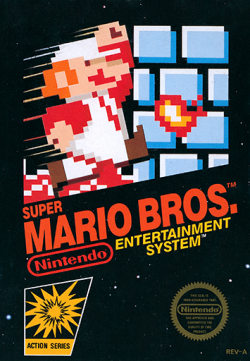
Shigeru Miyamoto's Super Mario Bros. set the template for side-scrolling platform games with tight controls, imaginative level design, and hidden secrets. It became one of the best-selling games ever and made Mario a global icon.
Image source: Super Mario Bros.
Oct 18, 1985
% complete
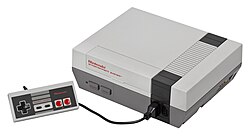
Nintendo launched the NES in North America with strict quality control through its seal of approval and licensing system. Bundled with Super Mario Bros., it single-handedly revived the home console market after the crash.
Image source: Nintendo Entertainment System
Feb 21, 1986
% complete
Nintendo's The Legend of Zelda offered a sprawling open world and battery-backed saving, letting players continue adventures across sessions. It pioneered exploration-focused action-adventure design.
Image source: The Legend of Zelda (video game)
Apr 21, 1989
% complete
Nintendo's Game Boy, bundled with Tetris, proved handheld gaming could be a massive success despite modest monochrome hardware. Its battery life and durability helped it dominate portable gaming for over a decade.
Image source: Game Boy
Aug 14, 1989
% complete
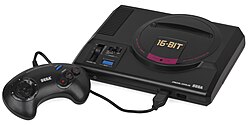
Sega launched the 16-bit Genesis in North America with edgy marketing ('Genesis does what Nintendon't') and Sonic the Hedgehog, sparking fierce competition with Nintendo that drove rapid innovation throughout the early 1990s.
Image source: Sega Genesis
Jun 23, 1991
% complete
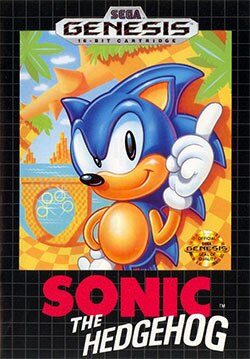
Sega's Sonic the Hedgehog gave the company a mascot to rival Mario, showcasing the Genesis's speed with fast-paced level design. Sonic became a defining symbol of Sega's aggressive 1990s identity.
Image source: Sonic the Hedgehog (1991 video game)
Aug 23, 1991
% complete
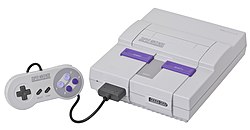
Nintendo's Super Famicom/Super NES delivered enhanced graphics and sound, hosting classics like Super Mario World, The Legend of Zelda: A Link to the Past, and Chrono Trigger during the celebrated 16-bit golden era.
Image source: Super Nintendo Entertainment System
Oct 1992
% complete
Mortal Kombat's graphic digitized violence and fatalities triggered congressional hearings in the U.S., leading to the creation of the Entertainment Software Rating Board (ESRB) in 1994 to rate video game content.
Image source: Mortal Kombat (1992 video game)
Dec 10, 1993
% complete
id Software's Doom refined the FPS genre with fast movement, multiplayer deathmatch, and moddable WAD files. Distributed via shareware, it spread across offices and universities and shaped PC gaming for decades.
Image source: Doom (1993 video game)
Dec 3, 1994
% complete
Sony's PlayStation embraced CD-ROM media and 3D polygonal graphics, attracting older audiences and third-party developers. It outsold rivals and shifted the industry center toward disc-based, cinematic experiences.
Image source: PlayStation (console)
Jun 23, 1996
% complete
The Nintendo 64 debuted with Super Mario 64, whose analog stick and free-roaming 3D camera defined 3D platforming. Four controller ports also made local multiplayer a hallmark of the system.
Image source: Nintendo 64
Jan 31, 1997
% complete
Square's Final Fantasy VII, with pre-rendered cinematics and CD storage, brought Japanese role-playing games to mass Western audiences and became a landmark in narrative-driven gaming.
Image source: Final Fantasy VII
Mar 16, 1999
% complete
Sony Online's EverQuest popularized 3D massively multiplayer online role-playing games in the West, building persistent virtual communities and paving the way for World of Warcraft.
Image source: EverQuest
Feb 4, 2000
% complete
Will Wright's The Sims expanded gaming's audience dramatically by simulating everyday life. It became the best-selling PC game of all time and spawned numerous expansion packs and sequels.
Image source: The Sims (video game)
Nov 23, 2004
% complete
Blizzard's World of Warcraft attracted millions of subscribers worldwide, becoming the most successful subscription MMORPG ever and embedding itself deeply in internet culture.
Image source: World of Warcraft
Nov 19, 2006
% complete
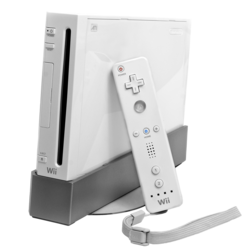
Nintendo's motion-controlled Wii appealed to families and non-gamers alike, selling over 100 million units and proving that accessible controls could broaden the gaming population.
Image source: Wii
Jul 10, 2008
% complete
Apple's App Store enabled low-cost downloadable mobile games like Angry Birds and Candy Crush Saga, turning smartphones into the largest gaming platform by player count worldwide.
Image source: App Store (Apple)
Jun 6, 2011
% complete
Twitch.tv spun off from Justin.tv to become the leading live-streaming platform for gaming, creating new careers for streamers and esports viewership at massive scale.
Image source: Twitch (service)
Nov 18, 2011
% complete
Mojang officially released Minecraft, a block-building sandbox that became the best-selling video game of all time, inspiring creativity, education uses, and a vast modding community.
Image source: Minecraft
2012
% complete
Crowdfunding successes like Double Fine Adventure and breakout indie hits such as Journey and FTL: Faster Than Light marked a flourishing independent scene, with small teams achieving critical and commercial acclaim.
Image source: Indie game
Jul 6, 2016
% complete
Niantic's Pokémon Go used augmented reality and GPS to send millions of players outdoors hunting Pokémon, becoming a global cultural phenomenon and demonstrating location-based gaming's potential.
Image source: Pokémon Go
Sep 26, 2017
% complete
Epic Games' free-to-play Fortnite Battle Royale became a cross-platform juggernaut with hundreds of millions of players, popularizing the battle royale genre and live in-game events like concerts.
Image source: Fortnite Battle Royale
2018
% complete
InnerSloth's social deduction game Among Us exploded in popularity in 2020 during COVID-19 lockdowns, topping charts as friends played together remotely and streamers fueled its viral growth.
Image source: Among Us
Nov 10, 2020
% complete
Sony's PlayStation 5 and Microsoft's Xbox Series X/S launched amid high demand, introducing ultra-fast SSDs, ray-traced lighting, and near-instant loading, setting the technical baseline for the ninth console generation.
Image source: Ninth generation of video game consoles
Or browse the full history timeline directory, with more than 2,000 topics.
This History of Video Games timeline was generated with the help of AI, using information found on the internet.
We work hard to keep these timelines accurate, but mistakes do get through. If you spot one, email us at [email protected] and we'll fix it for future visitors.
Generate yours with AI or build it from scratch, for free.
Export your timeline, add your own events, edit or remove AI-generated events, and much more
No credit card required.
Cancel anytime.
Cancel anytime.
You can create an unlimited number of timelines with up to 10 events on each one, customize how they look, export them to PDF, PNG, PowerPoint, CSV, and Excel, and share them with a link. Paid plans raise the event limit and add features like spreadsheet imports and collaborators.
Yes. You can cancel your subscription from your account page at any time, and you will not be charged again. Your subscription stays active for the rest of the period you already paid for.
Yes. We will email you a reminder before the annual renewal, and we will also email you a receipt.
Yes. You can email us within 15 days of any payment, and we will issue you a full refund.
Check out our pricing docs or send us an email anytime: [email protected].