-
Use Cases
-
Resources
-
Pricing
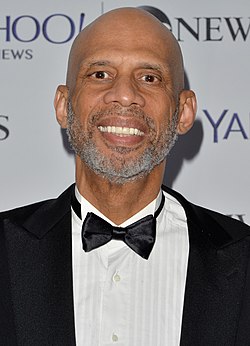
This timeline chronicles the life of Kareem Abdul-Jabbar (born Ferdinand Lewis Alcindor Jr.), one of basketball's greatest players. It covers his record-breaking college career at UCLA under John Wooden, his transformation from Lew Alcindor to Kareem Abdul-Jabbar after converting to Islam, his legendary NBA career with the Milwaukee Bucks and Los Angeles Lakers, the development of his signature skyhook shot, his six NBA championships and six MVP awards, and his post-retirement work as an author, activist, and cultural ambassador. More Less
Apr 16, 1947
% complete
Ferdinand Lewis Alcindor Jr. is born in Harlem, New York City, the only child of Cora and Ferdinand Alcindor Sr., a police officer and jazz musician. He would grow up to become one of the greatest basketball players of all time.
Image source: Kareem Abdul-Jabbar
Sep 1961
% complete
Alcindor enrolls at Power Memorial Academy in Manhattan, where he becomes the dominant force in high school basketball, leading the Panthers to a 71-game winning streak and multiple city championships.
1964 - Mar 1965
% complete
As a towering center, Alcindor leads Power Memorial to an unprecedented run of dominance in New York high school basketball, earning national attention as the most recruited player in America.
Oct 1965
% complete
Alcindor chooses UCLA to play for legendary coach John Wooden. Due to NCAA freshman eligibility rules at the time, he plays for the freshman team, which soundly defeats the varsity squad.
Image source: UCLA Bruins men's basketball
Dec 3, 1966
% complete
In his first varsity game, Alcindor scores 56 points against USC, setting a UCLA single-game scoring record that still stands and announcing his arrival as college basketball's premier player.
Image source: 1966–67 UCLA Bruins men's basketball team
Mar 25, 1967
% complete
UCLA wins the NCAA championship over Dayton, beginning an era of total dominance. Alcindor is named Most Outstanding Player as the Bruins finish the season 30-0.
Apr 1967 - 1976
% complete
The NCAA institutes a rule prohibiting dunking, often called the 'Lew Alcindor rule.' Alcindor responds by perfecting the skyhook shot, an unblockable shot that becomes his signature move.
Image source: Slam Dunk (manga)
Mar 23, 1968 - Mar 21, 1969
% complete
UCLA wins consecutive national championships in 1968 and 1969 with Alcindor anchoring the team. He finishes his college career with three titles, three Final Four Most Outstanding Player awards, and an 88-2 record as a starter.
Image source: 1969 NCAA University Division basketball tournament
1968 - 1971
% complete
Influenced by Malcolm X's autobiography, Alcindor converts to Sunni Islam and eventually adopts the name Kareem Abdul-Jabbar in 1971, publicly announcing the change after winning his first NBA championship.
1999
% complete
Abdul-Jabbar publishes his autobiography 'Giant Steps,' co-written with Peter Knobler, offering reflections on his life, faith, activism, and basketball career.
2000 - 2011
% complete
Abdul-Jabbar works as an assistant coach, including stints with the Seattle SuperSonics, Los Angeles Clippers, and Los Angeles Lakers, helping develop big men like Andrew Bynum.
Jul 1, 2005 - 2011
% complete
The Lakers hire Abdul-Jabbar to mentor their young centers, most notably Andrew Bynum, whom he coaches in the fundamentals of post play and the skyhook technique.
Image source: Los Angeles Lakers
2017
% complete
Continuing a prolific second career as an author and historian, Abdul-Jabbar publishes books exploring Black American history and culture, establishing himself as a prominent public intellectual.
Image source: Black Indians in the United States
May 6, 1969
% complete
The Milwaukee Bucks select Alcindor with the first overall pick in the NBA draft, just one year after entering the league. The Phoenix Suns lose a coin flip for the pick, altering both franchises' destinies.
Image source: 1969 NBA draft
Apr 1970
% complete
Abdul-Jabbar has an immediate impact, averaging 28.8 points and 14.5 rebounds per game and leading the Bucks to a 29-win improvement, easily capturing Rookie of the Year honors.
Image source: NBA Rookie of the Year
Apr 30, 1971
% complete
The Bucks sweep the Baltimore Bullets to win the franchise's first NBA championship. Abdul-Jabbar wins Finals MVP and shortly thereafter announces he has changed his name to Kareem Abdul-Jabbar.
Aug 5, 1975
% complete
After requesting a trade out of Milwaukee, Abdul-Jabbar is dealt to the Los Angeles Lakers for Junior Bridgeman, Dave Meyers, Elmore Smith, and Brian Winters, setting up the defining chapter of his career.
Image source: Kareem Abdul-Jabbar
Jun 26, 1979
% complete
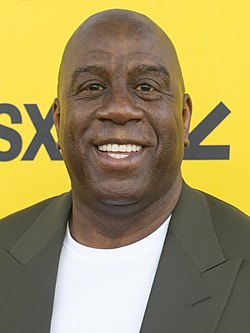
The Lakers acquire Magic Johnson with the first overall pick, pairing him with Abdul-Jabbar. Their partnership forms the nucleus of the 'Showtime' Lakers dynasty of the 1980s.
Image source: Magic Johnson
May 16, 1980
% complete
Los Angeles defeats Philadelphia in six games. Though Abdul-Jabbar sprains his ankle in Game 5 after a heroic 40-point performance, rookie Magic Johnson delivers a legendary Game 6 to clinch the title.
Image source: 1980 NBA Finals
Jun 9, 1985
% complete
After being dominated by Boston's frontcourt early in the series, Abdul-Jabbar responds with a vintage 30-point, 17-rebound performance in Game 6 as the Lakers beat the Celtics at the Boston Garden to claim the title.
Image source: 1985 NBA Finals
Jun 14, 1987 - Jun 21, 1988
% complete
The Showtime Lakers repeat as champions, defeating Boston in 1987 and Detroit in 1988. Abdul-Jabbar provides veteran leadership and clutch play, including key performances in the Finals.
Image source: Showtime Lakers
Nov 23, 1988 - Jun 28, 1989
% complete
Abdul-Jabbar announces before the 1988-89 season that it will be his last. He receives tributes at every arena on the farewell tour and plays his final game in the 1989 playoffs, retiring at age 42.
May 1971
% complete
Abdul-Jabbar earns the first of what will become a record six NBA MVP awards, cementing his status as the league's dominant player while averaging over 31 points per game during the season.
Image source: NBA Most Valuable Player Award
May 1976
% complete
Despite the Lakers missing the playoffs, Abdul-Jabbar leads the league in rebounds and blocks and wins his fourth MVP award, becoming one of the few players to win MVP without a playoff appearance.
Apr 5, 1984
% complete
Playing against the Utah Jazz, Abdul-Jabbar passes Wilt Chamberlain's career scoring record with his signature skyhook, finishing the game at 31,421 career points. The record stood until LeBron James surpassed it in 2023.
Image source: List of National Basketball Association career scoring leaders
Jun 1989
% complete
At retirement, Abdul-Jabbar holds numerous records including all-time scoring, games played, minutes played, field goals made, and blocked shots, along with a record six MVP awards and six championships.
May 15, 1995
% complete
Abdul-Jabbar is enshrined in the Naismith Memorial Basketball Hall of Fame as a player, recognized as one of the greatest centers and players in basketball history.
Image source: Naismith Basketball Hall of Fame
Oct 29, 1996
% complete
The NBA names Abdul-Jabbar to its list of the 50 greatest players in history during the league's 50th anniversary celebration, affirming his place among the all-time elite.
Nov 22, 2016
% complete
President Barack Obama presents Abdul-Jabbar with the Presidential Medal of Freedom, honoring not only his basketball greatness but also his civil rights activism, scholarship, and public service.
Image source: Presidential Medal of Freedom
Oct 21, 2021
% complete
The NBA honors Abdul-Jabbar on its 75th Anniversary Team, celebrating the greatest players in league history as part of its diamond anniversary celebrations.
Image source: NBA 75th Anniversary Team
Or browse the full history timeline directory, with more than 2,000 topics.
This Kareem Abdul-Jabbar timeline was generated with the help of AI, using information found on the internet.
We work hard to keep these timelines accurate, but mistakes do get through. If you spot one, email us at [email protected] and we'll fix it for future visitors.
Generate yours with AI or build it from scratch, for free.
Export your timeline, add your own events, edit or remove AI-generated events, and much more
No credit card required.
Cancel anytime.
Cancel anytime.
You can create an unlimited number of timelines with up to 10 events on each one, customize how they look, export them to PDF, PNG, PowerPoint, CSV, and Excel, and share them with a link. Paid plans raise the event limit and add features like spreadsheet imports and collaborators.
Yes. You can cancel your subscription from your account page at any time, and you will not be charged again. Your subscription stays active for the rest of the period you already paid for.
Yes. We will email you a reminder before the annual renewal, and we will also email you a receipt.
Yes. You can email us within 15 days of any payment, and we will issue you a full refund.
Check out our pricing docs or send us an email anytime: [email protected].