-
Resources
-
Pricing
The Know Nothing Party was a mid-19th-century American political movement that promoted nativism, opposed Catholic immigration, and sought to restrict immigrants’ political power. Originally secretive, it became publicly known as the American Party before declining over sectional conflicts about slavery. More Less
Build a timeline like this one in minutes, for free. Start Yours →
1840 - 1860
The arrival of large numbers of Irish and German Catholics between 1840 and 1860 intensified religious differences between Catholics and Protestants and helped make immigration and anti-Catholicism major political issues.
Image source: History of immigration to the United States
1843
The movement appeared in New York City politics as early as 1843 under the banner of the American Republican Party, an early expression of organized nativism.
Image source: Know Nothing
1846 - 1853
Rising crime in some cities reinforced nativist arguments. In Cincinnati, for example, the crime rate tripled between 1846 and 1853, while the murder rate increased sevenfold.
1848
Protestants alleged that Pope Pius IX had helped cause the failure of the liberal Revolutions of 1848 in Europe and portrayed him as an enemy of liberty and democracy.
1849
Charles B. Allen founded the oath-bound secret society known as the Order of the Star Spangled Banner in New York City in 1849. It became an important organizational precursor of the Know Nothing movement.
1854
In Ellsworth, Maine, Know Nothings were associated with the tarring and feathering of the Jesuit priest Johannes Bapst in 1854, illustrating the movement's anti-Catholic hostility.
Image source: John Bapst
1854
A Know Nothing chapter was founded in San Francisco in 1854 to oppose Chinese immigration. Its members included a state supreme court judge who ruled that a Chinese person could not testify against a white person in court.
Image source: Know Nothing
1855
The Know Nothings attempted to pass multiple congressional bills restricting the acceptance of certain immigrants into the United States. The measures failed as the party began to decline.
1855
The anonymous anti-Catholic book titled Know Nothing Platform argued for restricting the political rights of Irish immigrants and expressed the movement's nativist program.
1844
The movement succeeded in several local and congressional contests, notably in Philadelphia in 1844, when the anti-Catholic orator Lewis Charles Levin was elected representative from Pennsylvania's 1st district.
Image source: Lewis Charles Levin
Aug 18, 1853
The party held its first rally in Baltimore on August 18, 1853, drawing about 5,000 people. Speakers called for secular public schools, separation of church and state, freedom of speech, and regulation of immigration.
1854 - 1857
Between 1854 and 1857, the traditional nativist wing declined among Massachusetts Know Nothings while abolitionists and reformers, including former Senate President Henry Wilson, sought to redirect the party.
Image source: Henry Wilson
1854 - 1855
After the 1854 elections, the party exerted substantial influence in Maine, Indiana, Pennsylvania, and California, although historians caution that secrecy and overlapping antislavery, prohibition, and nativist issues make the results difficult to assess precisely.
1854
The Know Nothings swept Massachusetts in the fall 1854 elections, achieving their largest state-level victory and gaining almost complete control of the legislature.
1854
In the spring of 1854, Know Nothing candidates carried Boston and Salem, Massachusetts, as well as other New England cities.
1854
The movement elected Nathaniel P. Banks of Massachusetts and several other candidates in the 1854 elections. These victories helped propel the movement toward formation of the American Party.
Image source: Nathaniel P. Banks
1854
The Know Nothings won important Northern state elections in 1854, taking control of the Massachusetts legislature and polling about 40 percent of the vote in Pennsylvania.
1854
The collapse of the second party system, driven primarily by the demise of the Whig Party, created the political opening that enabled Know Nothing candidates to achieve major gains in 1854.
Image source: Second Party System
1854
Favorable results in the 1854 elections led the previously informal movement to organize officially as the American Party. It attracted many former Whigs and a significant number of Democrats.
1855
The Massachusetts legislature passed a series of reforms in 1855 that weakened entrenched party barriers and opened the way for a broad wave of legislative change.
1855
The Know Nothings scored a landslide in New Hampshire in 1855 after the Whig and Free Soil parties collapsed there in 1854–55. They again swept the fall elections against the Democrats and the small Republican party.
1855
Virginia attracted national attention during its tempestuous 1855 gubernatorial election, which highlighted the regional tensions surrounding Know Nothing politics.
Image source: 1855 Virginia gubernatorial election
1855
Ohio was the only state where the American Party gained strength in 1855, even as the movement began losing momentum elsewhere.
1855
Know Nothing candidate Levi Boone was elected mayor of Chicago in the spring of 1855. His administration barred all immigrants from city jobs.
Image source: Levi Boone
1855
In 1855, the American Party mounted a broad challenge to Democratic dominance, expanding its influence through state and local elections.
1855
The Know Nothings dominated Rhode Island politics in 1855. William W. Hoppin held the governorship, and the party received five out of every seven votes while controlling the legislature.
Image source: William W. Hoppin
1855
In 1855, the Know Nothings first entered politics under the American Party label, formalizing the identity that increasingly replaced their earlier secretive movement structure.
Aug 6, 1855
Rioting broke out in Louisville, Kentucky, on August 6, 1855, during a fiercely contested gubernatorial race. The violence became known as Bloody Monday and was part of a wider pattern of anti-Catholic Know Nothing violence.
Image source: Bloody Monday
1856
Millard Fillmore won 21.5 percent of the popular vote in the 1856 presidential election, finishing behind the Democratic and Republican nominees.
Image source: 1856 United States presidential election
1856
The American Party nominated former president Millard Fillmore for president in 1856. Fillmore kept quiet about his membership and personally refrained from supporting the movement's activities and ideology.
1856 - 1858
Baltimore's mayoral elections in 1856, 1857, and 1858 were marked by violence and well-founded accusations that Know Nothings had rigged ballots.
1856
During the 1856 presidential election, the American Party became bitterly divided over slavery. The failure to adopt a clear anti-slavery position contributed to its rapid decline in the North.
1856
After the American Party collapsed and merged with the Republicans in 1856, New Hampshire developed a two-party system in which Republicans edged out Democrats.
1857
The Supreme Court's pro-slavery decision in Dred Scott v. Sandford further galvanized Northern opposition to slavery. Most anti-slavery Know Nothings subsequently joined the Republican Party.
Image source: Dred Scott v. Sandford
1857 - 1860
The pro-slavery wing of the American Party remained strong at local and state levels in a few Southern states, but it was no longer a serious national political movement by the 1860 election.
1860
Most remaining American Party members supported the Constitutional Union Party in 1860. The remnants of the movement largely entered that coalition before disappearing during the Civil War.
Image source: Constitutional Union Party (United States)
1861 - 1865
The remnants of the American Party disappeared during the American Civil War as its members moved into other political alignments, especially the Constitutional Union and Republican coalitions.
1890
In the late nineteenth century, Democrats called Republicans Know Nothings during Wisconsin's 1890 Bennett Law campaign in an effort to attract German voters.
Image source: Bennett Law
1968
Time described George Wallace's 1968 presidential campaign as operating under a neo-Know Nothing banner, using the historical movement as a comparison for its politics.
2002
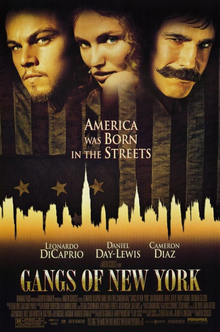
The 2002 film Gangs of New York portrayed a fictional Confederation of American Natives party led by William Bill the Butcher Cutting, a fictionalized version of real-life Know Nothing leader William Poole.
Image source: Gangs of New York
2006
In a 2006 editorial in The Weekly Standard, neoconservative writer William Kristol accused populist Republicans of turning the GOP into an anti-immigration, Know-Nothing party.
Image source: Bill Kristol
2007
A May 20, 2007, lead editorial in The New York Times referred to opponents of a proposed immigration bill as this generation's Know-Nothings.
2010
In an August 27, 2010, New York Times editorial titled Building a Nation of Know-Nothings, Timothy Egan discussed the birther movement, which falsely claimed that Barack Obama was not a natural-born U.S. citizen.
Image source: Barack Obama citizenship conspiracy theories
2016
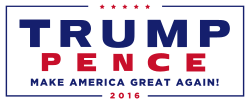
During the 2016 U.S. presidential election, commentators and politicians compared Donald Trump to the Know Nothings because of his anti-immigration policies.
Image source: Donald Trump 2016 presidential campaign
Build a timeline like this one in minutes, for free. Start Yours →
Or browse the full history timeline directory, with more than 2,500 topics.
This Know Nothing Party timeline was generated with the help of AI, using information found on the internet.
We work hard to keep these timelines accurate, but mistakes do get through. If you spot one, email us at [email protected] and we'll fix it for future visitors.
Generate yours with AI or build it from scratch, for free.
Export your timeline, add your own events, edit or remove AI-generated events, and much more
No credit card required.
15-day money-back guarantee.
You can create an unlimited number of timelines with up to 10 events on each one, customize how they look, export them to PDF, PNG, PowerPoint, CSV, and Excel, and share them with a link. Timelines made with Timeline Maker AI keep every event the generator created, and you can add up to 5 events of your own. Paid plans remove the event limit, add spreadsheet imports and hide Preceden's branding, and the higher-priced plan also adds collaborators, a custom logo and a custom domain.
Yes. You can cancel your subscription from your account page at any time, and you will not be charged again. Your subscription stays active for the rest of the period you already paid for.
Yes. We email you a reminder 15 days before your annual renewal, and we email you a receipt after every payment.
Yes. You can email us within 15 days of any payment, and we will issue you a full refund.
Check out our pricing docs or send us an email anytime: [email protected].