-
Use Cases
-
Resources
-
Pricing
Mark Twain, born Samuel Langhorne Clemens, was an American writer, humorist, and lecturer widely regarded as the father of American literature. Best known for The Adventures of Tom Sawyer and Adventures of Huckleberry Finn, his works captured life along the Mississippi River and offered sharp social commentary on slavery, imperialism, and human nature. More Less
Nov 30, 1835
% complete
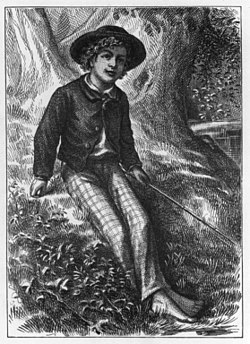
Samuel Langhorne Clemens, who would later adopt the pen name Mark Twain, was born in Florida, Missouri, the sixth of seven children of John Marshall Clemens and Jane Lampton Clemens. He was born shortly after the appearance of Halley's Comet, a coincidence he would later remark upon.
Image source: Mark Twain
Nov 1839
% complete
The Clemens family moved to Hannibal, Missouri, a bustling port town on the Mississippi River. The town and its colorful inhabitants would later serve as the inspiration for the fictional town of St. Petersburg in Twain's most famous novels.
Image source: Hannibal, Missouri
Mar 24, 1847
% complete
Twain's father died of pneumonia when Samuel was just eleven years old, leaving the family in financial hardship. The loss forced young Sam to leave school and begin working to help support his family.
1848
% complete
At age twelve, Samuel became an apprentice printer at the Hannibal-based Missouri Courier. During this period he learned the printing trade and began contributing humorous sketches and articles to newspapers.
1853 - 1854
% complete
After his apprenticeship, Samuel traveled as an itinerant printer, working in St. Louis, New York City, and Philadelphia. He educated himself in public libraries during evenings, broadening his knowledge beyond his limited formal schooling.
1857 - 1859
% complete
Twain began training as a riverboat pilot on the Mississippi River under the respected pilot Horace Bixby. He memorized over 1,200 miles of the river's treacherous channels, an experience he later chronicled in 'Life on the Mississippi.'
Image source: Horace Ezra Bixby
1859
% complete
Samuel received his pilot's license and worked as a licensed Mississippi River steamboat pilot, a well-paying and prestigious profession. He reportedly earned $250 per week, a substantial sum at the time.
1861
% complete
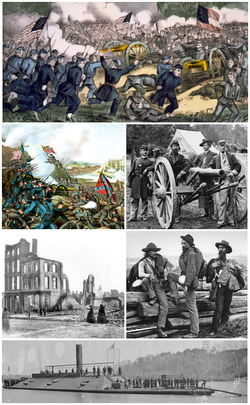
The outbreak of the American Civil War brought commercial river traffic to a halt, ending Twain's piloting career. He briefly served for about two weeks in a Confederate militia unit, the Marion Rangers, before abandoning the cause and heading west.
Image source: American Civil War
Jul 1861
% complete
Twain accompanied his brother Orion, newly appointed secretary of the Nevada Territory, on a stagecoach journey west. He tried his hand at silver mining in Nevada but ultimately failed to strike it rich, experiences later recounted in 'Roughing It.'
Image source: Roughing It
Feb 3, 1863
% complete
While working as a reporter for the Virginia City Territorial Enterprise, Samuel Clemens signed a humorous travel sketch with the pseudonym 'Mark Twain,' a riverboat term meaning two fathoms (twelve feet) of water.
Nov 18, 1865
% complete
Twain's short story about a frog-jumping contest was published in the New York Saturday Press and became a nationwide sensation, bringing him his first significant literary fame as a humorist.
Image source: The Celebrated Jumping Frog of Calaveras County
Mar 1866 - Jul 1866
% complete
Twain traveled to the Sandwich Islands (Hawaii) to write letters for the Sacramento Union. His letters were widely read, and upon returning he launched a successful career as a public lecturer describing his travels.
Image source: The Sacramento Union
1869
% complete
Based on letters he wrote during a voyage to Europe and the Holy Land aboard the Quaker City, 'The Innocents Abroad' became Twain's best-selling book during his lifetime, establishing his reputation as a major travel writer and humorist.
Image source: The Innocents Abroad
1873
% complete
Co-authored with neighbor Charles Dudley Warner, this satirical novel gave the era of post-Civil War America its popular name. The book satirized greed, political corruption, and speculative excess in Washington D.C.
Image source: The Gilded Age: A Tale of Today
1876
% complete
Drawing on his childhood in Hannibal, Twain published 'The Adventures of Tom Sawyer,' the beloved tale of boyhood mischief along the Mississippi River. Though initially modest in sales, it grew into one of the most cherished works of American literature.
Image source: The Adventures of Tom Sawyer
1880 - 1894
% complete
Twain invested vast sums in James Paige's elaborate typesetting machine, hoping it would make him wealthy. The machine never worked reliably, and combined with his publishing house's failure, it drove him into deep financial ruin by 1894.
Image source: Paige Compositor
1883
% complete
Twain published this memoir chronicling his days as a Mississippi steamboat pilot, blending nostalgia, history, and humor in a vivid portrait of the great river and its culture.
Image source: Life on the Mississippi
1884
% complete
Twain established his own publishing firm, named after his nephew Charles Webster, to control publication of his own books and other titles, including Ulysses S. Grant's best-selling memoirs. The company eventually went bankrupt in 1894.
Image source: Charles L. Webster and Company
Dec 1884
% complete
Published first in the United Kingdom in December 1884 and then in the U.S. in February 1885, 'Adventures of Huckleberry Finn' is widely regarded as Twain's masterpiece. Ernest Hemingway famously declared that all modern American literature comes from this novel.
Image source: Adventures of Huckleberry Finn
1889
% complete
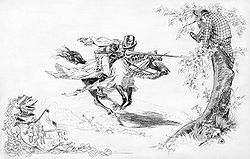
This satirical science fiction novel sent a nineteenth-century mechanic back to medieval Camelot, where he used modern technology to challenge feudalism. The book showcased Twain's growing skepticism toward romanticism and blind faith in technology and institutions.
Image source: A Connecticut Yankee in King Arthur's Court
Feb 4, 1869
% complete
After a lengthy courtship, Twain became engaged to Olivia Langdon of Elmira, New York, daughter of a wealthy coal businessman. She became his lifelong editor and moral compass, reviewing his manuscripts until her death.
Image source: Olivia Langdon Clemens
Feb 2, 1870
% complete
Twain married Olivia Langdon in Elmira, New York. The couple settled in Buffalo, New York, where Twain edited the Buffalo Express, before eventually relocating to Hartford, Connecticut.
Nov 7, 1870
% complete
Twain and Livy's first child, son Langdon, was born prematurely. Tragically, Langdon died of diphtheria in June 1872 at nineteen months old, a devastating loss for the couple.
1871
% complete
The Clemens family moved to Hartford, Connecticut, where they built a lavish Victorian home. The city proved highly productive for Twain, who wrote many of his most celebrated works during his seventeen years there.
Image source: Mark Twain House
Mar 19, 1872
% complete
Daughter Susy Clemens was born in Elmira, New York. She was the first of three daughters, and Twain doted on all his children; Susy later wrote a biography of her father at age thirteen.
Image source: Susy Clemens
Jun 8, 1874
% complete
Clara Clemens, the second daughter, was born in Elmira. She later became a concert singer and author, and was the only one of Twain's children to survive him.
Image source: Clara Clemens
Jul 26, 1880
% complete
The youngest daughter, Jean, was born. She suffered from epilepsy throughout her life, which deeply affected the family dynamics in Twain's later years.
Image source: Jean Clemens
1894 - 1900
% complete
Facing bankruptcy after his investments collapsed, Twain embarked on a round-the-world lecture tour to repay his creditors in full, despite having no legal obligation to do so. The journey produced his travelogue 'Following the Equator' and restored his finances and public standing.
Image source: Following the Equator
Aug 18, 1896
% complete
Susy died of spinal meningitis at the family's home in Hartford while Twain and Livy were abroad in England. Her death at twenty-four devastated Twain, who considered her the brightest of his children.
Oct 1900
% complete
After years abroad, Twain returned to America a celebrated hero, declaring himself 'the most conspicuous person on the planet.' He lived first in a fashionable Manhattan townhouse and later in Redding, Connecticut, becoming known as a genial white-suited celebrity.
1901
% complete
Yale University awarded Twain an honorary Doctor of Letters degree, recognizing his literary achievements despite his lack of formal education. Oxford University later granted him an even more prestigious honorary doctorate in 1907.
1901 - 1910
% complete
In his final decades, Twain became a fierce anti-imperialist, serving as vice president of the Anti-Imperialist League and writing biting satirical essays like 'To the Person Sitting in Darkness,' condemning colonialism and American actions in the Philippines.
Image source: To the Person Sitting in Darkness
Jun 5, 1904
% complete
Livy died in Florence, Italy, after a long illness, while the family was staying at the Villa Viviani. Her death left Twain profoundly grief-stricken; he had depended on her judgment and companionship throughout their thirty-four-year marriage.
1905 - 1910
% complete
During his last years, Twain wrote increasingly dark and philosophical works, including 'What Is Man?' and the 'Mysterious Stranger' manuscripts, exploring pessimism, determinism, and human nature. Many were unpublished until after his death.
Image source: The Mysterious Stranger
Nov 30, 1905
% complete
Twain marked his seventieth birthday with a star-studded banquet at Delmonico's restaurant in New York City, attended by leading writers and dignitaries, cementing his status as America's foremost literary celebrity.
1906 - 1909
% complete
Twain dictated his autobiography to biographer Albert Bigelow Paine using a non-linear approach, insisting it remain unpublished until 100 years after his death so he could speak freely without consequence.
Image source: Autobiography of Mark Twain
Dec 1906
% complete
Twain famously adopted his trademark white suit after Christmas 1906, wearing it year-round thereafter. The image became inseparable from his public persona as the beloved, silver-haired humorist of America.
Dec 24, 1909
% complete
Jean died suddenly of a heart attack, likely related to epilepsy, in the bathtub of Twain's Stormfield home in Redding, Connecticut, on Christmas Eve. The loss shattered Twain in the final months of his life.
Apr 21, 1910
% complete
Samuel Langhorne Clemens died of a heart attack at his Stormfield home in Redding, Connecticut, at age seventy-four, one day after Halley's Comet made its closest approach — fulfilling his prediction that he would 'go out with it.' He was buried alongside his family in Elmira, New York.
Or browse the full history timeline directory, with more than 2,000 topics.
This Mark Twain timeline was generated with the help of AI, using information found on the internet.
We work hard to keep these timelines accurate, but mistakes do get through. If you spot one, email us at [email protected] and we'll fix it for future visitors.
Generate yours with AI or build it from scratch, for free.
Export your timeline, add your own events, edit or remove AI-generated events, and much more
No credit card required.
Cancel anytime.
Cancel anytime.
You can create an unlimited number of timelines with up to 10 events on each one, customize how they look, export them to PDF, PNG, PowerPoint, CSV, and Excel, and share them with a link. Paid plans raise the event limit and add features like spreadsheet imports and collaborators.
Yes. You can cancel your subscription from your account page at any time, and you will not be charged again. Your subscription stays active for the rest of the period you already paid for.
Yes. We will email you a reminder before the annual renewal, and we will also email you a receipt.
Yes. You can email us within 15 days of any payment, and we will issue you a full refund.
Check out our pricing docs or send us an email anytime: [email protected].