
-
Use Cases
-
Resources
-
Pricing
Miles Davis (1926-1991) was an American trumpeter, bandleader, and composer widely considered one of the most influential figures in the history of jazz. Over five decades, he pioneered multiple jazz styles including bebop, cool jazz, hard bop, modal jazz, and jazz fusion, consistently reinventing his sound and shaping the direction of modern music. More Less
May 26, 1926
% complete
Miles Dewey Davis III was born in Alton, Illinois, to Miles Jr. and Cleota Davis. His family later moved to East St. Louis, where he grew up in a comfortable middle-class household that encouraged his early interest in music.
Image source: Miles Davis
1939
% complete
Davis's father gave him his first trumpet when he was 13 years old. He began taking lessons from Elwood Buchanan, a local musician who taught him a distinctive style that avoided vibrato, shaping Davis's signature sound.
1944 - 1945
% complete
While still in high school, Davis joined Eddie Randle's band, the Blue Devils, gaining valuable professional experience performing around St. Louis before heading to New York.
Sep 1944
% complete
Davis moved to New York City on scholarship to attend the Juilliard School of Music, but he soon spent more time in Harlem's clubs than in classrooms, seeking out his idol Charlie Parker.
1945
% complete
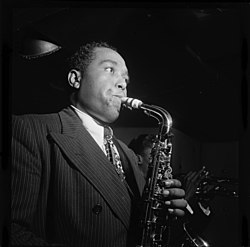
At just 19 years old, Davis replaced Dizzy Gillespie in trumpeter Charlie Parker's quintet, becoming part of the vanguard of the bebop movement and recording classics like 'Now's the Time.'
Image source: Charlie Parker
Jan 21, 1949 - Mar 9, 1950
% complete
With arranger Gil Evans and a nine-piece ensemble, Davis recorded the nonet sessions later collected as Birth of the Cool, pioneering the relaxed 'cool jazz' style that contrasted with bebop's intensity.
Image source: Birth of the Cool
1955
% complete
After a triumphant Newport Jazz Festival performance of 'Round Midnight,' Davis signed with Columbia Records and formed a quintet featuring John Coltrane, Red Garland, Paul Chambers, and Philly Joe Jones.
Image source: Miles Davis Quintet
1955
% complete
Davis signed a contract with Columbia Records, which offered him greater exposure and resources. He remained one of the label's flagship jazz artists for decades.
Image source: Columbia Records
Oct 24, 1955
% complete
Davis's stunning performance of 'Round Midnight' at the Newport Jazz Festival revitalized his career after struggles with addiction, earning him critical acclaim and a record deal with Columbia.
Image source: Newport Jazz Festival
Mar 1957
% complete
Davis released his debut album for Columbia, featuring his first great quintet. The album included Thelonious Monk's title track and became a landmark hard bop recording.
Image source: 'Round About Midnight
May 10, 1957 - May 23, 1957
% complete
Collaborating again with Gil Evans, Davis fronted a large orchestra for Miles Ahead, the first of their celebrated orchestral collaborations that also included Porgy and Bess and Sketches of Spain.
Image source: Miles Ahead (album)
Dec 4, 1957 - Dec 5, 1957
% complete
While touring in France, Davis improvised an entire soundtrack for Louis Malle's film noir Ascenseur pour l'échafaud in two late-night sessions, demonstrating his ability to compose spontaneous music for cinema.
Image source: Elevator to the Gallows
Apr 1958
% complete
The Milestones album featured the title track, Davis's first fully modal composition, hinting at the direction he would take further with Kind of Blue.
Image source: Milestones (Miles Davis album)
Mar 2, 1959 - Apr 22, 1959
% complete
Recorded in two sessions with John Coltrane, Cannonball Adderley, Bill Evans, Wynton Kelly, Paul Chambers, and Jimmy Cobb, Kind of Blue revolutionized jazz by building entire pieces on modal scales rather than chord progressions.
Image source: Kind of Blue
Aug 17, 1959
% complete
The release of Kind of Blue marked a watershed moment in music history. It became the best-selling jazz album of all time and remains a cultural touchstone far beyond the jazz world.
1964
% complete
Saxophonist Wayne Shorter completed Davis's second great quintet alongside Herbie Hancock, Ron Carter, and Tony Williams, a group celebrated for its adventurous, boundary-pushing live improvisations.
Aug 1965
% complete
E.S.P. was the first studio album of the second great quintet, showcasing original compositions by Shorter and a freer, more dynamic group interplay.
1968
% complete
Inspired by Jimi Hendrix and James Brown, Davis added electric piano and guitar to his sound, beginning his transition toward jazz fusion with albums like Miles in the Sky and Filles de Kilimanjaro.
Image source: In a Silent Way
Jul 30, 1969
% complete
Produced by Teo Macero, In a Silent Way featured Chick Corea, Herbie Hancock, John McLaughlin, and Joe Zawinul. Its ambient, electric textures announced the arrival of jazz fusion.
Aug 19, 1969 - Aug 21, 1969
% complete
Over three days in August 1969, Davis recorded Bitches Brew, a sprawling double album of electric, funk-influenced jazz. It became his highest-charting release and defined the fusion era.
Image source: Bitches Brew
1970
% complete
Bitches Brew achieved gold status within months and won a Grammy Award, proving that experimental fusion could reach massive commercial audiences and influencing rock, funk, and electronic musicians.
1975
% complete
Exhausted by years of touring, drug use, and illness including ulcers and sickle cell complications, Davis withdrew from public life and did not perform or record publicly for five years.
Jul 1981
% complete
Davis made a triumphant return to performing at the Kool Jazz Festival and released The Man with the Horn, embracing pop and funk influences for a new generation of listeners.
Image source: The Man with the Horn
1983 - 1991
% complete
In his final decade, Davis devoted himself increasingly to painting, creating vibrant canvases influenced by African art and Italian painters, exhibiting works widely before his death.
1986
% complete
Tutu, co-produced with Marcus Miller, blended jazz trumpet over programmed funk and pop grooves, winning Davis a Grammy Award and introducing him to younger audiences in the MTV era.
Image source: Tutu (album)
Oct 1989
% complete
Written with Quincy Troupe, Davis's candid autobiography chronicled his career, collaborations, struggles, and artistic philosophy, becoming a bestseller and an essential document of jazz history.
Image source: Miles: The Autobiography
1990
% complete
Davis received the Grammy Lifetime Achievement Award in recognition of his profound and enduring impact on American music across five decades of innovation.
Jul 8, 1991 - Jul 10, 1991
% complete
Weeks before his death, Davis performed arrangements of his classic Gil Evans collaborations conducted by Quincy Jones at the Montreux Jazz Festival, a moving farewell to his greatest repertoire.
Image source: Montreux Jazz Festival
Sep 28, 1991
% complete
Davis died of pneumonia, respiratory failure, and a stroke at age 65 in Santa Monica, California. His death marked the end of one of the most consequential careers in the history of American music.
2006
% complete
Davis was inducted into the Rock and Roll Hall of Fame, honoring his enormous influence on rock, funk, and popular music beyond his role as a jazz pioneer.
Image source: Rock and Roll Hall of Fame
Or browse the full history timeline directory, with more than 2,000 topics.
This Miles Davis timeline was generated with the help of AI, using information found on the internet.
We work hard to keep these timelines accurate, but mistakes do get through. If you spot one, email us at [email protected] and we'll fix it for future visitors.
Generate yours with AI or build it from scratch, for free.
Export your timeline, add your own events, edit or remove AI-generated events, and much more
No credit card required.
Cancel anytime.
Cancel anytime.
You can create an unlimited number of timelines with up to 10 events on each one, customize how they look, export them to PDF, PNG, PowerPoint, CSV, and Excel, and share them with a link. Paid plans raise the event limit and add features like spreadsheet imports and collaborators.
Yes. You can cancel your subscription from your account page at any time, and you will not be charged again. Your subscription stays active for the rest of the period you already paid for.
Yes. We will email you a reminder before the annual renewal, and we will also email you a receipt.
Yes. You can email us within 15 days of any payment, and we will issue you a full refund.
Check out our pricing docs or send us an email anytime: [email protected].