-
Use Cases
-
Resources
-
Pricing
The Troubles was a three-decade ethno-political conflict in Northern Ireland between unionists/loyalists (mostly Protestant, wanting Northern Ireland to remain part of the United Kingdom) and nationalists/republicans (mostly Catholic, seeking a united Ireland). Sparked by civil rights protests and marked by paramilitary violence, British military intervention, and events like Bloody Sunday, the conflict claimed over 3,500 lives before largely ending with the 1998 Good Friday Agreement. More Less
1920
% complete
The 'B-Specials' auxiliary police force was established, composed almost entirely of Protestants, which deepened Catholic distrust of state security institutions in Northern Ireland.
Image source: Ulster Special Constabulary
May 3, 1921
% complete
The Government of Ireland Act 1920 partitioned Ireland, creating Northern Ireland as a devolved region within the United Kingdom with a unionist majority and a large Catholic nationalist minority who felt alienated by the new state.
Image source: Partition of Ireland
1968
% complete
NICRA campaigned against discrimination in housing, employment, and voting rights faced by Catholics. Its marches and the state's heavy-handed responses helped spark the conflict known as the Troubles.
Image source: Northern Ireland Civil Rights Association
Aug 12, 1969 - Aug 14, 1969
% complete
Three days of rioting in Derry between nationalist residents, police, and loyalists marked a major escalation. The violence prompted the deployment of British troops to Northern Ireland.
Image source: Battle of the Bogside
Aug 14, 1969
% complete
Operation Banner began as troops were sent to restore order after sectarian riots. Initially welcomed by some Catholics, the army's presence became increasingly contested as conflict intensified.
Image source: Operation Banner
Aug 9, 1971
% complete
The British Army launched mass internment of suspected republican paramilitaries. The operation, based on flawed intelligence, swept up hundreds of mostly innocent men and dramatically escalated violence and recruitment for the IRA.
Image source: Operation Demetrius
Jan 1970
% complete
The IRA split after the 1969 violence, with the Provisionals emerging committed to armed struggle against British rule. They would become the dominant republican paramilitary group during the Troubles.
Image source: Provisional Irish Republican Army
Jul 3, 1970 - Jul 5, 1970
% complete
The British Army imposed a 36-hour curfew on Belfast's Falls Road while searching for weapons, alienating the Catholic community and boosting support for the Provisional IRA.
Aug 9, 1971 - Aug 11, 1971
% complete
Soldiers from the Parachute Regiment shot dead ten civilians in the Ballymurphy estate of west Belfast over three days, in killings that went largely uninvestigated for decades.
Image source: Ballymurphy massacre
Aug 9, 1971 - Aug 11, 1971
% complete
Widespread rioting erupted in response to internment, with thousands of Catholic families fleeing their homes in Belfast. The violence killed dozens of people and deepened sectarian division.
Image source: 1969 Northern Ireland riots
Jan 30, 1972
% complete
British soldiers from the Parachute Regiment shot dead 13 civil rights marchers in Derry, wounding 15 others. The massacre galvanised republican recruitment and internationalised the conflict.
Image source: Bloody Sunday (1972)
Jul 21, 1972
% complete
The Provisional IRA detonated over 20 bombs across Belfast in about an hour, killing nine people and injuring around 130. The atrocity shocked public opinion in Ireland and Britain.
Jul 31, 1972
% complete
The British Army launched its largest military operation in Ireland since the Irish War of Independence, dismantling barricaded 'no-go' areas controlled by republicans in Derry and Belfast.
May 17, 1974
% complete
Loyalist paramilitaries, with suspected British intelligence involvement, detonated four car bombs in the Republic of Ireland, killing 34 people in the deadliest day of the Troubles.
Image source: Dublin and Monaghan bombings
Nov 21, 1974
% complete
IRA bombs killed 21 people in two Birmingham pubs. The atrocity led to the Prevention of Terrorism Act and the wrongful conviction of the Birmingham Six, who spent 16 years in prison.
Image source: Birmingham pub bombings
Oct 12, 1984
% complete
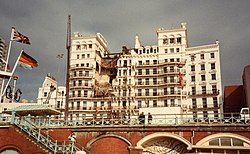
The IRA bombed the Grand Hotel during the Conservative Party conference, killing five people and nearly assassinating Prime Minister Margaret Thatcher, who narrowly escaped injury.
Image source: Brighton hotel bombing
Nov 8, 1987
% complete
An IRA bomb killed 12 people, many of them elderly, at a Remembrance Day ceremony in Enniskillen. The atrocity caused widespread revulsion, including among republicans.
Image source: Remembrance Day bombing
Mar 6, 1988
% complete
British SAS soldiers shot dead three unarmed IRA members in Gibraltar, sparking controversy and a European Court of Human Rights case over the use of lethal force.
Image source: Operation Flavius
Mar 16, 1988
% complete
Loyalist gunman Michael Stone attacked an IRA funeral at Milltown Cemetery in Belfast, killing three mourners. Days later, two British corporals were killed after driving into the funeral procession of one victim.
Image source: Milltown Cemetery attack
Oct 23, 1993
% complete
An IRA bomb targeting loyalist paramilitaries exploded prematurely in a fish shop on the Shankill Road in Belfast, killing ten people including one of the bombers and prompting retaliatory loyalist attacks.
Image source: Shankill Road bombing
Jun 18, 1994
% complete
Loyalist gunmen shot dead six Catholic men watching a World Cup match in a County Down pub, one of the deadliest loyalist attacks of the Troubles.
Image source: Loughinisland massacre
Feb 9, 1996
% complete
The IRA bombed London's Canary Wharf, killing two people and ending its 17-month ceasefire, citing the slow pace of all-party talks and demanding British government movement.
Image source: 1996 Docklands bombing
Aug 15, 1998
% complete
A dissident republican car bomb killed 29 people and unborn twins in Omagh, County Tyrone, the single deadliest attack of the Troubles, occurring months after the Good Friday Agreement.
Image source: Omagh bombing
Mar 30, 1972
% complete
The British government suspended the Northern Ireland Parliament at Stormont and imposed direct rule from Westminster, ending 50 years of unionist one-party government.
Image source: Direct rule (Northern Ireland)
Dec 9, 1973 - May 28, 1974
% complete
An agreement established a power-sharing executive between unionists and nationalists and proposed a Council of Ireland. It collapsed in May 1974 after the Ulster Workers' Council strike.
May 15, 1974 - May 28, 1974
% complete
A loyalist general strike brought Northern Ireland to a standstill and forced the collapse of the Sunningdale power-sharing executive, delaying devolved government for decades.
Image source: Ulster Workers' Council strike
Mar 1, 1981
% complete
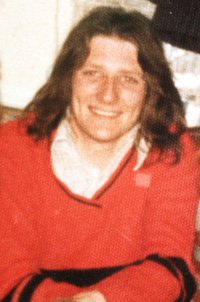
IRA prisoner Bobby Sands began a hunger strike in the Maze Prison demanding political status. His death after 66 days, along with nine others, drew worldwide attention and transformed Sinn Féin's electoral fortunes.
Image source: 1981 Irish hunger strike
Apr 9, 1981
% complete
Sands was elected MP for Fermanagh and South Tyrone while on hunger strike, demonstrating the electoral potential of republicanism and prompting the IRA's shift toward 'armalite and ballot box' strategy.
Image source: Bobby Sands
Nov 15, 1985
% complete
Margaret Thatcher and Taoiseach Garret FitzGerald signed an agreement giving the Irish government a consultative role in Northern Ireland's affairs, a landmark in British-Irish cooperation that enraged unionists.
Image source: Anglo-Irish Agreement
Aug 31, 1994
% complete
The IRA called a 'complete cessation of military operations', a pivotal moment that opened the door to multi-party talks, though it broke down in 1996 before being restored in 1997.
Image source: Provisional Irish Republican Army campaign
Oct 13, 1994
% complete
Six weeks after the IRA ceasefire, loyalist paramilitaries announced their own cessation of violence, completing a mutual halt to paramilitary campaigns that underpinned the peace process.
Apr 10, 1998
% complete
Multi-party talks chaired by George Mitchell produced a landmark accord establishing power-sharing government, cross-border institutions, and principles of consent, approved by referendums in both parts of Ireland.
Image source: Good Friday Agreement
Dec 2, 1999
% complete
Devolved government returned to Northern Ireland with David Trimble as First Minister and Seamus Mallon as Deputy First Minister, implementing the Good Friday Agreement's power-sharing structures.
Image source: Northern Ireland Assembly
Jul 31, 2007
% complete
The British Army's 38-year deployment in Northern Ireland, the longest continuous operation in British military history, formally ended, with security normalisation completed under the peace process.
Jun 15, 2010
% complete
After 12 years and nearly £200 million, the Saville Inquiry concluded that the 1972 killings in Derry were unjustified and unjustifiable. Prime Minister David Cameron formally apologised on behalf of the state.
Image source: Bloody Sunday Inquiry
Or browse the full history timeline directory, with more than 2,000 topics.
This Northern Ireland Troubles timeline was generated with the help of AI, using information found on the internet.
We work hard to keep these timelines accurate, but mistakes do get through. If you spot one, email us at [email protected] and we'll fix it for future visitors.
Generate yours with AI or build it from scratch, for free.
Export your timeline, add your own events, edit or remove AI-generated events, and much more
No credit card required.
Cancel anytime.
Cancel anytime.
You can create an unlimited number of timelines with up to 10 events on each one, customize how they look, export them to PDF, PNG, PowerPoint, CSV, and Excel, and share them with a link. Paid plans raise the event limit and add features like spreadsheet imports and collaborators.
Yes. You can cancel your subscription from your account page at any time, and you will not be charged again. Your subscription stays active for the rest of the period you already paid for.
Yes. We will email you a reminder before the annual renewal, and we will also email you a receipt.
Yes. You can email us within 15 days of any payment, and we will issue you a full refund.
Check out our pricing docs or send us an email anytime: [email protected].