
-
Resources
-
Pricing
The Palmer Raids were a series of U.S. government arrests and deportations targeting suspected anarchists, communists, and other radicals during the First Red Scare. More Less
Build a timeline like this one in minutes, for free. Start Yours →
1892 - 1997
In the 105 years between 1892 and 1997, the United States deported 2.1 million people. This long-term figure places the Palmer raids within the broader history of American deportation policy.
Image source: Deportation
2001 - 2008
During the presidency of George W. Bush, about 2.0 million people were deported. The figure is cited as a later comparison with the deportation practices associated with the Palmer raids.
2009 - 2016
During the presidency of Barack Obama, about 3.2 million people were deported. This later figure illustrates the continuing scale and political significance of deportation in the United States.
1915
President Woodrow Wilson warned against so-called hyphenated Americans, accusing them of pouring disloyalty into the nation’s political life. He declared that creatures of passion, disloyalty, and anarchy had to be crushed out, expressing an early official hostility toward radicalism and immigrant political activism.
Image source: Woodrow Wilson
1917
The Russian Revolutions of 1917 gave additional force to American fears of labor agitators and supporters of anarchist and communist ideologies. Revolutionary developments abroad were increasingly viewed by government officials as potential models or sources of subversion in the United States.
Image source: Russian Revolution
1919
Strikes after World War I drew national attention and contributed to a climate of fear surrounding labor activism. Officials and much of the public increasingly associated industrial conflict with revolutionary political movements.
Image source: Palmer Raids
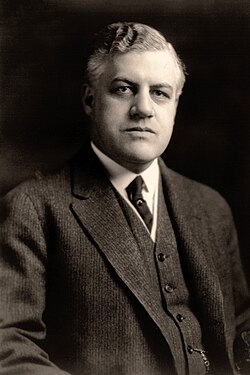
1919
Labor unrest and social tensions prompted race riots in more than 30 American cities. These disturbances formed part of the broader crisis of fear, violence, and political instability that preceded the Palmer raids.
Image source: Red Summer
Feb 1919
The general strike in Seattle represented a new development in American labor unrest. Its scale and organization heightened concern among officials who feared that coordinated labor action could become connected to revolutionary politics.
Image source: Seattle General Strike
Apr 1919
Galleanists, Italian immigrant followers of anarchist Luigi Galleani, carried out a series of bombings in April 1919. The attacks helped confirm government fears about violent anarchist activity and contributed to support for intensified investigations.
Image source: Galleanisti
Apr 1919
One bomb was mailed to Attorney General A. Mitchell Palmer’s home in response to his policy of politically motivated mass arrests and deportations. The attack made the threat to senior officials especially immediate.
Jun 2, 1919
Night watchman William Boehner was killed during the second wave of bombings. His death underscored the lethal consequences of the attacks and strengthened calls for action against suspected radicals.
Jun 2, 1919
One of the June 2 bombs damaged the Washington, D.C., home of Attorney General A. Mitchell Palmer. Because the attack occurred in the national capital, it generated particular alarm among officials and the public.
Jun 2, 1919
On June 2, several much larger package bombs were detonated by Galleanists in eight American cities. The coordinated attacks intensified public fears of anarchist terrorism.
1919
The Union of Russian Workers was selected as a target for a nationwide enforcement operation. Federal officials associated the organization with revolutionary and anarchist politics.
Image source: Union of Russian Workers
Jun 1919
Palmer requested that his investigative budget be increased from $1,500,000 to $2,000,000 to support operations against radicals. Congress limited the increase to $100,000, but the additional funds still supported the department’s campaign.
Jun 1919
Attorney General Palmer told the House Appropriations Committee that evidence indicated radicals would, on a certain day, rise up and destroy the government at one fell swoop. His warning was used to justify expanded federal investigations.
Image source: A. Mitchell Palmer
Aug 1, 1919
Palmer named 24-year-old J. Edgar Hoover to head the Justice Department’s new General Intelligence Division within the Bureau of Investigation. The division was responsible for investigating radical groups and identifying their members.
Image source: J. Edgar Hoover
Aug 1919 - Jan 1920
Under Hoover, the General Intelligence Division investigated radical organizations and compiled information about their members. Its work supplied intelligence and organizational support for subsequent federal raids.
Nov 1919 - Dec 1919
Attorney General Palmer devoted his energies to the United Mine Workers coal strike during November and December 1919. His exhaustion and attention to the strike left Hoover to organize the next major wave of raids.
Image source: United Mine Workers of America
Nov 7, 1919
The November operation was carried out in 12 cities. The raids were heavily publicized and violent, demonstrating the Justice Department’s new willingness to use coordinated federal and local police action against suspected radicals.
Nov 7, 1919
At 9 p.m. on November 7, agents of the Bureau of Investigation and local police began a series of raids against the Union of Russian Workers. The date was chosen because it was the second anniversary of the Bolshevik Revolution.
Jan 1920
Approximately 10,000 people were arrested during the raids. The mass arrests reflected the scale of the Justice Department’s campaign, although many detainees were never shown evidence of criminal activity.
Jan 1920
Of the approximately 10,000 people arrested, 3,500 were held by authorities in detention. The number of detainees became central to criticism of the government’s methods and its disregard for ordinary legal process.
1920
Ultimately, 556 resident aliens were deported under the Immigration Act of 1918. Deportation was the principal official objective for many foreign-born people swept up in the raids.
Jan 2, 1920
The Justice Department launched a second major series of raids on January 2, 1920. The operation was organized by Hoover while Palmer was occupied with the coal strike and other pressures.
Jan 3, 1920 - Jan 7, 1920
Follow-up operations continued over the next few days after the January 2 raids. Together, the raids formed the largest coordinated federal campaign against suspected anarchists, communists, and socialists in the period.
Jul 1919
An initial raid against an anarchist group in Buffalo, New York, achieved little. A federal judge dismissed Palmer’s case, providing an early indication of the legal difficulties that would confront the government’s campaign.
1920
Harvard professor Zechariah Chafee criticized the raids, deportation attempts, and lack of legal process in his 1920 volume Freedom of Speech. His work provided an influential academic critique of the government’s suppression of radical speech.
Image source: Zechariah Chafee
1920
The raids became an enduring example of mass deportation operations that ignored civil liberties, heightened racial tensions, and disrupted families. Later discussions have compared the legal issues of the 1919 raids with deportations during the second Trump administration.
Apr 1920
At a Cabinet meeting, Palmer called on Secretary of Labor William B. Wilson to fire Louis F. Post. Post had challenged deportation actions, but Wilson defended him rather than dismissing him.
Image source: Louis F. Post
May 1, 1920
Palmer had forecast an attempted radical uprising on May Day 1920. When the predicted uprising failed to occur, the political drive behind the campaign began to lose energy.
May 28, 1920
The nascent American Civil Liberties Union published its Report Upon the Illegal Practices of the United States Department of Justice. Founded in response to the raids, the organization documented unlawful arrests, entrapment by agents provocateurs, and incommunicado detention.
Image source: American Civil Liberties Union
Jun 1920
Massachusetts District Court Judge George W. Anderson ordered the discharge of 17 arrested aliens. He denounced the Department of Justice’s actions, adding an important judicial condemnation of the raids.
Build a timeline like this one in minutes, for free. Start Yours →
Or browse the full history timeline directory, with more than 2,500 topics.
This Palmer Raids timeline was generated with the help of AI, using information found on the internet.
We work hard to keep these timelines accurate, but mistakes do get through. If you spot one, email us at [email protected] and we'll fix it for future visitors.
Generate yours with AI or build it from scratch, for free.
Export your timeline, add your own events, edit or remove AI-generated events, and much more
No credit card required.
15-day money-back guarantee.
You can create an unlimited number of timelines with up to 10 events on each one, customize how they look, export them to PDF, PNG, PowerPoint, CSV, and Excel, and share them with a link. Timelines made with Timeline Maker AI keep every event the generator created, and you can add up to 5 events of your own. Paid plans remove the event limit, add spreadsheet imports and hide Preceden's branding, and the higher-priced plan also adds collaborators, a custom logo and a custom domain.
Yes. You can cancel your subscription from your account page at any time, and you will not be charged again. Your subscription stays active for the rest of the period you already paid for.
Yes. We email you a reminder 15 days before your annual renewal, and we email you a receipt after every payment.
Yes. You can email us within 15 days of any payment, and we will issue you a full refund.
Check out our pricing docs or send us an email anytime: [email protected].