-
Use Cases
-
Resources
-
Pricing
Agatha Christie (1890–1976) was an English writer known as the 'Queen of Crime.' She created iconic detectives Hercule Poirot and Miss Marple, and authored 66 detective novels, 14 short story collections, and the world's longest-running play, The Mousetrap. Her works have sold over two billion copies, making her one of the best-selling authors in history. More Less
Sep 15, 1890
Agatha Mary Clarissa Miller is born in Torquay, Devon, England, to Frederick Alvah Miller, an American stockbroker, and Clara Boehmer. She grows up in a comfortable household and is largely homeschooled, developing an early love of reading and storytelling.
Nov 1901
Agatha's father dies after chronic heart problems, leaving the family financially strained. The loss deeply affects eleven-year-old Agatha and marks the beginning of a more difficult period for the family.
1909
Christie begins publishing early writing, including poems that appear in local newspapers and periodicals. Her first published poem appears in The Sovereign Magazine, marking her earliest steps as a professional writer.
1914 - Dec 1918
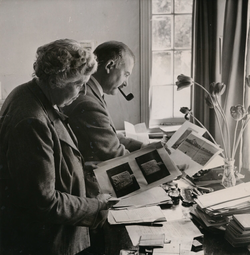
During World War I, Christie volunteers with the Voluntary Aid Detachment in Torquay, working as a nurse and later in the hospital dispensary. Her knowledge of poisons gained there becomes central to her crime fiction.
Image source: Agatha Christie
1940 - 1945
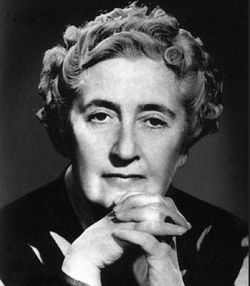
During World War II, Christie returns to dispensary work at University College Hospital in London, renewing her knowledge of medicines and poisons that informs her fiction.
Dec 24, 1914
Agatha marries Archibald Christie, a Royal Flying Corps aviator she met at a dance, on Christmas Eve while he is on leave during World War I.
Aug 5, 1919
Agatha gives birth to her only child, Rosalind Margaret Clarissa Christie, who will later become guardian of her mother's literary estate.
1922 - 1923
Archibald is appointed to a trade mission promoting the British Empire Exhibition, and Agatha accompanies him on a ten-month world tour visiting South Africa, Australia, New Zealand, Hawaii, and Canada, providing material for future novels.
Apr 5, 1926
The death of Christie's beloved mother plunges her into depression. Around the same time, her husband reveals he wants a divorce after falling in love with another woman.
Dec 3, 1926 - Dec 14, 1926
Following marital troubles, Christie disappears from her home, leaving a note. Her car is found abandoned, sparking a massive manhunt and national sensation. She is found registered at a hotel in Harrogate under the name of her husband's mistress. The episode remains controversial to this day.
Image source: Disappearance of Agatha Christie
1928
After her divorce, Christie travels alone to Istanbul aboard the Simplon-Orient-Express. The journey inspires one of her most famous novels, Murder on the Orient Express.
Image source: Murder on the Orient Express
Apr 1928
Agatha and Archibald finalize their divorce. She retains custody of their daughter Rosalind and keeps her pen name for her writing career.
1930 - 1931
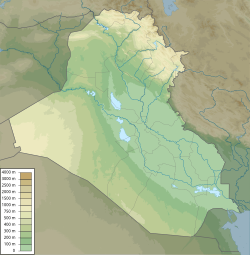
Christie visits Leonard Woolley's archaeological dig at Ur in Mesopotamia, where she meets Max Mallowan. The experience sparks a lifelong connection to archaeology and Middle Eastern settings in her fiction.
Image source: Ur
Sep 11, 1930
Christie marries Max Mallowan, an archaeologist fourteen years her junior whom she met in Mesopotamia. Their marriage lasts until her death, and she often accompanies him on excavation sites.
Image source: Max Mallowan
1938
Christie purchases Greenway, a Georgian estate overlooking the River Dart in Devon, as a summer home. The property later becomes a National Trust site open to the public.
Image source: Greenway Estate
Nov 1946
Christie publishes a memoir recounting her experiences on archaeological expeditions in Syria with her husband Max Mallowan, blending humor and affectionate observation.
Image source: Come, Tell Me How You Live
Oct 1920
After several rejections, Christie's first novel introduces the eccentric Belgian detective Hercule Poirot. The book earns critical praise and establishes her career as a detective novelist.
Image source: The Mysterious Affair at Styles
May 1923
Christie publishes her second full-length Poirot novel, inspired by her interest in golf courses in France. It solidifies Poirot's growing popularity among readers.
Image source: The Murder on the Links
Jun 1926
Featuring its famous twist ending and unreliable narrator, this novel becomes one of Christie's most celebrated works and cements her reputation as the 'Queen of Crime.'
Image source: The Murder of Roger Ackroyd
Oct 1930
Christie publishes her first full-length novel featuring Jane Marple, the sharp-eyed elderly spinster detective from St. Mary Mead, creating her second iconic sleuth.
Image source: The Murder at the Vicarage
Jan 1, 1934
One of Christie's most ingenious puzzles features Poirot investigating a murder aboard a snowbound train. Its surprising solution makes it a classic of the genre.
Nov 6, 1939
Christie's masterpiece of suspense about ten strangers lured to an island and killed one by one becomes the best-selling mystery novel of all time and one of the best-selling books ever written.
Image source: And Then There Were None
May 1948
Christie writes the radio play and short story 'Three Blind Mice' as a birthday gift to Queen Mary, which she later adapts into her legendary stage play The Mousetrap.
Image source: Three Blind Mice
Sep 1975
Written decades earlier and locked in a safe, Curtain brings Hercule Poirot's story to a poignant conclusion. Published just before Christie's death, it earns a front-page obituary notice for the fictional detective in The New York Times.
Image source: Curtain: Poirot's Last Case
Dec 8, 1930
Christie's original play Black Coffee debuts at the Embassy Theatre in London, featuring Hercule Poirot solving a murder involving a stolen formula. It proves successful and launches her playwriting career.
Image source: Black Coffee (play)
1951
Christie is elected a Fellow of the Royal Society of Literature, recognizing her distinguished contribution to English letters.
Nov 25, 1952
Christie's play The Mousetrap begins its record-breaking run at the Ambassadors Theatre in London's West End. It becomes the longest-running play in history, still performing decades later.
Image source: The Mousetrap
1956
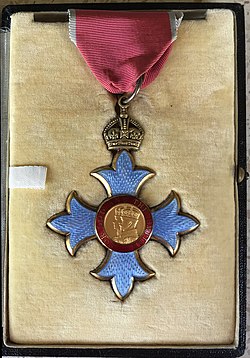
Christie is appointed CBE in recognition of her literary achievements, an honor she receives ahead of her later elevation to Dame Commander.
Jan 1971
Christie is elevated to DBE, becoming Dame Agatha Christie in the New Year Honours, formally acknowledging her stature as one of Britain's most beloved writers.
Image source: Order of the British Empire
Jan 12, 1976
Christie dies peacefully of natural causes at Winterbrook House in Wallingford, Oxfordshire, aged 85. She is buried at Cholsey churchyard, leaving behind 66 detective novels, numerous short stories, and plays.
1977
Christie's autobiography, written over fifteen years and completed in 1965, is published posthumously, offering intimate insight into her life, travels, and creative process.
Image source: Agatha Christie: An Autobiography
Mar 23, 1982
Guy Hamilton's film starring Peter Ustinov as Hercule Poirot adapts Christie's 1941 novel set at a Mediterranean resort, continuing the popular series of big-screen Christie adaptations.
Feb 2009
Greenway, Christie's beloved summer home in Devon, is transferred to the National Trust and opened to visitors, preserved much as the Christie family left it.
2012
Christie is recognized by Guinness World Records as the best-selling novelist of all time, with billions of copies of her books sold worldwide in dozens of languages, surpassed only by Shakespeare and the Bible in total sales.
Or browse the full history timeline directory, with more than 2,500 topics.
This Agatha Christie timeline was generated with the help of AI, using information found on the internet.
We work hard to keep these timelines accurate, but mistakes do get through. If you spot one, email us at [email protected] and we'll fix it for future visitors.
Generate yours with AI or build it from scratch, for free.
Export your timeline, add your own events, edit or remove AI-generated events, and much more
No credit card required.
Cancel anytime.
Cancel anytime.
You can create an unlimited number of timelines with up to 10 events on each one, customize how they look, export them to PDF, PNG, PowerPoint, CSV, and Excel, and share them with a link. Paid plans raise the event limit and add features like spreadsheet imports and collaborators.
Yes. You can cancel your subscription from your account page at any time, and you will not be charged again. Your subscription stays active for the rest of the period you already paid for.
Yes. We will email you a reminder before the annual renewal, and we will also email you a receipt.
Yes. You can email us within 15 days of any payment, and we will issue you a full refund.
Check out our pricing docs or send us an email anytime: [email protected].