-
Use Cases
-
Resources
-
Pricing
The Arc de Triomphe is a monumental neoclassical arch in Paris, France, commissioned by Napoleon Bonaparte after his victory at Austerlitz to honor those who fought for France. Standing at the western end of the Champs-Élysées, it was designed by Jean-François-Thérèse Chalgrin and completed in 1836. It features the Tomb of the Unknown Soldier and France's eternal flame. More Less
1806
% complete
The Arc de Triomphe was commissioned in 1806 by Emperor Napoleon following the victory at Austerlitz, at the peak of his successes. The monument was designed by Jean-François Chalgrin, whose astylar Neoclassical design drew on ancient Roman architecture.
1806
% complete
The central cohesive element of the Axe historique was designed by Jean-François Chalgrin in 1806. Its iconographic programme depicts heroically nude warriors and set the tone for public monuments with triumphant patriotic messages.
Image source: Arc de Triomphe
1808
% complete
Laying the foundations alone took two years, a testament to the enormous scale of the monument planned at the top of the Champs-Élysées in Paris.
1810
% complete
When Napoleon entered Paris from the west with his new bride, Archduchess Marie-Louise of Austria, he passed under a full-scale wooden mock-up of the completed arch constructed for the occasion, since the real arch remained unfinished.
1811
% complete
The architect Jean-François Chalgrin died in 1811, and supervision of the work was taken over by Louis-Robert Goust.
1815 - 1823
% complete
During the Bourbon Restoration, construction of the Arc de Triomphe was halted until 1823, leaving the monument incomplete for years as political priorities shifted away from Napoleon's imperial legacy.
Image source: Bourbon Restoration in France
1823
% complete
Construction resumed in 1823 after the halt during the Bourbon Restoration, continuing under architects Louis-Robert Goust and Jean-Nicolas Huyot, under the direction of Louis-Étienne Héricart de Thury, then by Guillaume-Abel Blouet.
1836
% complete
The Arc de Triomphe was finally completed in 1836 during the reign of Louis Philippe I, by architects Louis-Robert Goust and Jean-Nicolas Huyot, under the direction of Louis-Étienne Héricart de Thury and later Guillaume-Abel Blouet. The final cost was reported at about 10 million francs, equivalent to an estimated €65 million or $75 million in 2020.
1838
% complete
In 1838, Bernard Seurre submitted La France victorieuse ("Victorious France"), depicting a chariot drawn by six horses, intended for placement above the arch.
1840
% complete
In preparing the installation for the return of the Emperor's remains, Blouet returned to a scheme he had drafted in 1834, modifying it by substituting the originally intended allegorical figure of France with that of the Emperor himself.
Image source: Guillaume-Abel Blouet
1840
% complete
In 1840, Seurre's proposal gave way to a temporary sculptural group representing Napoleon I, installed above the arch by architect Guillaume-Abel Blouet for the return of the Emperor's remains from Saint Helena.
1882 - 1886
% complete
From 1882 to 1886, a quadriga by Alexandre Falguière was erected above the Arc de Triomphe, crowning the monument before it was later removed.
Image source: Alexandre Falguière
1914 - 1916
% complete
During World War I, The Departure of the Volunteers of 1792, commonly called La Marseillaise, served as a recruitment tool in the early months of the war and encouraged the French to invest in war loans in 1915–1916.
Image source: Musée Rude
1871
% complete
Famous victory marches around or under the Arc have included the Germans in 1871, following the Franco-Prussian War, one of several occasions on which foreign armies paraded past the monument.
Feb 21, 1916
% complete
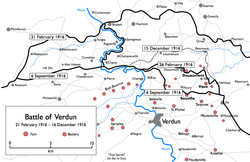
Apparently, on the day the Battle of Verdun began in 1916, the sword carried by the figure of the Republic in the La Marseillaise sculptural group on the arch broke off, an event popularly seen as an omen.
Image source: Battle of Verdun
Jul 10, 1919
% complete
Jean Navarre was the pilot who had been tasked with flying under the Arc de Triomphe, but he died on 10 July 1919 when he crashed near Villacoublay while training for the flight.
Image source: Jean Navarre
Jul 14, 1919
% complete
Three weeks before Charles Godefroy's flight, French and Allied troops held a famous victory parade around the Arc de Triomphe marking the end of hostilities in World War I.
Image source: Défilé de la Victoire
Aug 7, 1919
% complete
On 7 August 1919, three weeks after the Paris victory parade, Charles Godefroy flew his Nieuport biplane under the Arc de Triomphe's primary vault, with the daring stunt captured on newsreel.
Image source: Charles Godefroy
Nov 12, 1919
% complete
It was originally decided on 12 November 1919 to bury the unknown soldier's remains in the Panthéon, but a public letter-writing campaign led to the decision to bury him beneath the Arc de Triomphe instead.
Image source: Tomb of the Unknown Soldier
Nov 10, 1920
% complete
The coffin of the Unknown Soldier was put in the chapel on the first floor of the Arc de Triomphe on 10 November 1920, ahead of its final interment.
Nov 11, 1920
% complete
Interred on Armistice Day 1920, an eternal flame burns in memory of the dead who were never identified, now honoring soldiers lost in both world wars. A ceremony is held every 11 November on the anniversary of the Armistice signed by the Entente Powers and Germany in 1918.
Jan 28, 1921
% complete
The coffin of the Unknown Soldier was put in its final resting place beneath the Arc de Triomphe on 28 January 1921. The slab bears the inscription: Ici repose un soldat français mort pour la Patrie, 1914–1918.
Jun 14, 1940
% complete
Famous victory marches around or under the Arc included the Germans in 1940 during the occupation of France. Adolf Hitler observed the custom of not marching through the actual arch itself.
Image source: German military administration in occupied France during World War II
Aug 25, 1944 - May 8, 1945
% complete
Famous victory marches included those of the French and Allies in 1944 and 1945. After the interment of the Unknown Soldier, all military parades avoided marching through the actual arch, a custom observed by both Adolf Hitler in 1940 and Charles de Gaulle in 1944.
Image source: Liberation of Paris
1924
% complete
Replicas that used the Arc de Triomphe's design as a model include the Rosedale World War I Memorial Arch in Kansas City, United States, completed in 1924.
Image source: Rosedale World War I Memorial Arch
1936
% complete
The Arcul de Triumf in Bucharest, Romania, completed in 1936, is among the replicas that used the Parisian Arc de Triomphe's design as a model.
Image source: Arcul de Triumf
1938
% complete
Paris's Arc de Triomphe was the tallest triumphal arch until the completion of the Monumento a la Revolución in Mexico City in 1938, which stands 67 m (220 ft) high.
Image source: Monumento a la Revolución
1965 - 1966
% complete
By the early 1960s, the monument had grown very blackened from coal soot and automobile exhaust, and during 1965–1966 it was cleaned through bleaching.
1982
% complete
In the prolongation of the Avenue des Champs-Élysées, a new arch, the Grande Arche de la Défense, was built in 1982, completing the line of monuments that forms Paris's Axe historique, which runs from the courtyard of the Louvre to La Défense.
Image source: Grande Arche
1982
% complete
The Arch of Triumph in Pyongyang, completed in 1982, is modeled on the Arc de Triomphe and is slightly taller at 60 m (197 ft), making it one of several international replicas inspired by the Paris monument.
Image source: Arch of Triumph (Pyongyang)
1995
% complete
In 1995, the Armed Islamic Group of Algeria placed a bomb near the Arc de Triomphe which wounded 17 people as part of a campaign of bombings in France.
Image source: Armed Islamic Group of Algeria
Jul 12, 1998
% complete
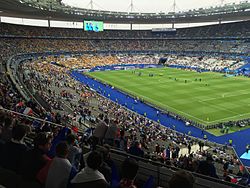
On 12 July 1998, when France won the FIFA World Cup for the first time after defeating Brazil 3–0 at the Stade de France, images of the players including double goal scorer Zinedine Zidane and their names along with celebratory messages were projected onto the arch.
Image source: 1998 FIFA World Cup final
1999
% complete
A miniature version of the Arc de Triomphe opened at the Paris Casino in Las Vegas, United States, in 1999, part of the hotel's homage to the French capital.
Image source: Paris Las Vegas
Feb 2007
% complete
Inside the monument, a permanent exhibition conceived by artist Maurice Benayoun and architect Christophe Girault opened in February 2007, presenting the history of the arch to visitors.
2008
% complete
The Simpang Lima Gumul Monument in Kediri, Indonesia, completed in 2008, is among the replicas that used the Arc de Triomphe's design as a model.
Image source: Simpang Lima Gumul Monument
Nov 2018 - Dec 2018
% complete
In late 2018, the Arc de Triomphe suffered acts of vandalism during the yellow vests protests, with graffiti and damage inflicted on parts of the monument during demonstrations.
Image source: Yellow vests protests
Sep 2021
% complete
In September 2021, the Arc was wrapped in a silvery blue fabric and red rope, as part of L'Arc de Triomphe, Wrapped, a posthumous project planned by artists Christo and Jeanne-Claude since the early 1960s.
Image source: L'Arc de Triomphe, Wrapped
Or browse the full history timeline directory, with more than 2,000 topics.
This Arc de Triomphe timeline was generated with the help of AI, using information found on the internet.
We work hard to keep these timelines accurate, but mistakes do get through. If you spot one, email us at [email protected] and we'll fix it for future visitors.
Generate yours with AI or build it from scratch, for free.
Export your timeline, add your own events, edit or remove AI-generated events, and much more
No credit card required.
Cancel anytime.
Cancel anytime.
You can create an unlimited number of timelines with up to 10 events on each one, customize how they look, export them to PDF, PNG, PowerPoint, CSV, and Excel, and share them with a link. Paid plans raise the event limit and add features like spreadsheet imports and collaborators.
Yes. You can cancel your subscription from your account page at any time, and you will not be charged again. Your subscription stays active for the rest of the period you already paid for.
Yes. We will email you a reminder before the annual renewal, and we will also email you a receipt.
Yes. You can email us within 15 days of any payment, and we will issue you a full refund.
Check out our pricing docs or send us an email anytime: [email protected].