-
Use Cases
-
Resources
-
Pricing
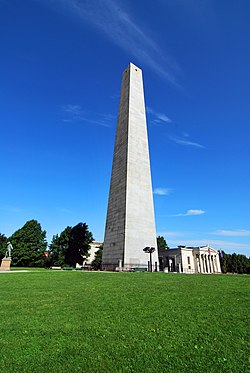
The Battle of Bunker Hill, fought on June 17, 1775 during the Siege of Boston, was one of the earliest major engagements of the American Revolutionary War. Although most fighting took place on nearby Breed's Hill, the battle became an iconic demonstration of colonial resolve. British forces eventually captured the fortifications, but at a staggering cost of over 1,000 casualties, proving that inexperienced Patriot militia could inflict devastating losses on the world's most powerful army. More Less
1594 - 1632
% complete
The idea behind the famous order dates originally to Swedish general-king Gustavus Adolphus (1594–1632), who gave standing orders to his musketeers never to give fire until they could see their own image in the pupil of their enemy's eye, emphasizing disciplined, close-range volleys.
Image source: Gustavus Adolphus
1594
% complete
Gustavus Adolphus, the Swedish general-king whose military innovations would influence tactics for generations, was born in 1594. His ideas on infantry discipline later inspired the famous order associated with the Battle of Bunker Hill.
Jun 27, 1743
% complete
The earliest similar quotation came from the Battle of Dettingen on June 27, 1743, where Lieutenant-Colonel Sir Andrew Agnew of Lochnaw warned the Royal Scots Fusiliers not to fire until they could see the white of their e'en, an early version of the famous phrase.
Image source: Battle of Dettingen
1745
% complete
In 1745, Prince Charles of Prussia used a version of the 'do not fire until you see the whites of their eyes' instruction, helping carry the tactical admonition through European military tradition.
Image source: Battle of Bunker Hill
1755
% complete
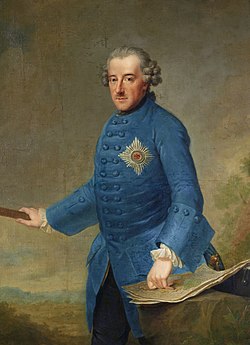
In 1755, Frederick the Great repeated the famous instruction about holding fire until the enemy was at very close range, and the phrase may have been mentioned in histories with which the colonial military leaders were familiar.
Image source: Frederick the Great
Sep 13, 1759
% complete
General James Wolfe used the hold-fire order on the Plains of Abraham when his troops defeated Montcalm's army on September 13, 1759, another precedent for the discipline later attributed to the Americans at Bunker Hill.
Image source: Battle of the Plains of Abraham
Apr 19, 1775
% complete
The battles of Lexington and Concord on April 19, 1775 marked the outbreak of armed conflict between Great Britain and its thirteen American colonies. In their aftermath, thousands of colonial militiamen converged on the Boston area, setting the stage for the prolonged standoff that would lead to the Battle of Bunker Hill.
Image source: Battles of Lexington and Concord
Apr 19, 1775
% complete
In the aftermath of the battles of Lexington and Concord, a colonial militia of some 15,000 men surrounded the town of Boston and placed it under siege, trapping the British garrison inside the city and beginning the Siege of Boston.
Image source: Siege of Boston
Apr 19, 1775
% complete
The colonial militia that surrounded and besieged Boston operated under the overall command of General Artemas Ward, who directed the encirclement of the town following the fighting at Lexington and Concord.
Image source: Artemas Ward
Jun 13, 1775
% complete
On June 13, 1775, the leaders of the colonial forces besieging Boston learned that the British were planning to send troops out from the city to fortify the unoccupied hills surrounding it, which would give the British control of Boston Harbor.
Jun 16, 1775
% complete
On the night of June 16, 1775, 1,200 Continental troops assembled in nearby Cambridge under the command of Colonel Prescott before marching toward the Charlestown peninsula. A small granite monument just north of Harvard Yard bears an inscription commemorating this assembly.
Jun 17, 1775
% complete
The Battle of Bunker Hill was fought on June 17, 1775, during the Siege of Boston in the first stage of the American Revolutionary War. Though a costly British victory, the battle demonstrated that inexperienced colonial forces could stand up to the British army in pitched combat.
Jun 20, 1775
% complete
A British commander was dismissed from office just three days after his report on the battle was received, reflecting dissatisfaction in London with the enormous casualties suffered in the pyrrhic victory at Bunker Hill.
Oct 1775
% complete
Although the dismissed commander had been removed from office shortly after his report was received, General Howe did not replace him until October 1775, when he took over the top command of British forces during the Siege of Boston.
Image source: William Howe, 5th Viscount Howe
Aug 1776
% complete
In the aftermath of the Battle of Long Island in 1776, General Howe again possessed tactical advantages that might have delivered Washington's army into his hands, but he once more refused to act, allowing the Continental Army to escape destruction.
Image source: Battle of Long Island
1777
% complete
For his role in the 1777 Battle of Bennington, John Stark became widely known as the Hero of Bennington, cementing the reputation he first earned as a commander at the Battle of Bunker Hill.
Image source: John Stark
Aug 16, 1777
% complete
John Stark, a hero of Bunker Hill who famously told his men to aim at the handsome coats of the British officers, played a key role in the 1777 Battle of Bennington, a significant American victory during the Saratoga campaign.
Image source: Battle of Bennington
1812 - 1815
% complete
One of the commanders connected to the battle's legacy was relieved of one of his top commands during the War of 1812 due to his mistakes, a blemish on a career otherwise tied to the Revolutionary War era.
Image source: War of 1812
Jun 17, 1825
% complete
On June 17, 1825, the fiftieth anniversary of the battle, the cornerstone of the Bunker Hill Monument was laid by the Marquis de Lafayette, with an address delivered by Daniel Webster before a large gathered crowd.
Image source: Bunker Hill Monument
Jun 16, 1875 - Jun 17, 1875
% complete
On June 16 and 17, 1875, the centennial of the battle was celebrated in Boston with a grand military parade honoring the hundredth anniversary of the famous engagement on the Charlestown peninsula.
Jun 17, 1875
% complete
As part of the centennial celebrations, a reception featured notable speakers including General William Tecumseh Sherman and Vice President Henry Wilson, marking one hundred years since the battle.
Jun 17, 1925
% complete
Celebratory events marked the sesquicentennial, the 150th anniversary of the Battle of Bunker Hill, in 1925, continuing the tradition of commemorating the pivotal early Revolutionary War engagement.
Jun 17, 1975
% complete
Celebratory events also marked the bicentennial of the Battle of Bunker Hill in 1975, held amid the wider bicentennial observances of the American Revolution taking place across the United States.
2007
% complete
A cyclorama depicting the battle was added in 2007 when the museum was renovated, giving visitors an immersive panoramic view of the fighting on Breed's and Bunker Hills.
Image source: Bunker Hill Monument
Jun 2025
% complete
In June 2025, multiple events were held during Bunker Hill Commemoration Week, celebrating and exploring the 250th anniversary of the Battle of Bunker Hill and its enduring place in American history.
Or browse the full history timeline directory, with more than 2,000 topics.
This Battle of Bunker Hill timeline was generated with the help of AI, using information found on the internet.
We work hard to keep these timelines accurate, but mistakes do get through. If you spot one, email us at [email protected] and we'll fix it for future visitors.
Generate yours with AI or build it from scratch, for free.
Export your timeline, add your own events, edit or remove AI-generated events, and much more
No credit card required.
Cancel anytime.
Cancel anytime.
You can create an unlimited number of timelines with up to 10 events on each one, customize how they look, export them to PDF, PNG, PowerPoint, CSV, and Excel, and share them with a link. Paid plans raise the event limit and add features like spreadsheet imports and collaborators.
Yes. You can cancel your subscription from your account page at any time, and you will not be charged again. Your subscription stays active for the rest of the period you already paid for.
Yes. We will email you a reminder before the annual renewal, and we will also email you a receipt.
Yes. You can email us within 15 days of any payment, and we will issue you a full refund.
Check out our pricing docs or send us an email anytime: [email protected].