
-
Use Cases
-
Resources
-
Pricing
The Beat Generation was a literary and cultural movement of the 1950s, centered on writers like Jack Kerouac, Allen Ginsberg, and William S. Burroughs, who rejected mainstream American values in favor of spiritual exploration, experimentation with drugs and sexuality, and spontaneous forms of writing. More Less
1926
% complete
The 1926 novel You Can't Win by outlaw author Jack Black was cited as having a strong influence on William S. Burroughs, shaping his fascination with the criminal underworld that would later permeate Beat literature.
Image source: You Can't Win (book)
1944
% complete
The core group of Beat Generation authors—Herbert Huncke, Allen Ginsberg, William S. Burroughs, Lucien Carr, and Jack Kerouac—met in 1944 in and around Columbia University's campus in New York City, forming the nucleus of the movement.
1944
% complete
Carr knew Kerouac's girlfriend Edie Parker, through whom Burroughs met Kerouac in 1944, cementing the friendships at the heart of the Beat Generation.
Aug 13, 1944
% complete
On August 13, 1944, Carr killed Kammerer with a Boy Scout knife in Riverside Park in what he claimed later was self-defense, an event that shook the young circle of friends.
Image source: Lucien Carr
1948
% complete
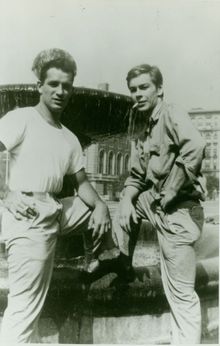
Kerouac introduced the phrase 'Beat Generation' in 1948 to characterize a perceived underground, anti-conformist youth movement in New York. Fellow poet Herbert Huncke is credited with first using the word 'beat'.
Image source: Beat Generation
1948
% complete
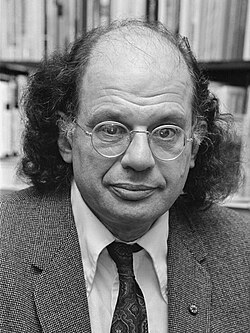
William Blake was the subject of Ginsberg's self-defining auditory hallucination and revelation in 1948, a mystical experience that profoundly shaped his poetry and worldview.
Image source: Allen Ginsberg
1949
% complete
Ginsberg was arrested in 1949, an episode connected to events surrounding Herbert Huncke and the stolen goods kept in Ginsberg's apartment, leading him to plead insanity and spend time in a psychiatric institution.
1954
% complete
Ginsberg had visited Neal and Carolyn Cassady in San Jose, California in 1954 and moved to San Francisco in August, relocating to the city that would become central to the Beat movement.
1955
% complete
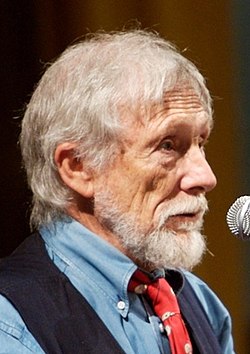
In the spring of 1955, they lived together in Snyder's cabin in Mill Valley, California, a period of close collaboration among the West Coast Beats.
Image source: Gary Snyder
1955
% complete
As documented in the conclusion of The Dharma Bums, Snyder moved to Japan in 1955, in large measure to intensively practice and study Zen Buddhism.
1955 - 1956
% complete
Gary Snyder studied anthropology there, Philip Whalen attended Reed, and Allen Ginsberg held multiple readings on the campus around 1955 and 1956, making Reed College a notable Beat touchstone.
Image source: Reed College
1962
% complete
Poet Elise Cowen, who had been part of the Beat circle and briefly involved with Allen Ginsberg, took her own life in 1962.
Image source: Elise Cowen
1953
% complete
Carl Solomon became the publishing contact who agreed to publish Burroughs' first novel, Junkie, in 1953, marking Burroughs' debut as a published novelist.
Image source: Junkie (novel)
1954
% complete
At the end of 1954, Ginsberg fell in love with Peter Orlovsky and began writing Howl, the poem that would become one of the defining works of the Beat Generation.
1955
% complete
Lawrence Ferlinghetti, of the new City Lights Bookstore, started to publish the City Lights Pocket Poets Series in 1955, creating a vital publishing outlet for Beat poetry.
Image source: City Lights Bookstore
1956
% complete
The 1956 publication of Howl (City Lights Pocket Poets, no. 4) was a marker of the beginning of the Beat movement, and its obscenity trial in 1957 brought it to nationwide attention.
1957
% complete
Jack Kerouac's On the Road, published in 1957, became one of the best-known examples of Beat literature, capturing the restless spirit of postwar American youth.
Image source: On the Road
1957
% complete
The obscenity trial of Howl in 1957 brought the poem to nationwide attention; Judge Clayton Horn ultimately ruled the work not obscene, a landmark victory for free expression.
1959
% complete
William S. Burroughs' Naked Lunch, published in 1959, became one of the best-known examples of Beat literature, renowned for its experimental structure and controversial content.
Image source: Naked Lunch
Oct 7, 1955
% complete
Philip Lamantia, Michael McClure, Philip Whalen, Ginsberg and Gary Snyder read on October 7, 1955, before 100 people including Kerouac, who had come up from Mexico City. The event marked the public emergence of the San Francisco Beat scene.
Image source: Six Gallery reading
1958
% complete
LeRoi Jones (Amiri Baraka) married Beat writer Hettie Cohen, who became Hettie Jones, in 1958; together they were central figures in the Greenwich Village avant-garde scene.
Image source: Hettie Jones
1958
% complete
Norman Podhoretz's 1958 Partisan Review article 'The Know-Nothing Bohemians' was a vehement critique primarily of Kerouac's On the Road and The Subterraneans, as well as Ginsberg's Howl.
Image source: Norman Podhoretz
1958
% complete
Ginsberg responded in a 1958 interview with The Village Voice, specifically addressing the charge that the Beats destroyed 'the distinction between life and literature', dismissing Podhoretz as out of touch with twentieth-century literature.
1958
% complete
By 1958 tourists who came to San Francisco could take bus tours to view the North Beach Beat scene, prophetically anticipating similar tours of the Haight-Ashbury district ten years later.
Image source: North Beach, San Francisco
Apr 2, 1958
% complete
The term 'beatnik' was coined by Herb Caen of the San Francisco Chronicle on April 2, 1958, blending the name of the recent Russian satellite Sputnik with Beat Generation.
Image source: Beatnik
1959
% complete
In 1959, Fred McDarrah started a 'Rent-a-Beatnik' service in New York, taking out ads in The Village Voice and sending Ted Joans and friends out on calls to read poetry.
Image source: Fred W. McDarrah
1959 - 1963
% complete
The beatnik character Maynard G. Krebs, played by Bob Denver, appeared in The Many Loves of Dobie Gillis (1959–1963), bringing a comedic version of the Beat stereotype into mainstream American living rooms.
Image source: Maynard G. Krebs
1960
% complete
In 1960, a presidential election year, the Beats formed a political party, the 'Beat Party', and held a mock nominating convention: African-American street poet Big Brown won a majority of votes on the first ballot but fell short of the eventual nomination.
1972
% complete
The band Aztec Two-Step recorded 'The Persecution & Restoration of Dean Moriarty (On the Road)' in 1972, a musical homage to Kerouac's novel.
Image source: Aztec Two-Step
1975
% complete
Ginsberg was a close friend of Bob Dylan and toured with him on the Rolling Thunder Revue in 1975, bridging Beat poetry and rock music for new audiences.
Image source: Rolling Thunder Revue
1984
% complete
Laurie Anderson featured Burroughs on her 1984 album Mister Heartbreak and again in her 1986 concert film Home of the Brave, extending Burroughs' influence into experimental music and art.
Image source: Mister Heartbreak
1988
% complete
Jazz musician/film composer Robert Kraft wrote and released a contemporary homage to Beat Generation aesthetics entitled 'Beat Generation' on the 1988 album Quake City.
1990
% complete
Carolyn Cassady titled her memoir Off the Road, and it was published in 1990, offering an insider's account of life with Neal Cassady and the Beats.
1997
% complete
Bono of U2 cites Burroughs as a major influence, and Burroughs appeared briefly in a U2 video in 1997, underscoring his enduring impact on popular culture.
2014
% complete
American artist Lana Del Rey references the Beat movement and Beat poetry in her 2014 song 'Brooklyn Baby', showing the movement's continued resonance in contemporary pop culture.
Image source: Brooklyn Baby
Or browse the full history timeline directory, with more than 2,000 topics.
This Beat Generation timeline was generated with the help of AI, using information found on the internet.
We work hard to keep these timelines accurate, but mistakes do get through. If you spot one, email us at [email protected] and we'll fix it for future visitors.
Generate yours with AI or build it from scratch, for free.
Export your timeline, add your own events, edit or remove AI-generated events, and much more
No credit card required.
Cancel anytime.
Cancel anytime.
You can create an unlimited number of timelines with up to 10 events on each one, customize how they look, export them to PDF, PNG, PowerPoint, CSV, and Excel, and share them with a link. Paid plans raise the event limit and add features like spreadsheet imports and collaborators.
Yes. You can cancel your subscription from your account page at any time, and you will not be charged again. Your subscription stays active for the rest of the period you already paid for.
Yes. We will email you a reminder before the annual renewal, and we will also email you a receipt.
Yes. You can email us within 15 days of any payment, and we will issue you a full refund.
Check out our pricing docs or send us an email anytime: [email protected].