
-
Resources
-
Pricing
The Bonus Army was a 1932 protest by World War I veterans seeking early payment of compensation promised for their military service. Their peaceful encampment in Washington, D.C., was forcibly removed, creating a major political crisis during the Great Depression. More Less
Build a timeline like this one in minutes, for free. Start Yours →
1776
The practice of wartime military bonuses began in 1776. These payments compensated soldiers for the difference between military earnings and what they might have earned had they not enlisted.
1776 - 1855
Before World War I, military-service bonuses were commonly provided as land and money, adjusted for rank. A Continental Army private received 100 acres and $80 at the war’s end, while a major general received 1,100 acres.
Image source: Veteran
Aug 1776
In August 1776, Congress adopted the first national pension law, providing half pay for life to disabled veterans.
Image source: Veterans Benefits Administration
1781
In 1781, most of the Continental Army was demobilized. The veterans’ benefits tradition continued through later congressional pension and bonus legislation.
Image source: Continental Army
1788 - 1836
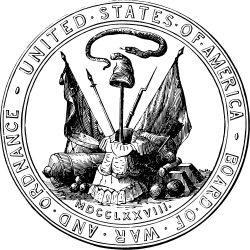
Beginning in 1788, Congress progressively passed legislation covering veterans’ pensions and bonuses. Eligibility was eventually extended to widows in 1836.
Image source: Pension
1855
In 1855, Congress raised the minimum land grant to 160 acres and reduced eligibility requirements to fourteen days of service or participation in one battle. The bonus also applied to veterans of any Indian war.
Image source: Land grant
1860
By 1860, 73.5 million acres had been issued. A lack of available arable land led to abandonment of the land-grant program and its replacement with a cash-only system.
Image source: Bounty jumper
1898 - 1918
Breaking with the earlier tradition, veterans of the Spanish–American War did not receive a bonus. After World War I, the issue became politically contentious when veterans received only a $60 payment.
Image source: Spanish–American War
1919
Created in 1919, the American Legion led a political movement seeking an additional bonus for World War I veterans.
Image source: American Legion
1924
Under the 1924 arrangement, veterans were to receive one dollar for each day of domestic service, up to $500, and $1.25 for each day of overseas service, up to $625.
Image source: World War Adjusted Compensation Act
1924
The government issued 3,662,374 Adjusted Service Certificates with a combined face value of $3.64 billion.
1924
The World War Adjusted Compensation Act awarded U.S. World War I veterans bonuses through certificates that could not be redeemed until 1945.
1924
Congress established a trust fund funded by 20 annual payments of $112 million. With interest, the fund was intended to finance the veterans’ $3.638 billion disbursement in 1945.
May 15, 1924
President Calvin Coolidge vetoed a bill granting bonuses to World War I veterans, declaring that “patriotism... bought and paid for is not patriotism.” Henry Cabot Lodge and Charles Curtis endorsed the Bonus Bill.
1931
Veterans could initially borrow up to 22.5 percent of a certificate’s face value. In 1931, during the Great Depression, Congress increased the maximum loan to 50 percent.
Jun 15, 1932
The U.S. House of Representatives passed the Wright Patman Bonus Bill by a vote of 211–176. The measure sought to move forward the date when World War I veterans would receive their cash bonuses.
Image source: Bonus Army
1936
With Democrats holding majorities in both houses, Congress passed the Adjusted Compensation Payment Act in 1936. It authorized immediate payment of $2 billion in World War I bonuses, and Congress overrode President Roosevelt’s veto.
1932
Eric Carlson, a 1932-deceased veteran from Oakland, California, had fought in the trenches of France during World War I. He was interred in Arlington National Cemetery.
Jan 1932
In January 1932, 25,000 unemployed Pennsylvanians known as Cox’s Army marched on Washington, D.C. It was the largest demonstration in the capital to that point and set a precedent for later marches by unemployed people.
Image source: James Renshaw Cox
1932
William Hushka, an immigrant from Lithuania, had sold his butcher shop in St. Louis and joined the U.S. Army when the United States entered World War I in 1917. He died in 1932 in connection with the Bonus Army events.
May 31, 1932
The Daily Worker, the central organ of the Communist Party in the United States, urged worker-veteran delegations to go to Washington on June 8. The Communist Party also undertook an organized campaign to encourage radicals to join the movement.
Jun 1932 - Jul 1932
The Bonus Army, consisting of about 43,000 demonstrators—including 17,000 World War I veterans, their families, and affiliated groups—gathered in Washington, D.C., to demand early cash redemption of their service-bonus certificates.
Jul 5, 1932
Conrad H. Lanza produced a report in upstate New York on July 5, 1932. The report was not declassified until 1991.
Jul 28, 1932
On July 28, 1932, U.S. Attorney General William D. Mitchell ordered the veterans removed from all government property.
Mar 1933 - May 1933
After Franklin D. Roosevelt became president in March 1933, the National Liaison Committee of Washington planned a second, smaller Bonus March. It demanded that the federal government provide housing and food for marchers during their stay in the capital.
May 1933
The second, smaller Bonus March was defused in May 1933 when the administration offered jobs with the Civilian Conservation Corps at Fort Hunt, Virginia. Most of the group accepted the offer.
May 11, 1933
On May 11, 1933, President Roosevelt issued an executive order allowing 25,000 veterans to enroll in the Civilian Conservation Corps. The order exempted them from the normal requirements that applicants be unmarried and under age 25.
Image source: Civilian Conservation Corps
1932
In 1932, President Herbert Hoover stated that most Bonus Army members behaved reasonably. He attributed much of the unrest to a minority he described as communists and career criminals while emphasizing that many marchers were honest veterans entitled to present their views to Congress.
Nov 8, 1932
The Bonus Army incident proved politically disastrous for President Herbert Hoover and contributed to his losing the 1932 election in a landslide to Franklin D. Roosevelt.
Image source: 1932 United States presidential election
Mar 1933
MGM released the film Gabriel Over the White House in March 1933, the month Franklin D. Roosevelt was sworn in as president.
Image source: Gabriel Over the White House
1991
The report written by Conrad H. Lanza on July 5, 1932, remained classified for decades and was not declassified until 1991.
1995
The opening scenes of the 1995 film In Pursuit of Honor depict a fictionalized version of the Bonus March.
Image source: In Pursuit of Honor
2024
Neal Stephenson’s 2024 novel Polostan features a main character who travels with communists within the Bonus Army to Washington and becomes involved in the army’s intervention.
Image source: Polostan
Build a timeline like this one in minutes, for free. Start Yours →
Or browse the full history timeline directory, with more than 2,500 topics.
This Bonus Army timeline was generated with the help of AI, using information found on the internet.
We work hard to keep these timelines accurate, but mistakes do get through. If you spot one, email us at [email protected] and we'll fix it for future visitors.
Generate yours with AI or build it from scratch, for free.
Export your timeline, add your own events, edit or remove AI-generated events, and much more
No credit card required.
15-day money-back guarantee.
You can create an unlimited number of timelines with up to 10 events on each one, customize how they look, export them to PDF, PNG, PowerPoint, CSV, and Excel, and share them with a link. Timelines made with Timeline Maker AI keep every event the generator created, and you can add up to 5 events of your own. Paid plans remove the event limit, add spreadsheet imports and hide Preceden's branding, and the higher-priced plan also adds collaborators, a custom logo and a custom domain.
Yes. You can cancel your subscription from your account page at any time, and you will not be charged again. Your subscription stays active for the rest of the period you already paid for.
Yes. We email you a reminder 15 days before your annual renewal, and we email you a receipt after every payment.
Yes. You can email us within 15 days of any payment, and we will issue you a full refund.
Check out our pricing docs or send us an email anytime: [email protected].