
-
Use Cases
-
Resources
-
Pricing
The Carolingian Renaissance was a period of cultural, intellectual, and artistic revival in Western Europe during the late 8th and 9th centuries, driven by Charlemagne and the Carolingian dynasty. It emphasized the preservation of classical texts, reform of education and liturgy, standardization of script (Carolingian minuscule), and flourishing of manuscript illumination and architecture. More Less
476
% complete
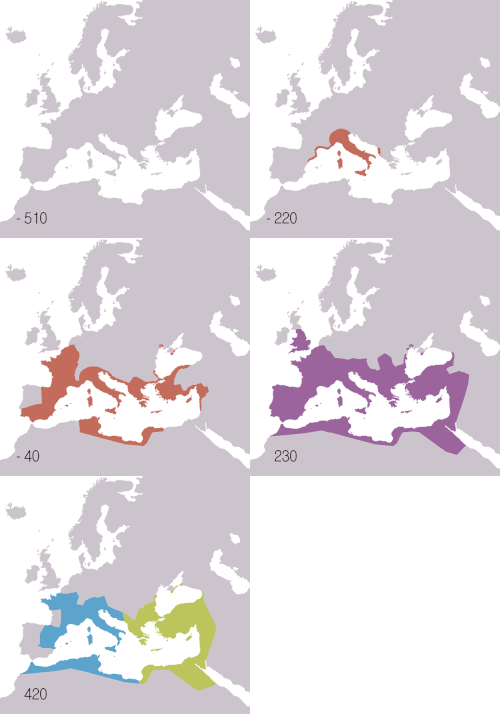
The fall of the Western Roman Empire in the 5th century marked a profound turning point in European history. The dissolution of imperial structures disrupted economic, educational, and cultural life, setting the stage for centuries of transformation that would eventually give way to revivals such as the Carolingian Renaissance.
Image source: Fall of the Western Roman Empire
500 - 700
% complete
The centuries following the dissolution of the Roman Empire in the West did not see an abrupt disappearance of the ancient schools. Educational traditions survived in various forms, preserving classical learning and providing foundations upon which later intellectual revivals, including the Carolingian Renaissance, could be built.
Image source: Carolingian Renaissance
550 - 800
% complete
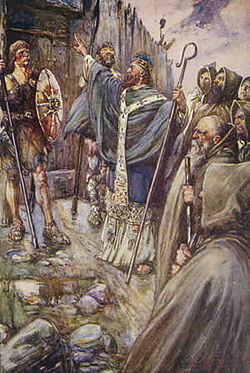
Missionaries and scholars such as Columbanus carried Irish monastic traditions across the continent. The spread of Irish monastic schools and their scriptoria over Europe laid essential groundwork for the Carolingian Renaissance by establishing networks of learning that Charlemagne's reforms later drew upon.
Image source: Columbanus
600 - 750
% complete
The spread of Irish monastic schools and scriptoria over Europe laid the groundwork for the Carolingian Renaissance. Irish monks established centers of learning and manuscript production on the continent, transmitting literacy, Latin scholarship, and Christian learning throughout western Europe.
Image source: Hiberno-Scottish mission
600 - 700
% complete
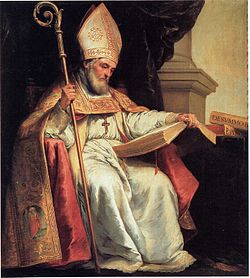
In the Visigothic Kingdom of Hispania, sciences flourished during the 7th-century Isidorian Renaissance. Centers such as Seville and Toledo became hubs of learning where astronomy, medicine, grammar, and natural philosophy were studied and transmitted.
Image source: Visigothic Kingdom
615 - 636
% complete
During the Isidorian Renaissance in Visigothic Hispania, the integration of Christian and pre-Christian thought occurred. Scholars such as Isidore of Seville synthesized classical pagan learning with Christian doctrine, creating encyclopedic works like the Etymologiae that shaped medieval education.
Image source: Isidore of Seville
620 - 700
% complete
The 7th century saw the Isidorian Renaissance in the Visigothic Kingdom of Hispania, in which sciences flourished under the influence of scholars such as Isidore of Seville. This period witnessed the integration of Christian and pre-Christian thought, preserving classical knowledge for later generations.
Image source: Medieval renaissances
700 - 800
% complete
A lack of Latin literacy in eighth-century western Europe caused problems for the Carolingian rulers by severely limiting the number of people capable of serving as court scribes in societies where Latin was valued. This shortage of literate administrators became a key motivation for the educational reforms of Charlemagne's reign.
768 - 814
% complete
Charlemagne's reign led to an intellectual revival taking inspiration from ancient Roman and Greek culture and the Christian Roman Empire of the 4th century. Drawing learned scholars from across Europe to his court, Charlemagne promoted education, standardization of Latin, and the copying of classical texts.
790 - 900
% complete
The Carolingian Renaissance provided a common language and writing style that enabled communication throughout most of Europe. The development of Carolingian minuscule standardized handwriting, making texts clearer and easier to copy, and facilitating correspondence and administration across the Frankish realm.
Image source: Carolingian minuscule
790 - 850
% complete
During the Carolingian Renaissance, rational ideas were applied to social issues for the first time in centuries. Scholars at the Carolingian court used reasoned analysis to address governance, law, theology, and society, marking a renewed engagement with classical modes of thought.
800 - 849
% complete
The intellectual revival of the Carolingian Renaissance took inspiration from ancient Roman and Greek culture and the Christian Roman Empire of the 4th century. Beginning in the late 8th century and continuing throughout the 9th, it sought to restore the grandeur of classical civilization within a Christian framework.
600
% complete
By the early 7th century, local economies in the West had degenerated into largely subsistence agriculture, with towns functioning merely as places of gift-exchange for the elite. This economic contraction represented the low point of post-Roman urban and commercial life.
650 - 700
% complete
By the late 7th century, developed urban settlements had emerged in western Europe, populated mostly by craftsmen and merchants and developing street grids, artisanal production, and regional and long-distance trade. This marked the beginning of an economic recovery from the subsistence economy of earlier centuries.
700 - 900
% complete
This period marked an economic revival in Western Europe, following the fall of the Western Roman Empire in the 5th century. Growing trade, urbanization, and agricultural productivity during the Carolingian era reversed the long decline that had followed antiquity.
700 - 730
% complete
Archaeological data shows the continuation of the upward economic trend in the early 8th century. Urban growth, trade expansion, and artisanal production that began in the late 7th century continued to develop, creating conditions favorable for the cultural flourishing to come.
790 - 800
% complete
The Carolingian system was imported to England by Offa of Mercia and other kings. Offa adopted the Carolingian coinage system, minting pennies modeled on Frankish examples, integrating England into broader European economic patterns.
Image source: Offa of Mercia
790 - 1971
% complete
The Carolingian monetary system formed the basis of English currency until the late 20th century. Its enduring legacy lasted over twelve centuries, demonstrating the remarkable longevity of Carolingian economic innovations introduced through Offa of Mercia.
Image source: Penny (British pre-decimal coin)
650 - 800
% complete
In the 7th and 8th centuries, no copies of the texts of certain ancient authors were made in the Latin West. The loss or neglect of these works underscored the fragility of classical transmission before the Carolingian scriptoria undertook their massive copying efforts.
700 - 800
% complete
In early medieval Spain, the word for 'century'—which would have been pronounced */sjeglo/—was properly spelled ⟨saeculum⟩, as it had been for the better part of a millennium. This illustrates how written Latin preserved conservative spellings even as spoken Romance diverged.
800 - 899
% complete
It has been estimated that Carolingian workshops produced over 100,000 manuscripts in the 9th century, of which some 6,000 to 7,000 survive. This unprecedented output of books preserved countless classical and Christian texts that might otherwise have been lost.
800 - 900
% complete
From the century after AD 800, over 7,000 Latin manuscripts survive—a dramatic increase over earlier periods. As Conrad Leyser notes, this explosion of surviving manuscripts testifies to the scale and intensity of Carolingian copying and educational activity.
800
% complete
As Conrad Leyser notes, fewer than 2,000 Latin manuscripts survive from the period before AD 800. This scarcity reflects both the limited book production of the early Middle Ages and the losses caused by war, decay, and neglect.
780 - 800
% complete
Beginning in the late eighth century, Carolingian architecture was a conscious attempt to create a Roman Renaissance, emulating Roman, Early Christian and Byzantine architecture while incorporating its own innovation. Buildings such as the Palatine Chapel at Aachen exemplified this unique character.
Image source: Carolingian architecture
800 - 899
% complete
Carolingian architecture spanned the late eighth and ninth centuries, producing churches, monasteries, and palaces that emulated Roman, Early Christian, and Byzantine models. These buildings featured westworks, monumental entrances, and innovative plans that gave the style its unique character.
810 - 820
% complete
A ninth-century copy of an astronomical treatise demonstrates how the Carolingians took great care copying pieces of work and preserving the Antique styles which characterize them. Such manuscripts show the deliberate effort to revive and maintain classical artistic and scholarly traditions.
Image source: Carolingian art
900 - 936
% complete
The period of Carolingian architecture extended until the reign of Otto I, beginning in 936. With the Ottonian dynasty's rise, architectural patronage shifted, but Carolingian forms and ideals continued to influence building design in the transition to the Ottonian Renaissance.
Image source: Otto the Great
800 - 899
% complete
The earliest concept of Europe as a distinct cultural region, instead of simply a geographic area, appeared during the Carolingian Renaissance of the 9th century. It included the territories which practiced Western Christianity at the time, linking cultural identity to religious affiliation.
1100 - 1200
% complete
Writing in Romance does not appear to have become widespread until the Renaissance of the Twelfth Century. During the Carolingian era, Latin remained the dominant written language, and the vernacular Romance tongues only gradually gained literary status in later centuries.
Image source: Renaissance of the 12th century
Or browse the full history timeline directory, with more than 2,000 topics.
This Carolingian Renaissance timeline was generated with the help of AI, using information found on the internet.
We work hard to keep these timelines accurate, but mistakes do get through. If you spot one, email us at [email protected] and we'll fix it for future visitors.
Generate yours with AI or build it from scratch, for free.
Export your timeline, add your own events, edit or remove AI-generated events, and much more
No credit card required.
Cancel anytime.
Cancel anytime.
You can create an unlimited number of timelines with up to 10 events on each one, customize how they look, export them to PDF, PNG, PowerPoint, CSV, and Excel, and share them with a link. Paid plans raise the event limit and add features like spreadsheet imports and collaborators.
Yes. You can cancel your subscription from your account page at any time, and you will not be charged again. Your subscription stays active for the rest of the period you already paid for.
Yes. We will email you a reminder before the annual renewal, and we will also email you a receipt.
Yes. You can email us within 15 days of any payment, and we will issue you a full refund.
Check out our pricing docs or send us an email anytime: [email protected].