-
Use Cases
-
Resources
-
Pricing
Charlie Chaplin (1889–1977) was an English comic actor, filmmaker, and composer who became one of the most influential figures in the history of cinema. Best known for his silent film character 'The Tramp,' Chaplin rose from a poverty-stricken childhood in London to global fame in Hollywood. Over his career spanning more than 75 years, he wrote, directed, produced, and starred in classics such as The Kid, City Lights, Modern Times, and The Great Dictator, shaping the art of motion pictures. More Less
Apr 16, 1889
% complete
Charles Spencer Chaplin was born on April 16, 1889, in Walworth, London, England. His parents, Charles Chaplin Sr. and Hannah Chaplin, were both music hall entertainers, exposing him to the performing arts from an early age.
Image source: Charlie Chaplin
1894
% complete
Chaplin made his first stage appearance in 1894, at the age of five, filling in for his mother during a music hall performance when her voice failed. The audience loved his impromptu singing and coin-throwing routine.
1899
% complete
At around age nine, Chaplin joined a clog-dancing troupe called the Eight Lancashire Lads, touring British music halls. The experience gave him valuable stage training despite the exhausting schedule.
May 9, 1901
% complete
Chaplin's father died in May 1901 from cirrhosis of the liver caused by alcoholism. His death left the family in further hardship, and Chaplin spent time in workhouses and schools for paupers during his childhood.
Image source: Charles Chaplin Sr.
1903
% complete
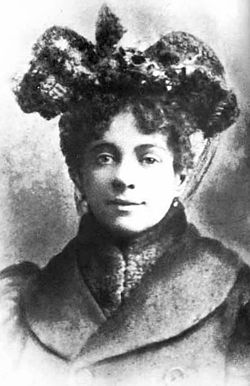
In 1903, Chaplin's mother Hannah was committed to a mental asylum after suffering a breakdown caused by psychosis and malnutrition. This left young Charlie and his brother Sydney to largely fend for themselves.
Image source: Hannah Chaplin
Jul 27, 1903 - 1906
% complete
Chaplin was cast as Billy the pageboy in William Gillette's stage production of Sherlock Holmes, first appearing in July 1903. He toured with the production for several years and earned his first significant acting recognition.
Image source: Sherlock Holmes (play)
1908
% complete
Chaplin joined Fred Karno's renowned comedy sketch company in 1908, where he honed his pantomime and physical comedy skills. He became one of Karno's star performers and eventually toured the United States.
Image source: Fred Karno
Sep 1913
% complete
After touring America with Karno's troupe, Chaplin signed a contract with Mack Sennett's Keystone Studios in September 1913 for $150 a week, beginning his prolific American film career.
Image source: Keystone Studios
Feb 2, 1914
% complete
Chaplin made his film debut in Keystone's one-reeler Making a Living, released February 2, 1914. Though not an immediate hit, it launched his extraordinary screen career.
Image source: Making a Living
Feb 7, 1914
% complete
Chaplin debuted his iconic Tramp persona — bowler hat, cane, toothbrush mustache, and baggy pants — in Kid Auto Races at Venice, filmed at Keystone in early February 1914. The Little Fellow would become one of the most recognizable figures in world cinema.
Image source: The Tramp
Apr 20, 1914
% complete
Chaplin began directing his own films with Twenty Minutes of Love, released April 1914. Taking creative control allowed him to develop his distinctive blend of comedy and pathos.
Image source: Twenty Minutes of Love
Dec 1914 - Feb 1916
% complete
Chaplin left Keystone for Essanay Studios in late 1914 for a much higher salary. During roughly a year there he made classics like The Bank and The Tramp, refining the character's blend of comedy and sentimentality.
Image source: Essanay Studios
1916 - Jun 1917
% complete
Chaplin signed with Mutual Film Corporation in 1916 for $670,000 a year, making him one of the highest-paid people in the world. His twelve Mutual two-reel comedies are considered among his finest short films.
Image source: Mutual Film Company
Feb 5, 1919
% complete
Chaplin joined Mary Pickford, Douglas Fairbanks, and D. W. Griffith in founding United Artists on February 5, 1919, giving artists unprecedented control over their films' production and distribution.
Image source: United Artists
Jan 21, 1921
% complete
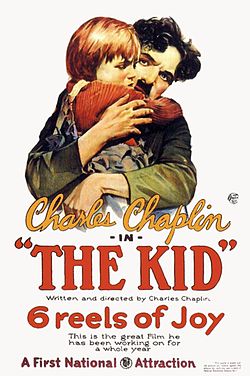
The Kid, Chaplin's first feature-length film, premiered January 21, 1921. Starring Jackie Coogan as an abandoned child raised by the Tramp, it masterfully blended slapstick with deep emotional drama and became a huge success.
Image source: The Kid (1921 film)
Nov 26, 1924 - Aug 25, 1927
% complete
Chaplin married sixteen-year-old Lita Grey, his leading lady in The Gold Rush, on November 26, 1924. Their troubled marriage ended in divorce in August 1927 amid scandal and a large financial settlement.
Image source: Lita Grey
Jun 26, 1925
% complete
The Gold Rush premiered June 26, 1925, featuring the Tramp as a lone prospector in the Klondike. Famous scenes include the boot-eating dinner and the dancing rolls; Chaplin considered it the film he most wanted to be remembered by.
Image source: The Gold Rush
Jan 6, 1928
% complete
The Circus premiered January 6, 1928, after a notoriously difficult production marred by studio fire and divorce proceedings. It earned Chaplin a special Academy Award for writing, directing, producing, and acting in the film.
Image source: The Circus (1928 film)
Jan 30, 1931
% complete
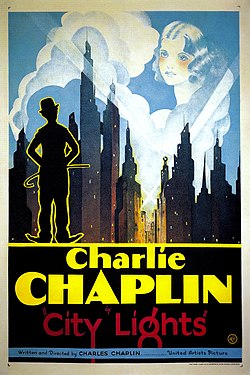
City Lights premiered January 30, 1931, a silent film made after the advent of sound, with a recorded score by Chaplin himself. Its story of the Tramp's love for a blind flower girl is widely regarded as one of the greatest films ever made.
Image source: City Lights
Sep 22, 1931
% complete
While promoting City Lights in Europe, Chaplin met Mahatma Gandhi in London on September 22, 1931. The meeting between the world's most famous comedian and its foremost advocate of nonviolence drew enormous public attention.
Image source: Mahatma Gandhi
Feb 5, 1936
% complete
Modern Times premiered February 5, 1936, satirizing industrialization and dehumanizing factory work. Paulette Goddard co-starred, and the film featured Chaplin's first audible screen voice in the nonsense song 'Titine.'
Image source: Modern Times (film)
Oct 15, 1940
% complete
The Great Dictator premiered October 15, 1940, Chaplin's first true talkie, in which he satirized Adolf Hitler as the dictator Adenoid Hynkel. Its climactic plea for humanity remains one of cinema's most celebrated speeches.
Image source: The Great Dictator
Jun 16, 1943
% complete
Chaplin married eighteen-year-old Oona O'Neill, daughter of playwright Eugene O'Neill, on June 16, 1943. Despite the age gap, their marriage proved deeply happy and lasted until his death; they had eight children together.
Image source: Oona Chaplin
1947 - 1952
% complete
Beginning in 1947, Chaplin faced accusations of communist sympathies during the postwar Red Scare. FBI director J. Edgar Hoover kept extensive files on him, and his political views made him increasingly unwelcome in the United States.
Apr 11, 1947
% complete
Monsieur Verdoux premiered April 11, 1947, a black comedy in which Chaplin played a Bluebeard-style serial killer of wealthy widows. The dark satire divided critics but has since been reappraised as a daring work.
Image source: Monsieur Verdoux
Sep 19, 1952
% complete
While sailing to Britain for Limelight's premiere in September 1952, Chaplin learned that his re-entry permit to the United States had been revoked amid political controversy. He settled in Switzerland and never lived in America again.
Oct 23, 1952
% complete
Limelight, about a fading vaudeville clown, premiered October 23, 1952, featuring Buster Keaton in a famous duet scene. Its score won an Academy Award in 1972, twenty years after release.
Image source: Limelight (1952 film)
Jan 1953
% complete
Chaplin purchased the Manoir de Ban estate in Corsier-sur-Vevey, Switzerland, moving there with his family in January 1953. He lived there in relative seclusion for the rest of his life.
Image source: Corsier-sur-Vevey
Apr 10, 1972
% complete
Chaplin returned to the United States for the first time in twenty years to accept an honorary Academy Award on April 10, 1972, receiving the longest standing ovation in Oscar history.
Mar 4, 1975
% complete
On March 4, 1975, Chaplin was knighted by Queen Elizabeth II, becoming Sir Charles Chaplin KBE. The honor recognized his immense contributions to British and world culture.
Dec 25, 1977
% complete
Charlie Chaplin died in his sleep on December 25, 1977, at his home in Corsier-sur-Vevey, Switzerland, at age 88. He was buried in the local cemetery, leaving behind an unmatched legacy in motion picture history.
Mar 2, 1978 - May 17, 1978
% complete
In March 1978, Chaplin's body was stolen by two men seeking ransom from his family. The plot was foiled, the culprits arrested in May 1978, and his remains were reburied in concrete to prevent future incidents.
Or browse the full history timeline directory, with more than 2,000 topics.
This Charlie Chaplin timeline was generated with the help of AI, using information found on the internet.
We work hard to keep these timelines accurate, but mistakes do get through. If you spot one, email us at [email protected] and we'll fix it for future visitors.
Generate yours with AI or build it from scratch, for free.
Export your timeline, add your own events, edit or remove AI-generated events, and much more
No credit card required.
Cancel anytime.
Cancel anytime.
You can create an unlimited number of timelines with up to 10 events on each one, customize how they look, export them to PDF, PNG, PowerPoint, CSV, and Excel, and share them with a link. Paid plans raise the event limit and add features like spreadsheet imports and collaborators.
Yes. You can cancel your subscription from your account page at any time, and you will not be charged again. Your subscription stays active for the rest of the period you already paid for.
Yes. We will email you a reminder before the annual renewal, and we will also email you a receipt.
Yes. You can email us within 15 days of any payment, and we will issue you a full refund.
Check out our pricing docs or send us an email anytime: [email protected].