
-
Use Cases
-
Resources
-
Pricing
Walt Disney (1901–1966) was an American animator, film producer, and entrepreneur who revolutionized the entertainment industry. He co-founded The Walt Disney Company, created iconic characters like Mickey Mouse, pioneered full-length animated feature films, and brought his imaginative vision to life with Disneyland and Walt Disney World theme parks, leaving a lasting global legacy. More Less
Dec 5, 1901
% complete
Walter Elias Disney was born in Chicago, Illinois, the fourth of five children of Elias and Flora Disney. Raised partly on a farm in Marceline, Missouri, his childhood experiences there later inspired many of the settings and themes in his films and theme parks.
Image source: Walt Disney
Jan 1, 1911
% complete
The Disney family relocated to Kansas City, Missouri, where Walt delivered newspapers for his father and developed an interest in drawing and vaudeville. He also took Saturday classes at the Kansas City Art Institute as a young teen.
Jan 1, 1918 - Jan 1, 1919
% complete
Too young to enlist during World War I, Walt Disney falsified his birth date to join the American Red Cross Ambulance Corps. He was stationed in France after the Armistice, driving ambulances and developing a lifelong sense of adventure.
Jan 1, 1922
% complete
In Kansas City, Disney founded Laugh-O-Gram Studio, producing animated fairy tale shorts. Despite early creativity, the studio went bankrupt in 1923, prompting Disney to move to Hollywood with little more than ambition and a reel of film.
Image source: Laugh-O-Gram Studio
Oct 16, 1923
% complete
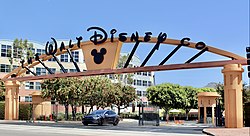
Walt and his brother Roy O. Disney established the Disney Brothers Cartoon Studio in Hollywood. The studio began by producing the Alice Comedies, blending live action and animation, laying the foundation of what would become The Walt Disney Company.
Image source: The Walt Disney Company
Jul 13, 1925
% complete
Disney married Lillian Bounds, an ink artist at his studio. She became a vital sounding board throughout his career; it was reportedly her suggestion that he name his most famous mouse 'Mickey' instead of 'Mortimer.'
Image source: Lillian Disney
Dec 18, 1933
% complete
Walt and Lillian Disney welcomed their first biological child, Diane. She later became a writer and philanthropist, helping preserve her father's legacy through projects like the Walt Disney Family Museum.
Image source: Diane Disney Miller
Jan 1, 1941 - Dec 31, 1945
% complete
During World War II, much of the Disney studio's output shifted to military training films, propaganda shorts, and morale-boosting works like Victory Through Air Power, keeping the financially strained studio afloat.
Image source: Walt Disney's World War II propaganda production
May 29, 1941 - Jul 28, 1941
% complete
A strike by hundreds of Disney animators over pay and working conditions lasted five weeks and deeply wounded Walt. The conflict reshaped labor relations at the studio and pushed some talent toward other studios.
Image source: Disney animators' strike
Aug 17, 1941 - Oct 20, 1941
% complete
Commissioned by the U.S. State Department as part of its Good Neighbor policy, Disney toured Latin America. The trip inspired the films Saludos Amigos and The Three Caballeros and strengthened hemispheric cultural ties.
Image source: Disney+ Hotstar
May 15, 1928
% complete
After losing rights to Oswald the Lucky Rabbit, Disney created Mickey Mouse with Ub Iwerks. The first Mickey cartoon, Plane Crazy, premiered as a silent test screening, but success would come only after sound was added.
Image source: Plane Crazy
Nov 18, 1928
% complete
Steamboat Willie debuted at New York's Colony Theatre as one of the first cartoons with fully synchronized sound. Its instant success launched Mickey Mouse into stardom and cemented Disney's reputation as a leader in animation innovation.
Image source: Steamboat Willie
Aug 22, 1929
% complete
The first Silly Symphony, The Skeleton Dance, premiered. The series allowed Disney to experiment with color, music, and character animation, serving as a proving ground for techniques used in later feature films.
Image source: Silly Symphony
Mar 19, 1932 - Mar 6, 1969
% complete
Over his lifetime Walt Disney won 22 competitive Academy Awards from 59 nominations, plus four honorary awards — records that still stand. Winnie the Pooh and the Blustery Day earned a posthumous Oscar awarded in 1969.
Image source: List of accolades received by Encanto
Nov 18, 1932
% complete
Flowers and Trees, the first full-color cartoon using three-strip Technicolor, won the inaugural Academy Award for Best Animated Short Subject. It began Disney's record-setting dominance of the category for decades.
Image source: Flowers and Trees
Dec 21, 1937
% complete
Hollywood's first full-length cel-animated feature premiered at the Carthay Circle Theatre. Dubbed 'Disney's Folly' during production, it grossed unprecedented sums and proved that animated features could be commercially and artistically successful.
Image source: Snow White and the Seven Dwarfs (1937 film)
Feb 7, 1940 - Nov 13, 1940
% complete
Disney released Pinocchio in February and Fantasia in November 1940. Fantasia pioneered Fantasound, an early stereophonic system, showcasing Disney's ambition to merge classical music with cutting-edge animation despite wartime box office struggles.
Image source: Fantasia (1940 film)
Feb 15, 1950
% complete
After postwar financial troubles forced cheaper package films, Cinderella marked Disney's return to full-scale animated features. Its enormous success rescued the studio financially and enabled expansion into new ventures.
Image source: Cinderella (1950 film)
Jul 19, 1950
% complete
Disney's first completely live-action feature film, produced in Britain, demonstrated Walt's intent to diversify beyond animation and opened decades of successful live-action filmmaking.
Image source: Treasure Island (1950 film)
Jul 28, 1951 - Feb 5, 1953
% complete
Two long-gestating projects finally reached theaters: Alice in Wonderland in 1951 and Peter Pan in 1953. Both had been in development since the 1930s and 40s and became enduring classics despite mixed initial reviews.
Image source: Peter Pan (1953 film)
Jan 29, 1959
% complete
Sleeping Beauty, in development for nearly a decade and costing $6 million, showcased lavish widescreen artistry inspired by medieval tapestries. Though initially underperforming, it became a beloved landmark of animation design.
Image source: Sleeping Beauty (1959 film)
Jan 25, 1961
% complete
101 Dalmatians used a new Xerox photocopy process to transfer animator drawings directly onto cels, dramatically reducing costs and giving the film its distinctive scratchy visual style. It was a major box office hit.
Image source: One Hundred and One Dalmatians
Aug 27, 1964
% complete
Mary Poppins blended live action with animation and earned 13 Academy Award nominations, winning five including Best Actress for Julie Andrews. It was Walt Disney's most personally championed film and the studio's biggest hit of his lifetime.
Image source: Mary Poppins Returns
Jul 17, 1955
% complete
Disneyland opened on a former orange grove in Anaheim, California. Broadcast live to millions on television, the park realized Walt's vision of an immersive family entertainment world and revolutionized the amusement park industry.
Image source: Disneyland
Oct 3, 1955
% complete
The Mickey Mouse Club variety show launched on ABC, making stars of the 'Mouseketeers' and proving television could be a powerful promotional engine for Disney films, merchandise, and Disneyland itself.
Image source: The Mickey Mouse Club
Oct 10, 1957 - Apr 2, 1961
% complete
The swashbuckling adventure Zorro became one of Disney's most popular TV hits, further establishing the company's presence in television and boosting merchandising revenue.
Image source: Zorro (1957 TV series)
Apr 22, 1964 - Oct 17, 1965
% complete
At the 1964 New York World's Fair, Disney unveiled Audio-Animatronics with attractions like Great Moments with Mr. Lincoln and It's a Small World, technologies that transformed theme park entertainment worldwide.
Image source: Great Moments with Mr. Lincoln
Sep 14, 1964
% complete
President Lyndon B. Johnson awarded Walt Disney the Presidential Medal of Freedom, America's highest civilian honor, recognizing his contributions to arts and entertainment.
Image source: Presidential Medal of Freedom
Nov 15, 1965
% complete
Walt announced the purchase of vast land holdings in central Florida for a new resort project. His vision included not just a theme park but an experimental prototype community of tomorrow, known as EPCOT.
Image source: Walt Disney World
Dec 15, 1966
% complete
Walt Disney died at St. Joseph's Hospital in Burbank, California, at age 65, just days after his birthday. His brother Roy postponed retirement to lead completion of Walt Disney World, which opened in 1971.
Or browse the full history timeline directory, with more than 2,000 topics.
This Walt Disney timeline was generated with the help of AI, using information found on the internet.
We work hard to keep these timelines accurate, but mistakes do get through. If you spot one, email us at [email protected] and we'll fix it for future visitors.
Generate yours with AI or build it from scratch, for free.
Export your timeline, add your own events, edit or remove AI-generated events, and much more
No credit card required.
Cancel anytime.
Cancel anytime.
You can create an unlimited number of timelines with up to 10 events on each one, customize how they look, export them to PDF, PNG, PowerPoint, CSV, and Excel, and share them with a link. Paid plans raise the event limit and add features like spreadsheet imports and collaborators.
Yes. You can cancel your subscription from your account page at any time, and you will not be charged again. Your subscription stays active for the rest of the period you already paid for.
Yes. We will email you a reminder before the annual renewal, and we will also email you a receipt.
Yes. You can email us within 15 days of any payment, and we will issue you a full refund.
Check out our pricing docs or send us an email anytime: [email protected].