-
Use Cases
-
Resources
-
Pricing
The Duomo of Florence, formally the Cathedral of Santa Maria del Fiore, is one of the most iconic landmarks of the Italian Renaissance. Construction began in 1296 under architect Arnolfo di Cambio and spanned nearly 150 years. Its most celebrated feature is the massive dome engineered by Filippo Brunelleschi between 1420 and 1436, an architectural marvel that remains the largest masonry dome in the world. The cathedral complex also includes Giotto's Campanile and the Baptistery of St. John, together forming a UNESCO World Heritage Site. More Less
1294
% complete
The city council of Florence approved Arnolfo di Cambio's design for the new church in 1294, setting in motion plans to replace the aging cathedral of Santa Reparata.
Sep 9, 1296
% complete
The first stone of the new cathedral was laid on 9 September 1296 by Cardinal Valeriana, the first papal legate ever sent to Florence, beginning construction in the Gothic style.
Image source: Florence Cathedral
1300
% complete
The ancient structure, founded in the early 5th century and having undergone many repairs, was crumbling with age according to Giovanni Villani's 14th-century Nuova Cronica, and was no longer large enough to serve Florence's growing population.
Image source: Santa Reparata, Florence
1302
% complete
After Arnolfo di Cambio died in 1302, building of the cathedral slowed for almost 50 years, leaving the ambitious project largely stalled.
Image source: Arnolfo di Cambio
1330
% complete
When the relics of Saint Zenobius were discovered in 1330 in Santa Reparata, the cathedral project gained a new impetus.
Image source: Zeno of Verona
1331 - 1334
% complete
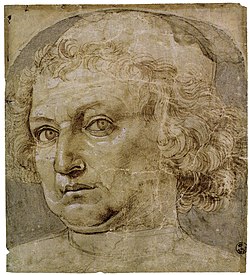
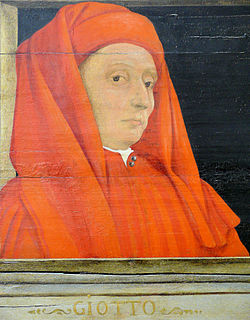
In 1331, the Arte della Lana, the guild of wool merchants, took over patronage for the construction, and in 1334 appointed Giotto to oversee the work.
Image source: Giotto
Jan 8, 1337 - 1348
% complete
When Giotto died on 8 January 1337, Andrea Pisano continued the building until work was halted due to the Black Death in 1348.
Image source: Andrea Pisano
1349 - 1359
% complete
In 1349, action resumed under a series of architects starting with Francesco Talenti, who finished the campanile and enlarged the overall project to include the apse and side chapels.
Image source: Francesco Talenti
1359 - 1369
% complete
In 1359, Talenti was succeeded by Giovanni di Lapo Ghini, who divided the centre nave into four square bays during his tenure from 1360 to 1369.
1375
% complete
By 1375, the old church of Santa Reparata was pulled down as construction of the new cathedral advanced around it.
1380
% complete
The nave was finished by 1380, and only the dome remained incomplete until 1436, leaving the cathedral open at its crown for decades.
Mar 25, 1436
% complete
The cathedral was consecrated by Pope Eugene IV on 25 March 1436, the first day of the year according to the Florentine calendar. During the ceremony, Guillaume Dufay's motet Nuper rosarum flores was performed.
Image source: Pope Eugene IV
1490 - 1491
% complete
The exterior decoration begun in the 14th century was left unfinished after Arnolfo di Cambio's initial works, leading Lorenzo de' Medici to initiate a design competition for the façade between 1490 and 1491, which ultimately went nowhere.
Image source: Lorenzo de' Medici
1367
% complete
The architectural choice made in 1367 was one of the first events of the Italian Renaissance, marking a break with the Medieval Gothic style and a return to the classic Mediterranean dome.
Image source: Filippo Brunelleschi
Aug 19, 1418
% complete
On 19 August 1418, the Arte della Lana announced an architectural design competition for erecting Neri's dome. Ghiberti, winner of the 1401 Baptistery doors competition, became Brunelleschi's lifelong rival.
1420
% complete
Erection of the dome had begun in 1420, executed without modern understanding of physical laws or mathematical tools for calculating stresses, which were centuries in the future.
Image source: Florence Cathedral
1423
% complete
In 1423, Brunelleschi was back in charge and took over sole responsibility. Although he executed an aesthetic plan made half a century earlier, his name is commonly associated with the dome rather than Neri's.
1446 - 1461
% complete
Construction of the lantern was begun a few months before Brunelleschi's death in 1446, and it was finally completed by his friend Michelozzo in 1461.
Image source: Michelozzo
1469
% complete
The conical roof was crowned with a gilt copper ball and cross containing holy relics by Verrocchio in 1469. With this, the building started in 1296 was finally completed.
Image source: Andrea del Verrocchio
1475
% complete
In 1475 the astronomer Paolo dal Pozzo Toscanelli pierced a hole in the dome 91.05 metres above the pavement to create a meridian line. Due to settlement and temperature movements it fell into disuse until restored in 1755 by Leonardo Ximenes.
Image source: Paolo dal Pozzo Toscanelli
1408
% complete
Donatello, then in his early twenties, was commissioned in 1408 to carve a statue of David to top one of the buttresses, though it was never placed there. One statue lifted into place in 1409 proved too small to be visible from the ground and was taken down.
Image source: David (Donatello)
1409 - 1411
% complete
Between 1409 and 1411 Donatello made a statue of a sitting Saint John the Evangelist, which until 1588 stood in a niche of the old cathedral façade.
Image source: Mark the Evangelist
1415 - 1426
% complete
Between 1415 and 1426, Donatello created five statues for the campanile: the Beardless and Bearded Prophet (both 1415), the Sacrifice of Isaac (1421), Habbakuk (1423–25), and Jeremiah (1423–26).
Image source: Donatello
1436
% complete
Paolo Uccello created this almost monochrome fresco in terra verde, painted to resemble bronze; it was transferred to canvas in the 19th century.
Image source: John Hawkwood
1443
% complete
Above the main door is the colossal clock face with fresco portraits of four Prophets or Evangelists painted by Paolo Uccello in 1443; this timetable was used until the 18th century.
Image source: Paolo Uccello
1456
% complete
Andrea del Castagno created the Equestrian statue of Niccolò da Tolentino fresco in 1456, painted to resemble marble in the same style as Uccello's Hawkwood monument; it was transferred to canvas in the 19th century.
Image source: Andrea del Castagno
1463
% complete
A figure of Hercules in terracotta was commissioned from the Florentine sculptor Agostino di Duccio in 1463 and was made perhaps under Donatello's direction.
Image source: Agostino di Duccio
1501 - 1504
% complete
A statue of David by Michelangelo was completed between 1501 and 1504, although it could not be placed on the buttress because of its six-ton weight.
1572 - 1579
% complete
This enormous work covering 3,600 square metres of painted surface was commenced in 1572 by Giorgio Vasari and completed in 1579. Vasari finished The 24 Elders of Apocalypse near the lantern before his death in 1574.
Image source: Giorgio Vasari
2010
% complete
In 2010 a fiberglass replica of Michelangelo's David was placed for one day on a rooftop buttress for a chapel's dome, evoking the sculpture's originally intended location.
Image source: David (Michelangelo)
Jul 17, 1600
% complete
The copper ball crowning the lantern was struck by lightning on 17 July 1600 and fell down, requiring replacement.
Sep 18, 1639
% complete
The first written evidence about cracks appears in a report by Gherardo Silvani dated 18 September 1639 referring to 'peli' ('hairs'). It is possible that the first cracks were caused by a strong earthquake in 1453.
1694 - 1695
% complete
In 1694 Giambattista Nelli and Vincenzo Viviani surveyed the cracks, recording two major cracks with a maximum width of 29 mm. A commission headed by Viviani concluded in 1695 that cracking was due to the dead weight of the buildings.
Image source: Vincenzo Viviani
1757
% complete
The first most complete survey of the cracks was published in 1757 by the Jesuit Leonardo Ximenes, two years after he restored the meridian line.
Image source: Leonardo Ximenes
1934
% complete
In 1934, Pier Luigi Nervi, head of a special commission established by the Opera del Duomo, observed that the cracks opened and closed with the seasons.
Image source: Pier Luigi Nervi
1955 - 2009
% complete
In 1955 the Opera del Duomo installed 22 mechanical deformometers, read four times a year to record variations in the width of major cracks in the inner dome. This system remained in service until 2009.
1965 - 1974
% complete
The cathedral underwent difficult excavations between 1965 and 1974, revealing remains of the earlier church of Santa Reparata.
1978 - 1995
% complete
A government culture agency decided in 1978 to restore the frescoes. Work undertaken between 1979 and 1995 required modern metal scaffolding anchored in holes filled with concrete in 1982.
1980
% complete
Using software developed to model dam structures, researchers led by Michele Fanelli and Gabriella Giuseppetti built a computer model of the dome in collaboration with Italian agencies and the University of Florence.
1983 - 1987
% complete
Analysis by Chiarugi, Fanelli and Giuseppetti found the principal source of cracks was dead-weight effect from the dome's geometry, its estimated 25,000-ton weight, and insufficient ring beam resistance. In 1987 it was demonstrated that filling the 48 scaffolding holes had no impact on the dome's movement.
1984
% complete
A survey completed in 1984 counted a total of 493 cracks of various sizes, sorted into categories identified by the letters A through D.
1987
% complete
In 1987 a comprehensive digital system automatically collecting data every six hours was installed by ISMES in cooperation with the Soprintendenza. Data shows major cracks widening approximately 3 mm per century.
1992
% complete
To assist monitoring of the dome, an extensive photogrammetric and topographical survey of the entire dome was commissioned in 1992 by the Soprintendenza.
1995
% complete
During restoration work ending in 1995, the entire pictorial cycle of The Last Judgment was photographed with specially designed equipment and all information collected in a catalogue. The meridian line was also unveiled again in 1997.
Or browse the full history timeline directory, with more than 2,000 topics.
This Duomo of Florence timeline was generated with the help of AI, using information found on the internet.
We work hard to keep these timelines accurate, but mistakes do get through. If you spot one, email us at [email protected] and we'll fix it for future visitors.
Generate yours with AI or build it from scratch, for free.
Export your timeline, add your own events, edit or remove AI-generated events, and much more
No credit card required.
Cancel anytime.
Cancel anytime.
You can create an unlimited number of timelines with up to 10 events on each one, customize how they look, export them to PDF, PNG, PowerPoint, CSV, and Excel, and share them with a link. Paid plans raise the event limit and add features like spreadsheet imports and collaborators.
Yes. You can cancel your subscription from your account page at any time, and you will not be charged again. Your subscription stays active for the rest of the period you already paid for.
Yes. We will email you a reminder before the annual renewal, and we will also email you a receipt.
Yes. You can email us within 15 days of any payment, and we will issue you a full refund.
Check out our pricing docs or send us an email anytime: [email protected].