-
Use Cases
-
Resources
-
Pricing
Edinburgh Castle is a historic fortress perched on Castle Rock, an extinct volcano in the heart of Edinburgh, Scotland. It has served as a royal residence, military stronghold, prison, and symbol of Scottish national identity for over a thousand years. Today it is one of Scotland's most visited tourist attractions and houses the Crown Jewels of Scotland and the Stone of Destiny. More Less
600
% complete
By the early Middle Ages, the rock had become an important stronghold of the Gododdin and later Pictish peoples, known as Din Eidyn, giving Edinburgh its name.
Image source: Edinburgh Castle
1130
% complete
King David I built St Margaret's Chapel in memory of his mother. It is the oldest surviving building in Edinburgh and still stands within the castle today.
Image source: St Margaret's Chapel, Edinburgh
1356
% complete
After his release from English captivity, King David II began rebuilding the castle, restoring it as the principal stronghold of the Scottish crown.
Image source: David II of Scotland
1540
% complete
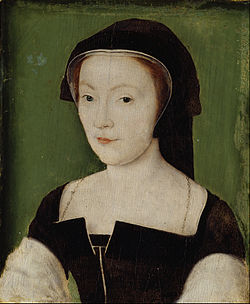
As regent of Scotland, Mary of Guise commissioned extensive new fortifications, including the Spur, to defend the castle against English attacks during the Rough Wooing.
Image source: Mary of Guise
1557
% complete
The giant bombard Mons Meg, forged in Flanders in the 15th century, became part of the castle's arsenal and remains displayed there as one of its most famous artefacts.
Image source: Mons Meg
955
% complete
The Anglian king Edmund I of England is recorded as overrunning the region around Edinburgh in the mid-10th century, marking one of the earliest documented military actions at the site.
Mar 1296
% complete
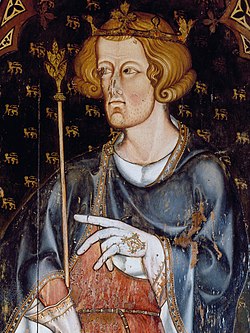
During the outbreak of the Wars of Scottish Independence, Edward I of England stormed and captured Edinburgh Castle after a brief siege, beginning a long period of English occupation.
Image source: Edward I of England
1297
% complete
William Wallace's forces attempted to retake the castle during the uprising against English rule but were unable to overcome its formidable defences.
Image source: William Wallace
1314
% complete
Following its recapture, Robert the Bruce ordered the destruction of the castle's defences to prevent it being used by the English again, leaving only the chapel standing.
Mar 14, 1314
% complete
Thomas Randolph, Earl of Moray, leading forces loyal to Robert the Bruce, scaled the cliffs at night and recaptured the castle from the English garrison during the campaign before Bannockburn.
Image source: Edinburgh Castle
1571 - May 28, 1573
% complete
The castle, held for Mary, Queen of Scots by William Kirkcaldy of Grange, endured the 'Lang Siege' — one of the longest sieges in British history — until English artillery forced its surrender.
Mar 1639
% complete
During the Bishops' Wars, Scottish Covenanters took control of the castle without a fight, exploiting political divisions between the garrison and Edinburgh's citizens.
Image source: Bishops' Wars
Dec 1650
% complete
Cromwell's New Model Army captured the castle after the Battle of Dunbar, using it as a base during the Commonwealth period; the Honours of Scotland were smuggled out beforehand.
Mar 1715
% complete
Jacobites attempted to capture the castle for James Francis Edward Stuart by scaling its walls, but the plot failed when their rope ladder proved too short and they were discovered.
Image source: Jacobite rising of 1715
Sep 1745
% complete
During Bonnie Prince Charlie's Jacobite rising of 1745, the castle's Hanoverian garrison held out against the rebels, firing on the city — the last siege in the castle's history.
Image source: Jacobite rising of 1745
1058
% complete
King Malcolm III Canmore made the castle his principal royal residence after seizing the Scottish throne, beginning its long association with Scotland's monarchy.
Image source: Malcolm III of Scotland
Nov 16, 1093
% complete
Queen Margaret, wife of Malcolm III, died at Edinburgh Castle shortly after learning of her husband's death. She was later canonised, and the castle's chapel is dedicated to her memory.
Image source: Saint Margaret of Scotland
Feb 19, 1594
% complete
Prince Henry Frederick, eldest son of James VI, celebrated with the spectacular baptismal festivities at the castle, for which the historic great hall was refurbished.
Image source: Henry Frederick, Prince of Wales
Apr 5, 1603
% complete
King James VI left Edinburgh to claim the English throne as James I, uniting the crowns of Scotland and England and reducing the castle's role as a principal royal residence.
Image source: Union of the Crowns
1652 - 1660
% complete
To keep them from Cromwell's forces, the Scottish crown jewels were secretly removed from Edinburgh Castle and hidden, first in Dunnottar Castle and later under the floor of Kinneff Church.
Image source: Honours of Scotland
Feb 4, 1818
% complete
Sir Walter Scott led a search of the castle that uncovered the lost Honours of Scotland, locked away since the Act of Union in 1707, sparking national celebration.
Aug 1822
% complete
King George IV's visit to Edinburgh, orchestrated by Sir Walter Scott, marked the first reigning monarch to visit Scotland in nearly two centuries and boosted restoration of the castle and its treasures.
Image source: Visit of George IV to Scotland
1573 - 1588
% complete
Built following the Lang Siege, the Half Moon Battery mounted powerful guns over the ruins of David's Tower and became one of the castle's most imposing defensive features.
1660
% complete
With the Restoration of Charles II, the castle returned to royal control and was re-established as a permanent military garrison, beginning its modern role as a barracks and depot.
Image source: Restoration (Scotland)
1796 - 1814
% complete
The castle vaults housed thousands of French prisoners of war during the Napoleonic Wars, some of whom carved ship models and graffiti into the ancient stone walls.
Jun 7, 1861
% complete
The One o'clock Gun was first fired from the castle's Half Moon Battery to allow ships in Leith Harbour to set their marine chronometers accurately, a tradition that continues daily.
Image source: Time signal
Jul 14, 1927
% complete
Designed by Robert Lorimer, the Scottish National War Memorial was unveiled within the castle to honour Scots who died in the First World War, later extended to commemorate all subsequent conflicts.
Image source: Scottish National War Memorial
Dec 30, 1996
% complete
After 700 years in Westminster Abbey, the Stone of Scone was formally returned to Scotland and placed in Edinburgh Castle alongside the Honours of Scotland, where it remains on display.
Image source: Stone of Scone
2018
% complete
Managed by Historic Environment Scotland, Edinburgh Castle attracted over two million visitors annually, cementing its status as Scotland's most popular paid tourist attraction and an enduring symbol of the nation.
Or browse the full history timeline directory, with more than 2,000 topics.
This Edinburgh Castle timeline was generated with the help of AI, using information found on the internet.
We work hard to keep these timelines accurate, but mistakes do get through. If you spot one, email us at [email protected] and we'll fix it for future visitors.
Generate yours with AI or build it from scratch, for free.
Export your timeline, add your own events, edit or remove AI-generated events, and much more
No credit card required.
Cancel anytime.
Cancel anytime.
You can create an unlimited number of timelines with up to 10 events on each one, customize how they look, export them to PDF, PNG, PowerPoint, CSV, and Excel, and share them with a link. Paid plans raise the event limit and add features like spreadsheet imports and collaborators.
Yes. You can cancel your subscription from your account page at any time, and you will not be charged again. Your subscription stays active for the rest of the period you already paid for.
Yes. We will email you a reminder before the annual renewal, and we will also email you a receipt.
Yes. You can email us within 15 days of any payment, and we will issue you a full refund.
Check out our pricing docs or send us an email anytime: [email protected].