-
Use Cases
-
Resources
-
Pricing
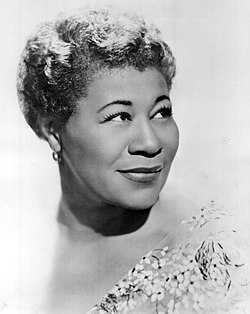
Ella Fitzgerald (1917–1996), known as the 'First Lady of Song,' was an American jazz vocalist celebrated for her pure tone, impeccable diction, and legendary scat singing. Over a career spanning nearly six decades, she recorded over 200 albums, won 14 Grammy Awards, and became one of the most influential and beloved singers in music history. More Less
Apr 25, 1917
% complete
Ella Jane Fitzgerald was born on April 25, 1917, in Newport News, Virginia. She would go on to become one of the most celebrated jazz vocalists in history.
Image source: Ella Fitzgerald
1923
% complete
Fitzgerald's half-sister, Frances da Silva, was born in 1923, expanding her family during her childhood years.
1925
% complete
By 1925, Fitzgerald and her family had moved to nearby School Street, a poor Italian area, where she spent part of her youth.
1929
% complete
Fitzgerald began her formal education at age six and was an outstanding student, moving through a variety of schools before attending Benjamin Franklin Junior High School in 1929.
1932
% complete
In 1932, when Fitzgerald was 15 years old, her mother died from injuries sustained in a car accident, a devastating loss for the young singer.
Apr 1933
% complete
After her stepfather cared for her for a time, Fitzgerald moved to Harlem in April 1933 to live with her aunt, where she survived partly by singing on the streets.
Nov 21, 1934
% complete
At age 17, Fitzgerald debuted on November 21, 1934, in one of the earliest Amateur Nights at the Apollo Theater, a pivotal moment that launched her professional career.
Image source: Apollo Theater
1935 - 1942
% complete
Fitzgerald recorded nearly 150 songs with Webb's orchestra between 1935 and 1942, establishing herself as a rising star in the jazz world.
Jan 1935
% complete
In January 1935, Fitzgerald won the chance to perform for a week with the Tiny Bradshaw band at the Harlem Opera House, an early professional opportunity.
1938
% complete
Fitzgerald's 1938 version of the nursery rhyme 'A-Tisket, A-Tasket', which she co-wrote, brought her widespread public acclaim and made her a household name.
Jun 16, 1939 - 1942
% complete
Webb died of spinal tuberculosis on June 16, 1939, and his band was renamed Ella Fitzgerald and Her Famous Orchestra, with Fitzgerald taking on the role of bandleader until 1942.
1942
% complete
After taking over the band when Webb died in 1939, Fitzgerald left it behind in 1942 to start her solo career, working as lead singer with The Three Keys; her band played its last concert in July at Earl Theatre in Philadelphia.
1942
% complete
Fitzgerald sang two songs in the 1942 Abbott and Costello film Ride 'Em Cowboy, an early appearance in the movies.
1943 - 1950
% complete
From 1943 to 1950, Fitzgerald recorded seven songs with the Ink Spots featuring Bill Kenny, producing some of her most popular recordings.
Image source: The Ink Spots
1945
% complete
Fitzgerald's 1945 scat recording of 'Flying Home', arranged by Vic Schoen, was later described by The New York Times as one of the most influential vocal jazz records of the decade.
1947
% complete
Fitzgerald's bebop recording of 'Oh, Lady Be Good!' (1947) was popular and increased her reputation as one of the leading jazz vocalists.
1949
% complete
In 1949, Norman Granz recruited Fitzgerald for the Jazz at the Philharmonic tour, and she was still performing at JATP concerts by 1955.
Image source: Jazz at the Philharmonic
Jul 1954
% complete
While on her way to her first Australian tour in July 1954, promoted by Lee Gordon, Fitzgerald was unable to board the Pan American flight because of racial discrimination.
Dec 1954 - Jan 1956
% complete
Fitzgerald, Henry, Lewis and Granz filed a civil suit for racial discrimination against Pan-Am in December 1954, which they won on appeal in January 1956.
Mar 15, 1955
% complete
On March 15, 1955, Fitzgerald opened her initial engagement at the Mocambo nightclub in Hollywood, after Marilyn Monroe lobbied the owner for the booking.
Image source: Mocambo (nightclub)
Aug 1955
% complete
Fitzgerald played singer Maggie Jackson in Jack Webb's 1955 jazz film Pete Kelly's Blues, a role she considered the biggest thing ever to have happened to her at the time.
1956
% complete
Released in 1956, this was the first of eight 'Song Book' sets Fitzgerald would record for Verve from 1956 to 1964, and they remain the best-known items in her discography.
Image source: Ella Fitzgerald Sings the Cole Porter Song Book
1956 - 1957
% complete
Fitzgerald recorded three Verve studio albums with Louis Armstrong: Ella and Louis (1956), Ella and Louis Again (1957), and a third featuring music from the Gershwin opera Porgy and Bess.
Image source: Ella and Louis
1957
% complete
Fitzgerald features on one track on Count Basie's 1957 album One O'Clock Jump, beginning a fruitful collaboration between the two artists.
Image source: One O'Clock Jump
1958 - 1960
% complete
Fitzgerald appeared in the films St. Louis Blues (1958) and Let No Man Write My Epitaph (1960), continuing her screen career alongside her music.
Image source: St. Louis Blues (1958 film)
1960 - 1967
% complete
Verve Records was sold to MGM in 1960 for $3 million, and in 1967 MGM failed to renew Fitzgerald's contract.
Image source: Verve Records
1963
% complete
Perhaps her most unusual performance was of the 'Three Little Maids' song from Gilbert and Sullivan's The Mikado alongside Joan Sutherland and Dinah Shore on Shore's weekly variety series in 1963.
1963
% complete
Fitzgerald's 1963 album Ella and Basie! is remembered as one of her greatest recordings, teaming her with Count Basie's orchestra.
Image source: Ella and Basie!
1965 - 1966
% complete
Fitzgerald's Duke Ellington Song Book placed Ellington firmly in the Great American Songbook canon. She released Ella at Duke's Place in 1965, and Ella and Duke at the Cote D'Azur in 1966, plus The Stockholm Concert, 1966.
Image source: Ella at Duke's Place
1972
% complete
The surprise success of the 1972 album Jazz at Santa Monica Civic '72, on which Fitzgerald collaborated with Basie, led Norman Granz to found Pablo Records, his first label since selling Verve.
Image source: Pablo Records
1972
% complete
Fitzgerald recorded albums exclusively devoted to the songs of Porter and Gershwin in 1972 and 1983: Ella Loves Cole and Nice Work If You Can Get It, respectively.
Image source: Ella Loves Cole
1973 - 1986
% complete
Fitzgerald and guitarist Joe Pass appeared together on the albums Take Love Easy (1973), Speak Love (1983) and Easy Living (1986).
Image source: Joe Pass
1974
% complete
Ella in London, recorded live in 1974 with pianist Tommy Flanagan, guitarist Joe Pass, bassist Keter Betts and drummer Bobby Durham, was considered by many to be some of her best work.
Image source: Ella in London
1980
% complete
In 1980, she performed a medley of standards in a duet with Karen Carpenter on the Carpenters' television special Music, Music, Music.
Mar 1990
% complete
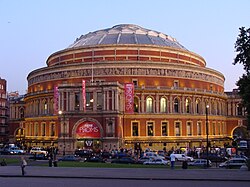
In March 1990, she appeared at the Royal Albert Hall in London with the Count Basie Orchestra for the launch of Jazz FM, plus a gala dinner at the Grosvenor House Hotel.
Image source: Royal Albert Hall
1991
% complete
Plagued by health problems, Fitzgerald made her last recording in 1991, closing out a legendary discography.
1993
% complete
In 1993, after a career of nearly 60 years, Fitzgerald gave her last public performance.
1941 - 1942
% complete
Fitzgerald's first marriage was in 1941, to Benny Kornegay, a convicted drug dealer and local dockworker. The marriage was annulled in 1942.
Dec 1947 - 1953
% complete
Fitzgerald married bass player Ray Brown in December 1947, whom she had met while on tour with Dizzy Gillespie's band a year earlier. They divorced in 1953 due to career pressures but continued to perform together.
Image source: Ray Brown (musician)
Jul 1957
% complete
In July 1957, Reuters reported that Fitzgerald had secretly married Thor Einar Larsen, a young Norwegian, in Oslo.
1961 - 1963
% complete
In 1961, Fitzgerald bought a house in the Klampenborg district of Copenhagen, Denmark, after beginning a relationship with a Danish man. The house was sold in 1963 and she permanently returned to the United States.
Image source: Klampenborg
1985 - 1990
% complete
Fitzgerald was hospitalized in 1985 briefly for respiratory problems, in 1986 for congestive heart failure, and in 1990 for exhaustion as her health declined.
1993
% complete
In 1993, both of her legs were amputated below the knee due to the effects of diabetes, a condition which also damaged her eyesight.
1959
% complete
In 1959, Fitzgerald became the first African-American woman to win at the inaugural Grammy show, a landmark achievement. She went on to win 13 Grammy Awards overall.
Image source: Grammy Awards
1967
% complete
Fitzgerald won 13 Grammy Awards during her career and received the Grammy Lifetime Achievement Award in 1967.
1986
% complete
In 1986, Fitzgerald received an honorary doctorate of music from Yale University, recognizing her immense contribution to American music.
Image source: Yale University
1987
% complete
Recognized as a 'cultural ambassador' despite racial barriers, Fitzgerald received the National Medal of Arts in 1987 and America's highest non-military honor, the Presidential Medal of Freedom.
Image source: National Medal of Arts
1990
% complete
Harvard gave Fitzgerald an honorary degree in music in 1990, adding to her academic honors.
Image source: Harvard University
1987 - 1988
% complete
'Ella, elle l'a', a tribute to Fitzgerald written by Michel Berger and performed by French singer France Gall, was a hit across Europe in 1987 and 1988.
Image source: Ella, elle l'a
1993
% complete
In 1993, Fitzgerald established the Ella Fitzgerald Charitable Foundation, focusing on academic opportunities for children, music education, basic care needs for the less fortunate, and medical research into diabetes, heart disease, and vision impairment.
Image source: Ella Fitzgerald
1996
% complete
Callaway's album To Ella with Love (1996) features 14 jazz standards made popular by Fitzgerald, along with trumpeter Wynton Marsalis.
Jun 15, 1996
% complete
Fitzgerald died in her home from a stroke on June 15, 1996, at age 79, leaving behind one of the most celebrated legacies in jazz history.
1997
% complete
In 1997, Newport News, Virginia created a week-long music festival with Christopher Newport University to honor Fitzgerald in her birth city.
Image source: Newport News, Virginia
1997
% complete
Bridgewater's album Dear Ella (1997) featured musicians closely associated with Fitzgerald, including pianist Lou Levy, trumpeter Benny Powell, and Fitzgerald's second husband Ray Brown.
Image source: Dear Ella
1998
% complete
Folk singer Odetta's album To Ella (1998) is dedicated to Fitzgerald, though it features no songs associated with her.
Image source: Ella Mai (album)
Apr 25, 1998
% complete
Bridgewater's album Live at Yoshi's was recorded live on April 25, 1998, what would have been Fitzgerald's 81st birthday.
2002
% complete
Austin's album For Ella (2002) features 11 songs most immediately associated with Fitzgerald, plus 'Hearing Ella Sing', Austin's tribute to her.
Image source: For Ella
2007
% complete
In 2007, We All Love Ella was released, a tribute album recorded in honor of Fitzgerald's 90th birthday.
Image source: Ella Langley
Jan 9, 2007 - Apr 2007
% complete
On January 9, 2007, the United States Postal Service announced that Fitzgerald would be honored with her own postage stamp, released in April 2007 as part of the Black Heritage series.
Oct 11, 2008 - Oct 12, 2008
% complete
In 2008, the Downing-Gross Cultural Arts Center in Newport News named its new 276-seat theater the Ella Fitzgerald Theater. The grand opening performers on October 11 and 12, 2008 were Roberta Flack and Queen Esther Marrow. Greer also dramatized the Mocambo story as Marilyn and Ella that year.
2012
% complete
In 2012, Rod Stewart performed a 'virtual duet' with Ella Fitzgerald on his Christmas album Merry Christmas, Baby, and his television special of the same name.
Apr 25, 2013
% complete
On April 25, 2013, Fitzgerald was featured in a Google Doodle depicting her performing onstage, marking what would have been her 96th birthday.
Image source: Google Doodle
Apr 25, 2017
% complete
On April 25, 2017, the centenary of her birth, BBC Radio 2 broadcast three programs as part of an 'Ella at 100' celebration, introduced by Jamie Cullum, Leo Green, and Petula Clark.
Image source: BBC Radio 2
2019
% complete
In 2019, Ella Fitzgerald: Just One of Those Things, a documentary by Leslie Woodhead, was released in the UK.
2020
% complete
In 2020, The Valatie Community Theater in Valatie, New York staged Ella The Ungovernable, a play by David McDonald telling a fictional story of 15-year-old Fitzgerald's incarceration and theorized escape from the New York Training School for Girls in Hudson, New York, in 1933.
Image source: Valatie, New York
Or browse the full history timeline directory, with more than 2,000 topics.
This Ella Fitzgerald timeline was generated with the help of AI, using information found on the internet.
We work hard to keep these timelines accurate, but mistakes do get through. If you spot one, email us at [email protected] and we'll fix it for future visitors.
Generate yours with AI or build it from scratch, for free.
Export your timeline, add your own events, edit or remove AI-generated events, and much more
No credit card required.
Cancel anytime.
Cancel anytime.
You can create an unlimited number of timelines with up to 10 events on each one, customize how they look, export them to PDF, PNG, PowerPoint, CSV, and Excel, and share them with a link. Paid plans raise the event limit and add features like spreadsheet imports and collaborators.
Yes. You can cancel your subscription from your account page at any time, and you will not be charged again. Your subscription stays active for the rest of the period you already paid for.
Yes. We will email you a reminder before the annual renewal, and we will also email you a receipt.
Yes. You can email us within 15 days of any payment, and we will issue you a full refund.
Check out our pricing docs or send us an email anytime: [email protected].