-
Use Cases
-
Resources
-
Pricing
F. Scott Fitzgerald (1896–1940) was an American novelist and short story writer best known for chronicling the Jazz Age. His masterpiece, The Great Gatsby, is widely regarded as one of the greatest American novels. His turbulent life, including his marriage to Zelda Sayre and struggles with alcoholism, mirrored the glamour and excess of the 1920s. More Less
Sep 24, 1896
% complete
Francis Scott Key Fitzgerald was born in St. Paul, Minnesota, to Edward and Mary McQuillan Fitzgerald. Named after the author of 'The Star-Spangled Banner,' a distant relative, he would grow up to become one of America's most celebrated writers of the Jazz Age.
Image source: F. Scott Fitzgerald
Sep 1911 - Jun 1913
% complete
Fitzgerald was sent to the Newman School, a Catholic prep school in Hackensack, New Jersey, where he met Father Sigourney Fay, who encouraged his literary ambitions and helped shape his early writing.
Sep 1913
% complete
Fitzgerald enrolled at Princeton University, where he devoted much of his energy to writing for the Princeton Triangle Club and the Nassau Lit literary magazine rather than academics. His Princeton years deeply influenced his fiction and social outlook.
Image source: Princeton University

Nov 1917
% complete
Struggling academically and drawn to military service during World War I, Fitzgerald left Princeton in November 1917 to accept a commission as a second lieutenant in the U.S. Army, never returning to complete his degree.
Jun 1918 - Feb 1919
% complete
While stationed at Camp Sheridan near Montgomery, Alabama, Fitzgerald met Zelda Sayre, the daughter of an Alabama Supreme Court judge, at a country club dance. Their romance became central to both their lives and his fiction.
Feb 1919 - Jul 1919
% complete
After being discharged from the Army, Fitzgerald moved to New York City hoping to marry Zelda and make his fortune. He took a job writing advertising copy for Barron Collier but struggled financially, and Zelda broke off their engagement over his lack of prospects.
Mar 26, 1920
% complete
Fitzgerald's first novel, 'This Side of Paradise,' published by Scribner's, became an instant success, selling out its first printing within days. The novel's portrayal of postwar youth made the 23-year-old author famous overnight and allowed him to marry Zelda.
Image source: This Side of Paradise
Sep 1920
% complete
Fitzgerald released his first collection of short stories, 'Flappers and Philosophers,' which included popular works like 'Bernice Bobs Her Hair.' The collection cemented his reputation as the chronicler of the Jazz Age generation.
Image source: Flappers and Philosophers
Mar 1922
% complete
Fitzgerald's second novel, 'The Beautiful and Damned,' depicted the dissipation of a wealthy young couple and mirrored aspects of his own marriage. It was another commercial success and was quickly adapted into a silent film.
Image source: The Beautiful and Damned
Sep 1922
% complete
This collection included 'The Diamond as Big as the Ritz' and 'The Curious Case of Benjamin Button,' showcasing Fitzgerald's range beyond realistic fiction into fantasy and satire.
Image source: Tales of the Jazz Age
Apr 1924 - Oct 1924
% complete
Fitzgerald wrote most of 'The Great Gatsby' while living in Valescure on the French Riviera and in Rome, where he completed revisions. He labored over the novel, believing it would secure his place as a serious literary artist.
Image source: The Great Gatsby
Apr 10, 1925
% complete
Fitzgerald published what is now considered his masterpiece, 'The Great Gatsby.' Though it received mixed reviews and modest sales initially, the novel's portrait of Jay Gatsby and the American Dream eventually earned recognition as one of the greatest American novels.
Feb 1926
% complete
This acclaimed collection gathered some of Fitzgerald's finest Jazz Age stories, including 'Winter Dreams' and 'Absolution,' demonstrating his maturing craft during his most productive period.
Image source: All the Sad Young Men
Jan 1934
% complete
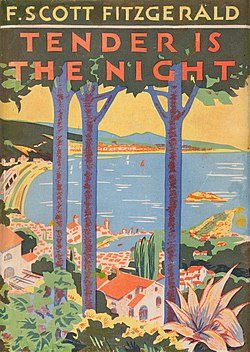
Fitzgerald's fourth novel, 'Tender Is the Night,' drew heavily on Zelda's illness and their life among wealthy Americans abroad. Though initially poorly received, it is now regarded as one of his major achievements.
Image source: Tender Is the Night
Mar 1935
% complete
Fitzgerald's final collection of short stories published during his lifetime, 'Taps at Reveille,' included stories from the late 1920s and early 1930s, marking the close of his story-writing career with magazines like the Saturday Evening Post.
Image source: Taps at Reveille
Feb 1936 - Apr 1936
% complete
Fitzgerald published three autobiographical essays—'The Crack-Up,' 'Pasting It Together,' and 'Handle with Care'—in Esquire, candidly documenting his emotional collapse. They were controversial at the time but are now admired as brave self-examination.
Image source: The Crack-Up
1939 - Dec 1940
% complete
Drawing on his Hollywood experiences, Fitzgerald began 'The Last Tycoon,' a novel about a brilliant film producer modeled on Irving Thalberg. He completed about half the manuscript before his death; it was published posthumously in 1941.
Image source: The Last Tycoon
Apr 3, 1920
% complete
One week after the publication of his first novel, Fitzgerald married Zelda Sayre at St. Patrick's Cathedral in New York City. The couple became celebrities of the Jazz Age, known for their glamorous and extravagant lifestyle.
Image source: Zelda Fitzgerald
Oct 26, 1921
% complete
Scottie Fitzgerald, the only child of Scott and Zelda, was born in St. Paul, Minnesota. She later became a writer and journalist herself, and her parents' turbulent marriage profoundly shaped her life.
Image source: Frances Scott Fitzgerald
May 1924 - 1925
% complete
Seeking quiet to write and escape mounting debts, the Fitzgeralds moved to France, settling on the French Riviera. There they befriended Gerald and Sara Murphy and later Ernest Hemingway, becoming part of the expatriate Lost Generation.
Apr 1925
% complete
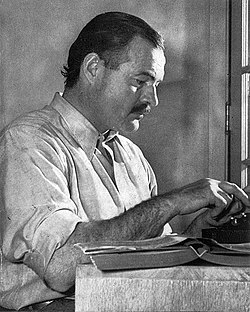
Fitzgerald met Ernest Hemingway at the Dingo Bar in Paris shortly after 'Gatsby' was published. He championed Hemingway's work to his editor Maxwell Perkins, though their friendship was later strained by rivalry and personal tensions.
Image source: Ernest Hemingway
Apr 1930
% complete
Zelda suffered her first nervous breakdown and was diagnosed with schizophrenia, entering a clinic in Switzerland. She spent much of the following decade in and out of sanatoriums, straining the family emotionally and financially.
Jan 1936 - Sep 1936
% complete
Exhausted by Zelda's illness and his own drinking, Fitzgerald suffered a breakdown and stayed at the Grove Park Inn in Asheville, North Carolina. Esquire magazine published his confessional 'Crack-Up' essays during this low point in his career.
1937 - Dec 1940
% complete
In Hollywood, Fitzgerald began a relationship with gossip columnist Sheilah Graham that lasted until his death. She supported him through his final years as he struggled with debt, alcoholism, and his unfinished novel.
Image source: Sheilah Graham
Jul 1937
% complete
Deeply in debt, Fitzgerald signed a contract with Metro-Goldwyn-Mayer and moved to Hollywood to work as a screenwriter. He contributed to films including 'Three Comrades' (1938) and worked uncredited on others, finding studio work creatively frustrating.
Jul 1937 - Dec 1937
% complete
Fitzgerald signed a six-month contract with MGM worth $1,000 per week, a substantial sum that helped him pay down his debts. His most notable credited screenplay was 'Three Comrades,' though much of his work went unused or uncredited.
Image source: Metro-Goldwyn-Mayer
Mar 1939 - Apr 1939
% complete
Fitzgerald traveled to Dartmouth College to work on the screenplay for 'Winter Carnival' with Budd Schulberg, but he was fired after disappearing on a drinking binge—an episode Schulberg later fictionalized in 'The Disenchanted.'
Image source: Quebec Winter Carnival
Nov 1940
% complete
Fitzgerald suffered a mild heart attack in November 1940 while at Schwab's Drug Store. Warned by doctors to avoid exertion, he continued working on 'The Last Tycoon' despite declining health.
Dec 21, 1940
% complete
F. Scott Fitzgerald died of a massive heart attack at Sheilah Graham's apartment in Hollywood, believing himself a failure. At the time of his death, his books were largely out of print, and he had sold fewer than 25,000 copies of 'Gatsby' in his lifetime.
Oct 1941
% complete
Edmund Wilson edited and published Fitzgerald's unfinished Hollywood novel 'The Last Tycoon' a year after his death, along with selected stories and essays. The book received respectful reviews and helped begin the revival of interest in his work.
Mar 10, 1948
% complete
Zelda Fitzgerald died in a fire at Highland Hospital in Asheville, North Carolina, where she was undergoing treatment. She was locked in a room awaiting electroshock therapy when the blaze broke out, killing eight patients.
1950 - 1960
% complete
During the 1950s, Fitzgerald's reputation soared as critics and scholars reevaluated his work. 'The Great Gatsby' came to be seen as a masterpiece of American literature, and by the 1960s he was firmly established as one of the nation's greatest writers.
Or browse the full history timeline directory, with more than 2,000 topics.
This F. Scott Fitzgerald timeline was generated with the help of AI, using information found on the internet.
We work hard to keep these timelines accurate, but mistakes do get through. If you spot one, email us at [email protected] and we'll fix it for future visitors.
Generate yours with AI or build it from scratch, for free.
Export your timeline, add your own events, edit or remove AI-generated events, and much more
No credit card required.
Cancel anytime.
Cancel anytime.
You can create an unlimited number of timelines with up to 10 events on each one, customize how they look, export them to PDF, PNG, PowerPoint, CSV, and Excel, and share them with a link. Paid plans raise the event limit and add features like spreadsheet imports and collaborators.
Yes. You can cancel your subscription from your account page at any time, and you will not be charged again. Your subscription stays active for the rest of the period you already paid for.
Yes. We will email you a reminder before the annual renewal, and we will also email you a receipt.
Yes. You can email us within 15 days of any payment, and we will issue you a full refund.
Check out our pricing docs or send us an email anytime: [email protected].