
-
Use Cases
-
Resources
-
Pricing
The Dred Scott Decision was a landmark 1857 ruling by the U.S. Supreme Court in Dred Scott v. Sandford. The Court, led by Chief Justice Roger B. Taney, ruled that African Americans were not citizens and therefore could not sue in federal court, and that Congress had no authority to prohibit slavery in the territories. The decision invalidated the Missouri Compromise and pushed the nation closer to the Civil War. More Less
1787 - 1857
% completado
Taney supported his ruling with an extended survey of American state and local laws from the time of the Constitution's drafting in 1787, claiming a 'perpetual and impassable barrier' was intended between the white race and those reduced to slavery. Critics noted black men could vote in 5 of the 13 states when the Constitution was adopted in 1789.
Image source: Dred Scott v. Sandford
1853
% completado
In 1853, Dred Scott again sued his current owner, John Sanford, but this time in federal court, relying on diversity of citizenship jurisdiction. He also alleged that Sanford had assaulted his family and held them captive for six hours on January 1, 1853.
1854
% completado
At trial in 1854, Judge Robert William Wells directed the jury to rely on Missouri law on the question of Scott's freedom, resulting in a verdict against Scott.
1857
% completado
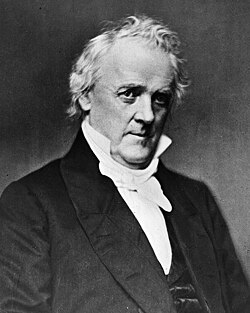
Historians discovered that after the Supreme Court heard arguments in the case but before it issued a ruling, President-elect James Buchanan wrote to his friend, Associate Justice John Catron, asking whether the case would be decided before his inauguration in March 1857.
Image source: James Buchanan
Mar 6, 1857
% completado
On March 6, 1857, the U.S. Supreme Court issued a 7–2 decision against Scott. Chief Justice Taney held that black Americans were not citizens under the Constitution, that Scott could not establish diversity of citizenship, and that the Missouri Compromise was unconstitutional — the first time since Marbury v. Madison (1803) that the Court struck down an act of Congress.
1799
% completado
Dred Scott was born a slave in Virginia around 1799, beginning a life that would eventually lead to one of the most consequential legal battles over slavery and citizenship in American history.
1818
% completado
Scott's owner, Peter Blow, moved to Alabama in 1818, taking his six slaves along to work a farm near Huntsville.
1830
% completado
In 1830, Blow gave up farming and settled in St. Louis, Missouri, bringing Scott along to the growing river city.
1830
% completado
Scott was taken by his owner, army surgeon John Emerson, to Illinois. A free state, Illinois had been free as a territory under the Northwest Ordinance of 1787 and had prohibited slavery in its constitution in 1819 when it was admitted as a state.
1836
% completado
In 1836, Emerson moved with Scott from Illinois to Fort Snelling in the Wisconsin Territory, in what has become the state of Minnesota, land that was free territory under the Missouri Compromise.
Image source: Fort Snelling
1837
% completado
In 1837, the army ordered Emerson to Jefferson Barracks Military Post, south of St. Louis.
1838
% completado
Toward the end of 1838, the army reassigned Emerson back to Fort Snelling, where Scott and his family again resided on free soil.
Feb 1838
% completado
Before the end of the year, the army reassigned Emerson to Fort Jesup in Louisiana, where he married Eliza Irene Sanford in February 1838.
1840
% completado
By 1840, Emerson's wife Irene returned to St. Louis, taking the Scott family with her as slaves.
1842
% completado
In 1842, Dr. John Emerson left the army, ending his military career.
1843
% completado
After John Emerson died in the Iowa Territory in 1843, his widow Irene inherited his estate, including Dred Scott and his family.
Apr 6, 1846
% completado
In 1846, Scott attempted to purchase his and his family's freedom, but Irene Emerson refused, prompting him to resort to legal recourse. He filed suit in St. Louis County Circuit Court on April 6, 1846, at a time when dozens of freedom suits had been won in Missouri by former slaves.
Jun 30, 1847
% completado
Irene Emerson's case finally went to trial for the first time on June 30, 1847, in the St. Louis Circuit Court.
Dec 2, 1847
% completado
Judge Hamilton finally issued the order for a new trial on December 2, 1847, after the jury's verdict was set aside due to procedural issues.
Mar 17, 1848 - Mar 18, 1857
% completado
On March 17, 1848, Judge Hamilton issued the order to the St. Louis sheriff. Scott would remain in the sheriff's custody or hired out by him until March 18, 1857.
Jun 30, 1848
% completado
The Missouri Supreme Court agreed unanimously with the position that the case should be retried and dismissed Emerson's appeal on June 30, 1848.
1849 - Jan 12, 1850
% completado
The Great St. Louis Fire of 1849, a cholera epidemic, and two continuances delayed the retrial in the St. Louis Circuit Court until January 12, 1850.
1850
% completado
In 1849 or 1850, Irene Emerson left St. Louis and moved to Massachusetts, where she married Calvin C. Chaffee, an antislavery congressman.
Image source: Calvin C. Chaffee
Jan 12, 1850
% completado
At the retrial, the jury directed by Judge Wells relied on Missouri law and found against Scott, ruling that he and his family remained slaves.
Feb 13, 1850
% completado
On February 13, 1850, Emerson's defense filed a bill of exceptions, which was certified by Judge Hamilton, setting into motion another appeal to the Missouri Supreme Court.
Oct 25, 1850
% completado
After the court convened on October 25, 1850, proslavery justices William Barclay Napton and James Harvey Birch persuaded John Ferguson Ryland to join them in a unanimous decision that Dred Scott remained a slave under Missouri law.
Image source: Supreme Court of Missouri
Mar 1851
% completado
Attorney David Hall had prepared the brief for Dred Scott but died in March 1851. Field continued alone as counsel for Dred Scott and resubmitted the same briefs from 1850 for both sides.
Aug 1851
% completado
In August 1851, both Napton and Birch lost their seats in the Missouri Supreme Court following the state's first supreme court election, with only Ryland remaining as an incumbent.
Nov 29, 1851
% completado
On November 29, 1851, the case was taken under consideration by the Missouri Supreme Court on written briefs alone, and a decision was reached.
Mar 22, 1852
% completado
On March 22, 1852, Judge William Scott announced the decision of the Missouri Supreme Court that Dred Scott remained a slave, rejecting the 'once free, always free' doctrine and ordering the trial court's judgment reversed.
Mar 23, 1852
% completado
On March 23, 1852, the day after the Missouri Supreme Court decision was announced, Irene Emerson's lawyers filed an order in the St. Louis Circuit Court.
Jun 29, 1852
% completado
On June 29, 1852, Judge Hamilton overruled the order filed by Emerson's lawyers.
1857
% completado
The east–west railroads became insolvent immediately after the decision, causing dangerous runs on several large banks — events known as the Panic of 1857. Unlike the panic of 1837, it almost exclusively impacted the North, attributed to its system of unit banking.
Image source: Panic of 1857
May 26, 1857
% completado
Taylor Blow, son of Scott's original owner Peter Blow, purchased the Scott family and filed the manumission papers with Judge Hamilton on May 26, 1857, granting them their freedom.
Nov 7, 1858
% completado
Dred Scott died of tuberculosis on November 7, 1858, just months after gaining his freedom, never seeing the reversal of the decision bearing his name.
Image source: Dred Scott
1859
% completado
In 1859, while defending John Anthony Copeland and Shields Green from charges of treason following John Brown's raid on Harpers Ferry, attorney George Sennott cited the Dred Scott decision, arguing successfully that since they were not citizens according to the ruling, they could not commit treason.
Image source: John Brown's raid on Harpers Ferry
1860
% completado
During the 1860 United States elections, Republicans rejected the ruling as being corrupted by partisanship and non-binding because the court had no jurisdiction over the matter.
Image source: 1860 United States presidential election
1862
% completado
The Territorial Slavery Act of 1862 formally repudiated the Dred Scott decision, prohibiting slavery in the territories.
1865
% completado
In 1865, after the Union's victory in the Civil War, the Court's ruling in Dred Scott was superseded by passage of the Thirteenth Amendment to the U.S. Constitution, which outlawed slavery.
Image source: Thirteenth Amendment to the United States Constitution
1866
% completado
Congress passed the Civil Rights Act of 1866, conferring full citizenship and equal rights flowing from it, directly overturning the core holding of the Dred Scott decision.
Image source: Civil Rights Act of 1866
Jun 17, 1876
% completado
Harriet Scott, Dred Scott's wife who had also been part of the freedom suits, died on June 17, 1876.
Image source: Harriet Robinson Scott
1896
% completado
In 1896, during the Jim Crow era, Justice John Marshall Harlan was the lone dissenting vote in Plessy v. Ferguson, which declared racial segregation constitutional and created the concept of 'separate but equal'.
1927
% completado
Charles Evans Hughes, writing in 1927 on the Supreme Court's history, described Dred Scott as a 'self-inflicted wound' from which the court would not recover for many years.
Image source: Charles Evans Hughes
1977
% completado
In 1977, the Scotts' great-grandson John A. Madison spoke publicly about the family's history and the enduring significance of the Dred Scott case.
1992
% completado
In Planned Parenthood v. Casey (1992), insofar as it upheld the right to abortion established by Roe v. Wade (1973), Justice Antonin Scalia compared the rationale behind the decision to Dred Scott.
2000
% completado
In 2000, Harriet and Dred Scott's petition papers in their freedom suit were displayed at the main branch of the St. Louis Public Library.
2006
% completado
In 2006, a historic plaque was erected at the Old Courthouse in St. Louis to honor the active roles of both Dred and Harriet Scott in their freedom suit and the case's significance in U.S. history.
Image source: Old Courthouse (St. Louis)
2012
% completado
In 2012, a monument depicting Dred and Harriet Scott was erected at the Old Courthouse's east entrance facing the St. Louis riverfront.
2015
% completado
Critics of Obergefell v. Hodges (2015) compared it to Dred Scott as another example of trying to settle a contentious issue through a ruling that went beyond the scope of the Constitution.
2024
% completado
Critics of Trump v. United States, the 2024 Supreme Court decision that conferred immunity from criminal prosecution on a president's official acts, called it 'The Dred Scott of Our Time.' Other writers made the same comparison.
Image source: Trump v. United States
Or browse the full history timeline directory, with more than 2,000 topics.
This Dred Scott Decision timeline was generated with the help of AI, using information found on the internet.
We work hard to keep these timelines accurate, but mistakes do get through. If you spot one, email us at [email protected] and we'll fix it for future visitors.
Generate yours with AI or build it from scratch, for free.
Export your timeline, add your own events, edit or remove AI-generated events, and much more
No credit card required.
Cancel anytime.
Cancel anytime.
You can create an unlimited number of timelines with up to 10 events on each one, customize how they look, export them to PDF, PNG, PowerPoint, CSV, and Excel, and share them with a link. Paid plans raise the event limit and add features like spreadsheet imports and collaborators.
Yes. You can cancel your subscription from your account page at any time, and you will not be charged again. Your subscription stays active for the rest of the period you already paid for.
Yes. We will email you a reminder before the annual renewal, and we will also email you a receipt.
Yes. You can email us within 15 days of any payment, and we will issue you a full refund.
Check out our pricing docs or send us an email anytime: [email protected].