
-
Use Cases
-
Resources
-
Pricing
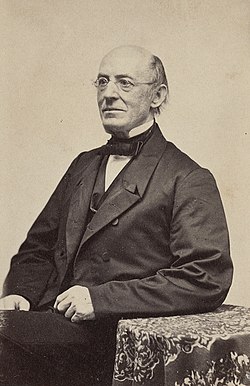
This timeline chronicles the life of Frederick Douglass (c. 1818–1895), an African American social reformer, abolitionist, orator, writer, and statesman. Born into slavery in Maryland, Douglass escaped to freedom in 1838 and became one of the most influential voices in the abolitionist movement, publishing his famous autobiography and founding newspapers such as The North Star. After the Civil War, he continued fighting for civil rights, women's suffrage, and equality until his death in 1895. More Less
Feb 1818
% complete
Frederick Augustus Washington Bailey was born into slavery on the Eastern Shore of Maryland. The exact date of his birth is unknown; he later chose to celebrate February 14 as his birthday. He was separated from his mother, Harriet Bailey, in infancy.
Image source: Frederick Douglass
1826
% complete
Douglass was sent to Baltimore to serve Hugh and Sophia Auld. Sophia began teaching him to read until her husband forbade it, teaching Douglass a crucial lesson about how slavery was maintained by denying education.
Image source: Frederick Douglass
1827 - 1833
% complete
Douglass taught himself to read by trading bread with poor white boys for lessons and studying newspapers and books such as 'The Columbian Orator.' Literacy opened his eyes to abolitionism and fueled his determination to escape slavery.
Image source: Narrative of the Life of Frederick Douglass, an American Slave
Jan 1834
% complete
After being sent to the notorious slave breaker Edward Covey, Douglass endured brutal beatings. In a pivotal confrontation he physically resisted Covey, later writing that this fight 'revived within me a sense of my own manhood.'
Image source: My Bondage and My Freedom
Sep 3, 1838
% complete
Disguised as a free sailor and aided by Anna Murray, a free Black woman who gave him money and sailor's clothing, Douglass traveled by train and ferry from Baltimore to New York City, escaping slavery after nearly twenty years in bondage.
Sep 15, 1838
% complete
Days after his escape, Douglass married Anna Murray in New York. The couple moved to New Bedford, Massachusetts, took the surname Douglass, and raised five children together over their forty-four-year marriage.
Image source: Anna Murray Douglass
Aug 11, 1841
% complete
At an anti-slavery meeting on Nantucket, Massachusetts, Douglass spontaneously delivered an eloquent account of his life in slavery. William Lloyd Garrison was present, and Douglass was soon hired as an agent of the Massachusetts Anti-Slavery Society.
Image source: American Anti-Slavery Society
Aug 1845 - Apr 1847
% complete
Douglass toured Britain and Ireland for nearly two years, delivering hundreds of lectures condemning American slavery. British supporters purchased his freedom, and he returned home legally free with funds to start his own newspaper.
Image source: Narrative of the Life of Frederick Douglass
Nov 1846
% complete
British abolitionists Ellen Richardson and her sister-in-law raised £150 to buy Douglass's legal freedom from his former owner Hugh Auld, eliminating the risk that Douglass could be seized and returned to slavery under the Fugitive Slave laws.
Jul 19, 1848 - Jul 20, 1848
% complete
Douglass was the only African American attendee at the Seneca Falls women's rights convention and eloquently defended Elizabeth Cady Stanton's demand for women's suffrage, helping pass the controversial resolution.
Image source: Seneca Falls Convention
1851
% complete
Douglass split from William Lloyd Garrison's faction, rejecting the view that the Constitution was pro-slavery. He argued instead that the document could be used as a weapon against slavery, aligning with Gerrit Smith and the Liberty Party.
Image source: William Lloyd Garrison
1858
% complete
Douglass met secretly with John Brown in Chambersburg, Pennsylvania, shortly before Brown's raid on Harpers Ferry. Douglass refused to join, predicting failure, and fled briefly to Canada after Brown's capture implicated him.
Image source: John Brown's raid on Harpers Ferry
May 1845
% complete
His first autobiography became an immediate bestseller, selling thousands of copies and becoming one of the most influential slave narratives ever written. Its success led him on speaking tours abroad to avoid recapture.
Dec 3, 1847
% complete
Douglass established The North Star in Rochester, New York, giving the abolitionist movement a powerful Black-owned voice. Its motto declared: 'Right is of no Sex – Truth is of no Color – God is the Father of us all.'
Image source: Rochester, New York
Jun 1851 - 1860
% complete
Douglass merged The North Star with Liberty Party Paper to form Frederick Douglass' Paper, which he edited until 1860, continuing his advocacy against slavery and for equal rights through print journalism.
1855
% complete
Douglass published an expanded second autobiography offering deeper reflections on slavery, freedom, and racial politics, which broadened his reputation as a major American intellectual.
Image source: My Bondage and My Freedom
1881
% complete
Douglass published his third autobiography, covering his entire life including the war years, government service, and reflections on race in America. An expanded edition appeared in 1892.
Image source: Life and Times of Frederick Douglass
Jul 5, 1852
% complete
In Rochester, New York, Douglass delivered one of the most famous speeches in American history, scorching the hypocrisy of a nation celebrating liberty while millions remained enslaved, yet affirming his hope in the nation's founding principles.
Image source: What to the Slave Is the Fourth of July?
1861 - 1865
% complete
Throughout the Civil War, Douglass pressed Lincoln to make emancipation an explicit war aim and to allow Black men to fight. After the Emancipation Proclamation, two of his sons served in the famous 54th Massachusetts Infantry.
Image source: United States Colored Troops
Aug 10, 1863
% complete
Douglass met Lincoln to protest unequal pay and treatment of Black soldiers. He met him again in August 1864 to discuss plans for encouraging enslaved people to flee Confederate territory, gaining deep respect for the president.
Oct 1, 1864
% complete
Douglass participated in the founding of the National Equal Rights League in Syracuse, New York, an organization dedicated to securing full citizenship and voting rights for African Americans in the postwar era.
Image source: National Equal Rights League
1865 - 1870
% complete
Douglass championed the Thirteenth Amendment abolishing slavery, the Fourteenth Amendment granting citizenship, and the Fifteenth Amendment protecting Black male suffrage, calling the latter the crowning achievement of Reconstruction.
Image source: Reconstruction Amendments
Jun 1881 - 1886
% complete
President James A. Garfield appointed Douglass Recorder of Deeds for the District of Columbia, a lucrative federal post he held until 1886, making him the highest-ranking African American officeholder of his time alongside earlier diplomatic roles.
Image source: Recorder of deeds
1889 - 1891
% complete
President Benjamin Harrison appointed Douglass minister resident and consul general to Haiti, where he also served as chargé d'affaires for the Dominican Republic. He resigned partly in protest of American expansionist pressure on Haiti.
Image source: Haiti–United States relations
Feb 20, 1895
% complete
On February 20, 1895, Douglass attended a meeting of the National Council of Women in Washington, D.C., receiving a standing ovation before returning home, where he died that evening of a heart attack at age seventy-seven.
Or browse the full history timeline directory, with more than 2,000 topics.
This Frederick Douglass timeline was generated with the help of AI, using information found on the internet.
We work hard to keep these timelines accurate, but mistakes do get through. If you spot one, email us at [email protected] and we'll fix it for future visitors.
Generate yours with AI or build it from scratch, for free.
Export your timeline, add your own events, edit or remove AI-generated events, and much more
No credit card required.
Cancel anytime.
Cancel anytime.
You can create an unlimited number of timelines with up to 10 events on each one, customize how they look, export them to PDF, PNG, PowerPoint, CSV, and Excel, and share them with a link. Paid plans raise the event limit and add features like spreadsheet imports and collaborators.
Yes. You can cancel your subscription from your account page at any time, and you will not be charged again. Your subscription stays active for the rest of the period you already paid for.
Yes. We will email you a reminder before the annual renewal, and we will also email you a receipt.
Yes. You can email us within 15 days of any payment, and we will issue you a full refund.
Check out our pricing docs or send us an email anytime: [email protected].