-
Use Cases
-
Resources
-
Pricing
The Abolitionist Movement was a social and political campaign to end slavery, primarily in the United States, during the 18th and 19th centuries. Driven by moral, religious, and political convictions, abolitionists used publications, speeches, petitions, and the Underground Railroad to fight for emancipation, culminating in the Civil War and the passage of the 13th Amendment. More Less
May 22, 1787
% complete
Twelve men, including Thomas Clarkson and Granville Sharp, met in London to form the first organized abolitionist society in Britain. The society pioneered modern campaigning techniques such as petitions, pamphlets, and public lectures, and recruited William Wilberforce as its parliamentary spokesman.
Image source: Society for Effecting the Abolition of the Slave Trade
Feb 6, 1792
% complete
Abolitionists established Freetown in Sierra Leone as a settlement for formerly enslaved people freed by the British. The colony became a symbol of abolitionist ideals and later served as a base for the Royal Navy's efforts to suppress the Atlantic slave trade.
Image source: Sierra Leone Colony and Protectorate
Mar 25, 1807
% complete
Parliament passed the Slave Trade Act, outlawing the transatlantic slave trade throughout the British Empire after decades of campaigning by Clarkson, Wilberforce, and mass petition movements. Though slavery itself remained legal, the act marked a monumental victory and shifted British naval power toward suppressing the trade.
Image source: Slave Trade Act 1807
Aug 1, 1834
% complete
The Slavery Abolition Act of 1833 took effect, freeing approximately 800,000 enslaved people across most of the British Empire, though many were initially subjected to an 'apprenticeship' system until 1838. The act was the culmination of decades of parliamentary struggle led by Wilberforce, who died just days before its passage.
Image source: Slavery Abolition Act 1833
Mar 1, 1789
% complete
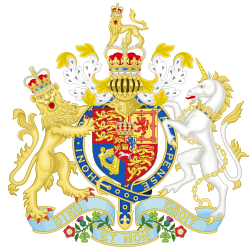
Olaudah Equiano's autobiography recounted his enslavement and the horrors of the Middle Passage. It became a bestseller in Britain, humanizing enslaved Africans for a wide audience and providing powerful firsthand testimony that fueled the British abolitionist campaign.
Image source: Olaudah Equiano
Aug 22, 1791
% complete
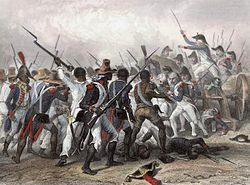
Enslaved people in the French colony of Saint-Domingue launched a massive revolt that would become the only successful slave revolution leading to an independent state. Led by figures like Toussaint Louverture, the revolution demonstrated that slavery could be overthrown by force and inspired both fear and hope across the Americas.
Image source: Haitian Revolution
Jan 1, 1804
% complete
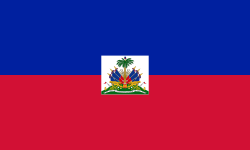
After more than a decade of brutal warfare, Jean-Jacques Dessalines proclaimed Haiti's independence, creating the world's first Black republic founded by former slaves. Haiti's existence challenged the institution of slavery globally and provided refuge and inspiration for abolitionists everywhere.
Image source: Haiti
Jan 1, 1831
% complete
William Lloyd Garrison launched The Liberator in Boston, vowing uncompromising advocacy for immediate emancipation. The weekly paper became the most influential abolitionist publication in America, giving voice to radical abolitionists and helping galvanize the movement until slavery's end in 1865.
Image source: The Liberator (newspaper)
Dec 4, 1833
% complete
William Lloyd Garrison, Arthur Tappan, and other reformers convened in Philadelphia to found the American Anti-Slavery Society, demanding the immediate emancipation of all enslaved people. The organization grew rapidly, publishing pamphlets, funding lecturers like Frederick Douglass, and making abolition a national political force.
Image source: American Anti-Slavery Society
Jun 12, 1840 - Jun 23, 1840
% complete
Abolitionists from Britain, America, and beyond gathered in London to coordinate international strategies against slavery. The convention famously excluded women delegates like Lucretia Mott and Elizabeth Cady Stanton, an insult that helped spark the women's rights movement at Seneca Falls eight years later.
Image source: World Anti-Slavery Convention
May 1, 1845
% complete
Douglass's autobiography exposed the brutality of slavery through his own experiences and became an instant bestseller in America and Europe. Its success made him a celebrity but forced him to flee to Britain for two years to avoid recapture under fugitive slave laws.
Image source: Narrative of the Life of Frederick Douglass, an American Slave
Aug 8, 1846
% complete
Congressman David Wilmot proposed legislation prohibiting slavery in any territory acquired from Mexico. Though repeatedly blocked in Congress, the proviso crystallized sectional tensions between North and South and pushed the question of slavery's expansion to the center of national politics.
Image source: Wilmot Proviso
Sep 18, 1850
% complete
As part of the Compromise of 1850, Congress passed a dramatically strengthened Fugitive Slave Act requiring citizens to assist in capturing escaped slaves even in free states. The law outraged Northerners, converted thousands to abolitionism, and made the Underground Railroad more vital than ever.
Mar 20, 1852
% complete
Harriet Beecher Stowe's novel dramatized the cruelties of slavery and became the best-selling novel of the nineteenth century. It stirred enormous Northern sympathy for enslaved people, enraged the South, and is often credited with intensifying the sectional conflict that led to the Civil War.
Image source: Uncle Tom's Cabin
Mar 20, 1854
% complete
Antislavery activists, former Whigs, and Free Soilers met in Ripon, Wisconsin, and Jackson, Michigan, to form the Republican Party. Though it sought to stop slavery's expansion rather than abolish it outright, the party gave abolitionists a major political vehicle that would eventually elect Abraham Lincoln.
Image source: History of the Republican Party (United States)
May 30, 1854
% complete
The act allowed settlers in Kansas and Nebraska to decide the slavery question by popular sovereignty, overturning the Missouri Compromise. Pro- and antislavery settlers flooded into Kansas, where violent clashes known as 'Bleeding Kansas' foreshadowed the coming civil war.
Image source: Kansas–Nebraska Act
Mar 6, 1857
% complete
The Supreme Court ruled that enslaved people were not citizens and that Congress had no power to prohibit slavery in the territories. The decision delighted slaveholders, horrified abolitionists, and further polarized the nation, pushing the country closer to disunion.
Image source: Dred Scott v. Sandford
Nov 6, 1860
% complete
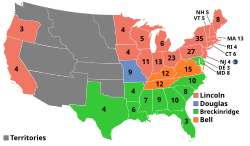
Lincoln's victory on an antislavery-expansion platform convinced Southern states that their 'peculiar institution' was threatened. Within months, seven states seceded to form the Confederacy, plunging the nation into civil war and setting the stage for slavery's destruction.
Image source: 1860 United States presidential election
Aug 21, 1831 - Aug 23, 1831
% complete
Nat Turner led one of the largest slave rebellions in U.S. history in Southampton County, Virginia, killing around 55 white people before the uprising was crushed. In retaliation, white mobs and militias killed dozens of Black people, and Southern states passed harsher laws restricting enslaved people's education and assembly, while the rebellion intensified national debate over slavery.
Image source: Nat Turner's Rebellion
Sep 3, 1838
% complete
Frederick Douglass escaped from bondage in Maryland, traveling north by train and boat to freedom in New York. He soon became the most famous Black orator and writer of his era, publishing his narrative and advising presidents, lending unmatched credibility to the abolitionist cause.
Image source: Frederick Douglass
Jul 2, 1839
% complete
Captives led by Sengbe Pieh seized control of the schooner La Amistad after being illegally transported from Africa. After landing in Connecticut, their case went to court, where abolitionists successfully argued for their freedom; the Supreme Court upheld it in 1841, and the survivors returned to Africa as free people.
Image source: La Amistad
Dec 1, 1850
% complete
Having escaped slavery herself in 1849, Harriet Tubman returned to Maryland to guide her niece's family to freedom, beginning nearly a decade of rescue missions. She ultimately made about thirteen trips and personally led some seventy enslaved people to freedom, earning the nickname 'Moses.'
Image source: Harriet Tubman
Oct 16, 1859 - Oct 18, 1859
% complete
Radical abolitionist John Brown led a small band in an attempt to seize the federal arsenal at Harpers Ferry, Virginia, and incite a slave insurrection. The raid failed and Brown was hanged, but his martyrdom electrified the nation, with his execution becoming a rallying point for Northern abolitionists.
Image source: John Brown's raid on Harpers Ferry
Apr 12, 1861
% complete
Confederate forces fired on Fort Sumter in Charleston Harbor, beginning the American Civil War. What began as a war to preserve the Union gradually transformed into a war for emancipation as enslaved people fled to Union lines and abolitionists pressed Lincoln to make the conflict a crusade against slavery.
Image source: Battle of Fort Sumter
Aug 6, 1861 - Jul 17, 1862
% complete
Congress passed two Confiscation Acts authorizing Union forces to seize property, including enslaved people, used by the Confederacy. The acts marked the first federal steps toward emancipation, treating enslaved people who reached Union lines as contraband of war and opening the door to Black military service.
Sep 22, 1862
% complete
Five days after the Union victory at Antietam, President Lincoln announced that all slaves in rebelling states would be declared free on January 1, 1863, unless those states returned to the Union. The announcement transformed the Civil War into a war against slavery and deterred European powers from recognizing the Confederacy.
Jan 1, 1863
% complete
Lincoln signed the Emancipation Proclamation, declaring free all enslaved people in the Confederate states still in rebellion. While it did not immediately free anyone in areas under Confederate control, it redefined the war's purpose, authorized the enlistment of Black soldiers, and made abolition an official Union war aim.
Image source: Emancipation Proclamation
Jul 18, 1863
% complete
The 54th Massachusetts Infantry, one of the first official African American regiments, led a heroic assault on Fort Wagner in South Carolina. Though the attack failed and Colonel Robert Gould Shaw was killed, the regiment's courage proved Black soldiers' valor and encouraged wider recruitment of Black troops.
Image source: Second Battle of Fort Wagner
Nov 15, 1864 - Dec 21, 1864
% complete
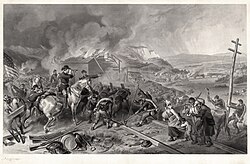
General William Tecumseh Sherman led Union troops from Atlanta to Savannah, devastating Confederate infrastructure. As the army advanced, tens of thousands of enslaved people abandoned plantations and followed the columns to freedom, demonstrating slavery's collapse across the Deep South.
Image source: Sherman's March to the Sea
Dec 6, 1865
% complete
The Thirteenth Amendment was certified after ratification by the required states, permanently abolishing slavery and involuntary servitude throughout the United States except as punishment for crime. It fulfilled the central goal of generations of abolitionists and enshrined emancipation in the Constitution itself.
Image source: Thirteenth Amendment to the United States Constitution
May 13, 1888
% complete
Brazil, the last country in the Americas to permit slavery, enacted the Golden Law abolishing the institution entirely, freeing roughly 700,000 remaining enslaved people. Signed by Princess Isabel, the law ended centuries of slavery in the hemisphere and closed the era of legal chattel slavery in the New World.
Image source: Lei Áurea
Or browse the full history timeline directory, with more than 2,000 topics.
This Abolitionist Movement timeline was generated with the help of AI, using information found on the internet.
We work hard to keep these timelines accurate, but mistakes do get through. If you spot one, email us at [email protected] and we'll fix it for future visitors.
Generate yours with AI or build it from scratch, for free.
Export your timeline, add your own events, edit or remove AI-generated events, and much more
No credit card required.
Cancel anytime.
Cancel anytime.
You can create an unlimited number of timelines with up to 10 events on each one, customize how they look, export them to PDF, PNG, PowerPoint, CSV, and Excel, and share them with a link. Paid plans raise the event limit and add features like spreadsheet imports and collaborators.
Yes. You can cancel your subscription from your account page at any time, and you will not be charged again. Your subscription stays active for the rest of the period you already paid for.
Yes. We will email you a reminder before the annual renewal, and we will also email you a receipt.
Yes. You can email us within 15 days of any payment, and we will issue you a full refund.
Check out our pricing docs or send us an email anytime: [email protected].