
-
Resources
-
Pricing
The Hippie Movement was a 1960s countercultural movement that challenged conventional values through peace activism, communal living, artistic expression, and experimentation. More Less
Build a timeline like this one in minutes, for free. Start Yours →
Part of our collection of American history timelines.
1800 - 1910
The hippie movement’s origins may be traced to European social movements of the nineteenth and early twentieth centuries, including Bohemianism, with additional influence from Eastern religion and spirituality.
Image source: Bohemianism
1900 - 1939
During the first several decades of the twentieth century, German settlers introduced alternative health and lifestyle beliefs in the United States. Some opened early health food stores and helped popularize nonconformist, natural-living practices.
1934
Hermann Sexauer opened Santa Barbara’s first health food store in 1934. A German immigrant and pacifist raw vegan, Sexauer represented the alternative-lifestyle communities that developed in Southern California.
Image source: Health food store
1940 - 1947
The Nature Boys, including William Pester, lived in the California desert, raised organic food, and promoted a back-to-nature lifestyle. Their practices anticipated later hippie interest in communal living, natural foods, and rejecting industrial society.
1963
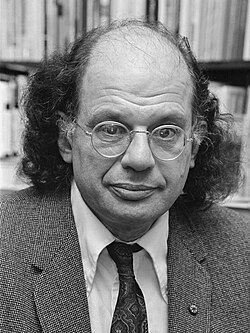
In 1963, Allen Ginsberg lived in San Francisco with Neal Cassady and Charles Plymell. His presence connected the Beat generation with the emerging countercultural scene that would soon be associated with hippies.
Image source: Allen Ginsberg
Oct 6, 1965
William Goodhart’s play Generation opened on Broadway on October 6, 1965. Starring Henry Fonda, it dramatized conflicts between establishment parents and hippie-influenced youth, including interest in natural childbirth.
1967
In 1967, Stephen Gaskin began developing a philosophy based on hippie perspectives while teaching at San Francisco State College. His lectures addressed English, creative writing, General Semantics, and spirituality.
Image source: Stephen Gaskin
1967
Drop City, an experimental community founded near Trinidad, Colorado, received Buckminster Fuller’s Dymaxion award in 1967. Its geodesic and recycled constructions exemplified hippie communal experimentation.
Image source: Drop City
1967
Several Nature Boys, including Gypsy Boots, reached Northern California in 1967. Their arrival connected earlier natural-living communities with the San Francisco hippie scene.
Image source: Lebensreform
Jul 7, 1967
Time magazine’s July 7, 1967, cover story, The Hippies: The Philosophy of a Subculture, examined the movement’s values. The article also asserted that hippie culture had historical precedents among Ancient Greek Cynic philosophers such as Diogenes of Sinope.
Image source: Hippie
1970
In 1970, Stephen Gaskin and Ina May Gaskin led a caravan of 60 buses, vans, and trucks on a cross-country speaking tour. The journey spread their communal and spiritual interpretation of hippie values.
1970
A hippie commune known as Tawapa was founded in 1970, reflecting the movement’s continuing interest in communal living and alternative social organization.
Image source: Intentional community
1970
By 1970, the 1960s zeitgeist that had produced hippie culture appeared to be declining in the United States. Many original Flower Children left Haight-Ashbury for agrarian movements, education, or careers.
2003 - 2007
The boho-chic fashion style of 2003–2007 incorporated numerous hippie features. The phrase hippie chic was also used by the London Evening Standard in March 2005, demonstrating the movement’s continued influence on mainstream fashion.
Image source: Boho-chic
1947
Eden Ahbez, associated with the Nature Boys, wrote Nature Boy. Nat King Cole recorded the hit in 1947, bringing the group’s homegrown back-to-nature ideals to mainstream American audiences.
Image source: Nature Boy
Oct 16, 1965
The Family Dog hosted A Tribute to Dr. Strange at Longshoreman’s Hall on October 16, 1965. The event grew out of Red Dog Saloon experiences and helped establish San Francisco’s psychedelic concert culture.
Jan 21, 1966 - Jan 23, 1966
The Trips Festival was held at Longshoreman’s Hall from January 21 to 23, 1966. Organized by Stewart Brand, Ken Kesey, Owsley Stanley, Zach Stewart, and others, it combined psychedelic music, performance, and multimedia spectacle.
Image source: Acid Tests
Feb 1966
In February 1966, the Family Dog became Family Dog Productions under Chet Helms. It promoted events at the Avalon Ballroom and Fillmore Auditorium, initially cooperating with Bill Graham.
Aug 15, 1969 - Aug 18, 1969
The Woodstock Music and Art Festival took place in Bethel, New York, in August 1969. Its large, peaceful gathering and celebrated performances came to exemplify an idealized version of hippie counterculture.
Image source: Woodstock
Dec 6, 1969
A major concert took place in Altamont, California, in December 1969. The event became a darker counterpart to Woodstock and is remembered as one of the major gatherings of the era.
Image source: Altamont Free Concert
Aug 1970
The Isle of Wight Festival in August 1970 attracted an even larger attendance than Woodstock. It was a major British hippie gathering and included some prominent musicians’ final major concert appearances.
Image source: Isle of Wight Festival 1970
1974 - 1985
The Stonehenge Free Festival began in 1974 through the efforts of figures including Wally Hope. English Heritage later banned it, contributing to the Battle of the Beanfield in 1985.
Image source: Stonehenge Free Festival
1986
The Burning Man festival began as a San Francisco beach party in 1986. It evolved into a temporary city featuring elaborate encampments, displays, and art cars, reflecting enduring hippie-influenced communal and artistic practices.
Image source: Burning Man
2002
The Bonnaroo Music and Arts Festival premiered in 2002 in Manchester, Tennessee. Its sold-out beginning established a major contemporary festival tradition for music fans connected to countercultural and hippie legacies.
Image source: Bonnaroo
1964
Ken Kesey and the Merry Pranksters undertook a famous 1964 road trip across the United States in the psychedelically painted school bus Further. The journey became an influential symbol of psychedelic communal culture.
Image source: Merry Pranksters
Nov 1965 - 1966
The first Acid Test was held in Palo Alto, California, in November 1965. Organized around LSD, music, light effects, and participatory performance, the events featured the Grateful Dead and helped define psychedelic festival culture.
Oct 6, 1966
California made LSD a controlled substance on October 6, 1966, ending its legal status in the state and intensifying the association between psychedelic experimentation and political opposition.
Image source: LSD
Jan 14, 1967
The Human Be-In took place in Golden Gate Park, San Francisco, on January 14, 1967. About 30,000 people gathered, and Allen Ginsberg, Gary Snyder, and Michael McClure led chanting of Om, helping popularize the hippie label and culture.
Image source: Human
Jan 29, 1967
The Mantra-Rock Dance was held on January 29, 1967. It joined devotional chanting, psychedelic culture, and countercultural music, becoming an important expression of hippie spirituality.
Image source: Mantra-Rock Dance
Jun 1967 - Oct 1967
During the Summer of Love, an estimated 100,000 people traveled to San Francisco. Around 15,000 hippies had moved into the Haight by June, making the district an international center of counterculture.
Image source: Summer of Love
Oct 6, 1967
The Diggers criticized the term hippie and organized the Death of Hippie event in October 1967. A funeral notice invited people to services beginning at sunrise on October 6 in Buena Vista Park.
Image source: Hippie
May 1964
The Los Angeles Free Press began in May 1964 as a broadside called The Faire Free Press. It became one of the earliest publications in the underground press network serving countercultural communities.
Image source: Los Angeles Free Press
May 12, 1964
The first draft card burnings took place in New York City on May 12, 1964. The act became a visible form of opposition to military conscription and the Vietnam War.
May 1965
More draft-card burnings occurred in May 1965 at the University of California, Berkeley, alongside the Free Speech Movement. Protesters also marched a coffin to the Berkeley draft board.
Aug 1965
The Berkeley Barb began publication in August 1965, joining the growing underground press. It reported on protest, alternative politics, and countercultural life in the San Francisco Bay Area.
Image source: Berkeley Barb
Aug 31, 1965
President Lyndon Johnson signed a law on August 31, 1965, making draft-card burning punishable by up to five years in prison and a $1,000 fine. Demonstrators continued the practice despite the new penalties.
Image source: Draft-card burning
Oct 1965
New York’s East Village Other began in October 1965. The paper became an important voice for the city’s avant-garde, radical, and hippie communities.
Image source: East Village Other
Nov 1965
The Fifth Estate began in Detroit in November 1965 as part of the expanding underground press. It provided a forum for countercultural politics and antiwar ideas.
Image source: Fifth Estate
Dec 1965
East Lansing’s The Paper began in December 1965, extending the underground press movement into a university-centered community.
Image source: The Paper (American newspaper)
1966
By 1966, the Underground Press Syndicate had been organized. A conference sponsored by Middle Earth in Iowa City brought together about 80 presses from the United States and Canada.
Image source: Underground Press Syndicate
Mar 1968
About 3,000 Yippies took over New York’s Grand Central Station during the 1968 spring equinox, resulting in 61 arrests. The Yippies parodied conventional politics while promoting radical protest.
Image source: Youth International Party
May 12, 1968 - Jun 24, 1968
The Poor People’s Campaign established Resurrection City on Washington’s National Mall beginning May 12, 1968. The encampment included Black, Native, and Latino militants as well as hippies and Diggers, and was removed by riot police on June 24.
Image source: Poor People's Campaign
Aug 1968
The Yippies publicized plans to protest the 1968 Democratic National Convention in Chicago and nominate the pig Pigasus as their candidate. Allen Ginsberg, a friend of Abbie Hoffman and other Chicago Seven members, was also associated with the period.
Image source: 1968 Democratic National Convention
Apr 1969 - May 15, 1969
The construction of People’s Park in Berkeley received international attention in April 1969. After a major confrontation on May 15, Governor Ronald Reagan ordered a two-week occupation of Berkeley by the National Guard.
Image source: People's Park (Berkeley)
Build a timeline like this one in minutes, for free. Start Yours →
Or browse the full history timeline directory, with more than 2,500 topics.
This Hippie Movement timeline was generated with the help of AI, using information found on the internet.
We work hard to keep these timelines accurate, but mistakes do get through. If you spot one, email us at [email protected] and we'll fix it for future visitors.
Generate yours with AI or build it from scratch, for free.
Export your timeline, add your own events, edit or remove AI-generated events, and much more
No credit card required.
15-day money-back guarantee.
You can create an unlimited number of timelines with up to 10 events on each one, customize how they look, export them to PDF, PNG, PowerPoint, CSV, and Excel, and share them with a link. Timelines made with Timeline Maker AI keep every event the generator created, and you can add up to 5 events of your own. Paid plans remove the event limit, add spreadsheet imports and hide Preceden's branding, and the higher-priced plan also adds collaborators, a custom logo and a custom domain.
Yes. You can cancel your subscription from your account page at any time, and you will not be charged again. Your subscription stays active for the rest of the period you already paid for.
Yes. We email you a reminder 15 days before your annual renewal, and we email you a receipt after every payment.
Yes. You can email us within 15 days of any payment, and we will issue you a full refund.
Check out our pricing docs or send us an email anytime: [email protected].