-
Use Cases
-
Resources
-
Pricing
1675 - 1699
In late-17th-century North America, alcohol was a vital part of colonial life. Men, women, and children used alcoholic beverages as drinks, medicines, and commodities.
1700 - 1799
During the 18th century, alcohol traded for furs severely affected many Native American cultures and societies, contributing to poverty and social disintegration.
Image source: Temperance movement
1700 - 1799
An 18th-century gin craze in Great Britain intensified public concern about drunkenness and helped stimulate calls for restrictions on alcohol.
Image source: Gin Craze
1737
As early as 1737, Native American temperance activists campaigned against alcohol and sought legislation restricting the sale and distribution of alcoholic drinks in Indigenous communities.
1767
In 1767, the average New England family was reported to consume seven barrels of hard cider annually, equivalent to about 35 gallons per person.
Image source: Cider
1775 - 1799
Attitudes toward alcohol in Great Britain became increasingly negative during the late 18th century, helping create the intellectual and religious environment in which organized temperance campaigns developed.
1775
Anthony Benezet suggested abstinence from alcohol in 1775, an early expression of the abstinence principle that later became central to temperance organizing.
1834
After the 1834 Indian Trade and Intercourse Act, alcohol consumption, distribution, and production on Indian reservations were prohibited or severely limited.
Image source: Nonintercourse Act
1743
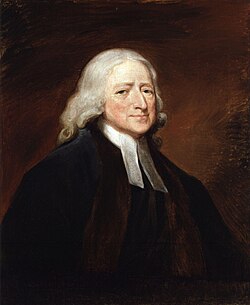
In 1743, Methodist founder John Wesley proclaimed that buying, selling, and drinking liquor, unless absolutely necessary, were evils to be avoided.
Image source: John Wesley
Aug 14, 1829
On August 14, 1829, Belfast professor and Presbyterian minister John Edgar published a letter in the Belfast Telegraph advocating temperance. He mainly targeted spirits rather than wine and beer.
Oct 6, 1830
The Kirtland Temperance Society was organized in Ohio on October 6, 1830, with 239 members while Latter Day Saints were residing in Kirtland.
Image source: Word of Wisdom (Latter Day Saints)
1831
During the Rochester, New York, revival of 1831, individuals were required to sign a temperance pledge in order to receive salvation.
1833
Teetotalism originated in Preston, Lancashire, in 1833, promoting complete abstinence from alcoholic beverages.
Feb 1, 1833
On February 1, 1833, a few weeks before the Word of Wisdom was published, all distilleries in the Kirtland area were shut down.
Oct 11, 1833
Pequot writer and minister William Apess established the first formal Native American temperance society among the Mashpee Indians on October 11, 1833.
1838
Irish priest Theobald Mathew established the Teetotal Abstinence Society in 1838, beginning the Catholic temperance movement.
1838
In 1838, the working-class movement for universal male suffrage, Chartism, included a current known as temperance chartism.
Image source: Chartism
1847
The Band of Hope was founded in Leeds, United Kingdom, in 1847 by Reverend Jabez Tunnicliff to promote temperance among children and young people.
1853
The avowedly prohibitionist United Kingdom Alliance began in 1853 and became one of the important prohibitionist organizations of the later 19th century.
Image source: United Kingdom Alliance
1855
In 1855, a national organization was formed amid an explosion of Band of Hope activity in Britain.
1862
Baptist missionary Joseph Gelson Gregson founded the Soldiers Total Abstinence Association in British India in 1862.
1864
The Salvation Army was founded in London in 1864 with a strong emphasis on abstinence from alcohol and ministry among working-class people. Publicans funded a Skeleton Army to disrupt its meetings.
Image source: The Salvation Army
1870
In 1870, physicians founded the American Association of the Cure of Inebriety to treat alcohol addiction, reflecting the growing medical approach to alcohol use disorder.
Nov 20, 1874 - Nov 30, 1874
The Woman's Christian Temperance Union was officially organized in Cleveland, Ohio, in late November 1874 after a spontaneous anti-saloon and anti-liquor crusade spread through the Midwest in 1873–1874.
Image source: Woman's Christian Temperance Union
1875 - 1899
Frances Willard, the WCTU’s second president, helped transform it into the largest women’s religious organization of the 19th century.
1881
In 1881, the WCTU began lobbying for mandatory temperance instruction in public schools. By 1901, schools were required to teach temperance ideas, though critics accused the lessons of misinformation, fearmongering, and racist stereotypes.
1898
Irish Catholic James Cullen formed the Pioneer Total Abstinence Association in 1898. It subsequently spread to other English-speaking Catholic communities.
1921
In 1921, LDS Church president Heber J. Grant officially called on Latter-day Saints to strictly follow the Word of Wisdom, including complete abstinence from alcohol.
1810
In 1810, Calvinist ministers met at a Massachusetts seminary to write articles about abstinence from alcohol for use in preaching to their congregations.
1813 - 1820
The Massachusetts Society for the Suppression of Intemperance was formed in 1813. Its influence peaked in 1818, and it ended in 1820 without making a significant lasting mark.
1819
The Darby Association for Discouraging the Unnecessary Use of Spirituous Liquors, the earliest recorded temperance society in Pennsylvania, was organized in 1819 at the Darby Friends Meetinghouse.
1826
Connecticut-born minister Lyman Beecher published Six Sermons on...Intemperance in 1826, helping popularize religious arguments against excessive drinking.
1833
By 1833, several thousand groups similar to the American Temperance Society had formed in most states, using meetings, abstinence pledges, and pamphlets.
Image source: American Temperance Society
1838
Massachusetts banned certain sales of spirits in 1838, one of the early state-level legislative interventions associated with the American temperance movement.
1840
In 1840, Baltimore artisans formed their own temperance society, designed to appeal to hard-drinking men through mutual support rather than primarily religious instruction.
Image source: Washingtonian movement
Feb 22, 1842
On February 22, 1842, Abraham Lincoln delivered an address to the Springfield Washington Temperance Society in Springfield, Illinois, while serving in the state legislature.
1845
In 1845, Michigan allowed its municipalities to decide whether they would prohibit alcohol, extending the local-option approach to temperance legislation.
1845
By 1845, the Washingtonian movement was no longer as prominent, marking a decline of one of the early mass temperance organizations.
1851
A law passed in Maine in 1851 created a full-fledged prohibition. The measure, associated with the efforts of Neal Dow, was followed by bans in several other states.
1893
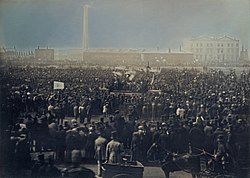
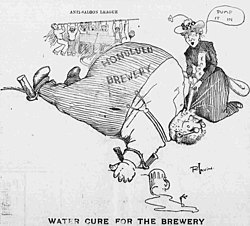
The Anti-Saloon League began in Ohio in 1893 and later became a powerful organization pressing for legislative prohibition.
Image source: Anti-Saloon League
1913
In 1913, the Anti-Saloon League began its efforts to establish national prohibition in the United States.
1914
L’Alarme, a French movement against alcoholism, was inaugurated in 1914 under the auspices of the National League Against Alcoholism to mobilize public opinion for stricter liquor restrictions.
1914 - 1916
During the First World War, Britain passed the Defence of the Realm Act 1914, restricted pub hours, watered down beer, and imposed an extra penny-a-pint tax. In 1916, the State Management Scheme nationalized breweries and pubs in some armaments-producing areas.
1915 - 1933
Iceland introduced prohibition in 1915. Consumption of spirits was liberalized in 1933, while beer remained illegal until 1989.
1916
In 1916, Canada’s Ontario Temperance Act prohibited sales of alcoholic beverages containing more than 2.5 percent alcohol.
1917 - 1926
Norway introduced partial prohibition in 1917. It became full prohibition through a 1919 referendum, but the legislation was overturned in 1926.
Image source: 1919 Norwegian prohibition referendum
1919 - 1932
Finland introduced prohibition in 1919 but repealed it in 1932 after violent crime and illegal liquor trading increased through criminal opportunism.
Image source: Prohibition
1920 - 1933
The Eighteenth Amendment took effect in 1920, prohibiting the manufacture, sale, and distribution of alcoholic beverages throughout the United States.
Image source: Prohibition in the United States
Dec 5, 1933
The Twenty-first Amendment was ratified on December 5, 1933, repealing nationwide prohibition in the United States.
Image source: Twenty-first Amendment to the United States Constitution
1966
Licensing restrictions were gradually relaxed throughout the 20th century, with Mississippi becoming the last state to end prohibition in 1966.
2016 - 2017
In 2016, women in Tamil Nadu blamed alcohol for social problems including domestic violence and voted for a pro-prohibition leader. In 2017, women in Bihar campaigned for temperance and helped elect Nitish Kumar, who pledged to prohibit alcohol.
2018
Restrictions on alcohol in Native communities were lifted incrementally throughout the 20th century. In 2018, the final law against operating distilleries on Native lands was overturned.
Or browse the full history timeline directory, with more than 2,500 topics.
This Temperance Movement timeline was generated with the help of AI, using information found on the internet.
We work hard to keep these timelines accurate, but mistakes do get through. If you spot one, email us at [email protected] and we'll fix it for future visitors.
Generate yours with AI or build it from scratch, for free.
Export your timeline, add your own events, edit or remove AI-generated events, and much more
No credit card required.
Cancel anytime.
Cancel anytime.
You can create an unlimited number of timelines with up to 10 events on each one, customize how they look, export them to PDF, PNG, PowerPoint, CSV, and Excel, and share them with a link. Paid plans raise the event limit and add features like spreadsheet imports and collaborators.
Yes. You can cancel your subscription from your account page at any time, and you will not be charged again. Your subscription stays active for the rest of the period you already paid for.
Yes. We will email you a reminder before the annual renewal, and we will also email you a receipt.
Yes. You can email us within 15 days of any payment, and we will issue you a full refund.
Check out our pricing docs or send us an email anytime: [email protected].