-
Use Cases
-
Resources
-
Pricing
1792
Mary Wollstonecraft argued that women are rational human beings entitled to education, independence, and civic participation. Her book became a foundational text for modern feminist political thought.
Image source: A Vindication of the Rights of Woman
Jul 19, 1848 - Jul 20, 1848
Organized by Elizabeth Cady Stanton, Lucretia Mott, and others, the convention issued the Declaration of Sentiments. It publicly demanded expanded rights for women, including voting, education, property ownership, and legal equality.
Image source: Seneca Falls Convention
1869
Susan B. Anthony and Elizabeth Cady Stanton founded the National Woman Suffrage Association to pursue a federal constitutional amendment guaranteeing women the vote.
Image source: National Woman Suffrage Association
1890
The National Woman Suffrage Association and American Woman Suffrage Association merged to form a major United States organization dedicated to winning voting rights for women.
Image source: National American Woman Suffrage Association
Sep 19, 1893
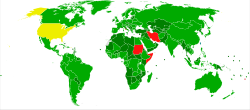
New Zealand became the first self-governing country in which women won the right to vote in parliamentary elections. The achievement followed decades of organizing led by campaigners including Kate Sheppard.
Image source: Women's suffrage in New Zealand
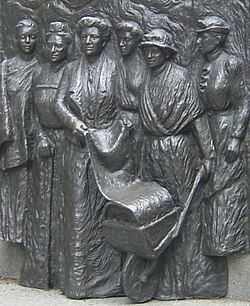
1903 - 1914
Emmeline Pankhurst and the Women’s Social and Political Union used marches, civil disobedience, hunger strikes, and other direct-action tactics to press for women’s suffrage in Britain.
Image source: Women's Social and Political Union
1906
Finland became the first country in Europe to grant women both the right to vote and the right to stand for election. Nineteen women were elected to the Finnish Parliament in 1907.
Image source: Women's suffrage

Aug 18, 1920
The United States ratified the Nineteenth Amendment, prohibiting denial of the vote on the basis of sex. Although the amendment expanded formal voting rights, many women of color remained excluded by discriminatory laws and practices.
Image source: Nineteenth Amendment to the United States Constitution
1888
The International Council of Women created an international network through which women’s organizations could coordinate campaigns on suffrage, education, labor, health, and peace.
Image source: International Council of Women
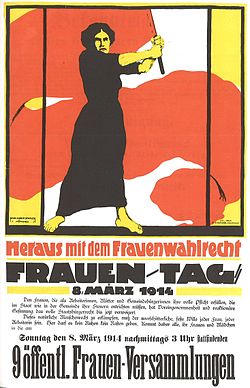
Mar 8, 1911
The first major International Women’s Day demonstrations took place in several European countries, linking demands for voting rights, labor protections, and political equality.
Image source: International Women's Day
Jun 30, 1966
Betty Friedan and other activists founded the National Organization for Women to pursue full equality for women in employment, education, politics, law, and family life.
Image source: National Organization for Women
Jun 28, 1969 - Jul 3, 1969
A series of protests at and around the Stonewall Inn in New York City galvanized the modern LGBTQ rights movement. Lesbian and transgender activists helped make sexuality and gender autonomy central to broader liberation struggles.
Image source: Stonewall riots
1975
The United Nations designated 1975 International Women’s Year and held a major world conference in Mexico City, elevating women’s equality, development, and peace on the international agenda.
Image source: International Women's Year
Sep 24, 1981 - 2000
Women established a long-running peace camp outside the Greenham Common air base in Britain to oppose nuclear weapons. The camp connected feminist activism with antimilitarism and environmental concerns.
Sep 4, 1995 - Sep 15, 1995
The Beijing conference adopted the Beijing Declaration and Platform for Action, identifying twelve critical areas for advancing women’s equality, including poverty, violence, education, health, political participation, and human rights.
Image source: World Conference on Women, 1995
Oct 9, 2012
The Taliban shot Malala Yousafzai in Pakistan because of her advocacy for girls’ education. Her survival and continued activism made her an internationally recognized symbol of education and women’s rights.
Image source: Malala Yousafzai
Jan 21, 2017
Millions of people participated in demonstrations in the United States and around the world following the inauguration of Donald Trump. The marches highlighted women’s rights, reproductive rights, racial justice, LGBTQ rights, and immigrant rights.
Image source: 2017 Women's March
Oct 2017
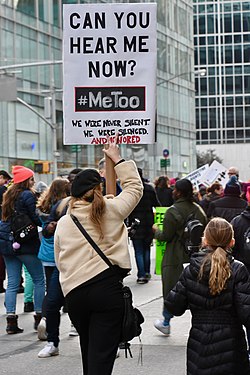
The #MeToo movement became a global campaign against sexual harassment and assault after widespread disclosures involving powerful men. It amplified survivors’ voices and challenged workplace cultures and institutional impunity.
Image source: MeToo movement
Aug 15, 2021
The Taliban’s return to power in Afghanistan renewed international concern over restrictions on women’s education, employment, movement, political participation, and personal autonomy, while Afghan women continued organizing and speaking out.
Image source: Women in Afghanistan
1930
An international convention addressed discriminatory nationality rules that could cause women to lose or change nationality through marriage, making women’s independent legal status an international concern.
1946
The United Nations established the Commission on the Status of Women to promote women’s political, economic, civil, social, and educational equality worldwide.
Dec 10, 1948
The declaration affirmed that all people are entitled to rights without distinction based on sex. Its language supplied a major international foundation for later women’s rights treaties and campaigns.
Image source: Universal Declaration of Human Rights
1952
The United Nations adopted the first international treaty specifically addressing women’s political rights, including voting, eligibility for election, and holding public office on equal terms with men.
Image source: Convention on the Political Rights of Women
Jul 2, 1964
Title VII of the Civil Rights Act prohibited employment discrimination based on sex, race, color, religion, or national origin and created a federal enforcement structure through the Equal Employment Opportunity Commission.
Image source: Civil Rights Act of 1964
Mar 22, 1972
The United States Congress approved the Equal Rights Amendment, which stated that equality of rights could not be denied on account of sex. The amendment was sent to the states but did not secure ratification by the original deadline.
Dec 18, 1979
The United Nations adopted CEDAW, a comprehensive international treaty requiring states to eliminate discrimination against women in political, economic, social, cultural, civil, and family life.
Image source: Convention on the Elimination of All Forms of Discrimination Against Women
Sep 13, 1994
The United States enacted the Violence Against Women Act, directing federal resources toward responses to domestic violence, sexual assault, dating violence, and stalking, while supporting shelters and victim services.
Aug 1, 2014
The Council of Europe Convention on preventing and combating violence against women and domestic violence entered into force, creating binding standards for prevention, protection, prosecution, and coordinated policy.
Image source: Istanbul Convention
Feb 19, 1963
Betty Friedan criticized the expectation that middle-class women should find fulfillment solely in domestic roles. The book helped stimulate organizing associated with the United States second-wave women’s movement.
Image source: The Feminine Mystique
Jun 10, 1963
The United States Equal Pay Act prohibited sex-based wage differences for substantially equal work under specified conditions, establishing an important federal standard against workplace discrimination.
Oct 27, 1967
The Abortion Act 1967 permitted abortions in Great Britain under specified conditions and represented a major change in reproductive healthcare law, though access remained regulated and unequal.
Image source: Abortion Act 1967
Jun 23, 1972
Title IX prohibited sex discrimination in education programs receiving federal financial assistance in the United States. It substantially expanded women’s and girls’ access to academic programs, athletics, and institutional opportunities.
Jan 22, 1973
The United States Supreme Court held that the Constitution protected a right to abortion under a constitutional privacy doctrine. The decision transformed reproductive-rights law and became a central focus of political conflict.
Image source: Roe v. Wade
Sep 5, 1994 - Sep 13, 1994
The Cairo conference adopted a program emphasizing reproductive health, informed choice, women’s empowerment, and human rights rather than population control as the basis of population policy.
Oct 3, 2016
Mass demonstrations known as Black Monday opposed proposed near-total abortion restrictions in Poland. The protests helped defeat the proposed legislation and became a prominent example of contemporary reproductive-rights mobilization.
Dec 30, 2020
Argentina’s Congress approved legislation legalizing abortion during the first fourteen weeks of pregnancy. The victory followed years of organizing by the Green Wave movement and influenced reproductive-rights campaigns across Latin America.
Or browse the full history timeline directory, with more than 2,500 topics.
This Women's Rights Movement timeline was generated with the help of AI, using information found on the internet.
We work hard to keep these timelines accurate, but mistakes do get through. If you spot one, email us at [email protected] and we'll fix it for future visitors.
Generate yours with AI or build it from scratch, for free.
Export your timeline, add your own events, edit or remove AI-generated events, and much more
No credit card required.
Cancel anytime.
Cancel anytime.
You can create an unlimited number of timelines with up to 10 events on each one, customize how they look, export them to PDF, PNG, PowerPoint, CSV, and Excel, and share them with a link. Paid plans raise the event limit and add features like spreadsheet imports and collaborators.
Yes. You can cancel your subscription from your account page at any time, and you will not be charged again. Your subscription stays active for the rest of the period you already paid for.
Yes. We will email you a reminder before the annual renewal, and we will also email you a receipt.
Yes. You can email us within 15 days of any payment, and we will issue you a full refund.
Check out our pricing docs or send us an email anytime: [email protected].