-
Use Cases
-
Resources
-
Pricing
The Gay Rights Movement is a social and political campaign advocating for the civil rights, legal equality, and social acceptance of lesbian, gay, bisexual, transgender, and queer individuals. Emerging prominently in the mid-20th century, the movement gained momentum after pivotal events like the Stonewall Riots in 1969, leading to major milestones including the decriminalization of homosexuality, anti-discrimination protections, and the legalization of same-sex marriage. More Less
1749
% complete
Thomas Cannon wrote what may be the earliest published defense of homosexuality in English, 'Ancient and Modern Pederasty Investigated and Exemplify'd', at a time when same-sex acts were serious crimes under sodomy laws.
Image source: Kay Cannon
1785
% complete
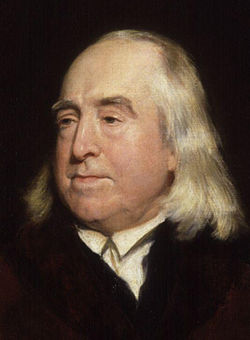
Social reformer Jeremy Bentham wrote the first known argument for homosexual law reform in England around 1785, when the legal penalty for buggery was death by hanging. Fearing reprisal, he did not publicize his views, and his essay was not published until 1978.
Image source: Jeremy Bentham
1867
% complete
In 1867, Karl Heinrich Ulrichs staged the first public gay rights protest, an early act of open advocacy for homosexual emancipation in Europe.
Image source: Karl Heinrich Ulrichs
1873
% complete
In 1873, John Addington Symonds wrote A Problem in Greek Ethics, a work of what would later be called 'gay history.' He used the word 'homosexual' in it before it was credited as introduced into English in 1892, and his memoirs (1889–1893) form one of the earliest works of self-conscious homosexual autobiography in English.
Image source: John Addington Symonds
1897
% complete
English sexologist Havelock Ellis wrote the first objective scientific study of homosexuality in 1897, treating it as a neutral sexual condition rather than a pathology.
Image source: Havelock Ellis
1901
% complete
The 1901 book Sind es Frauen? Roman über das Dritte Geschlecht (Are These Women? Novel about the Third Sex) by Aimée Duc was as much a political treatise as a novel, criticizing pathological theories of homosexuality and gender inversion in women.
1908
% complete
His 1908 book on the subject, The Intermediate Sex, would become a foundational text of the LGBTQ movements of the 20th century.
Image source: Edward Carpenter
1928
% complete
In 1928, English writer Radclyffe Hall published the novel The Well of Loneliness, a landmark work depicting lesbian life that sparked controversy and censorship.
Image source: The Well of Loneliness
1791
% complete
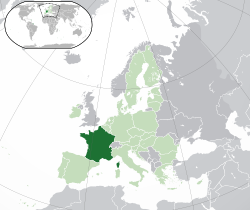
In 1791, France became the first nation to decriminalize homosexuality, probably thanks in part to Jean Jacques Régis de Cambacérès, one of the authors of the Napoleonic Code. In 1792, groups of militant 'sodomite-citizens' in Paris petitioned the National Constituent Assembly for freedom and recognition.
Image source: LGBT rights in France
1808
% complete
With the introduction of the Napoleonic Code in 1808, the Duchy of Warsaw also decriminalized homosexuality, extending French legal reforms to Eastern Europe.
Image source: Duchy of Warsaw
1830
% complete
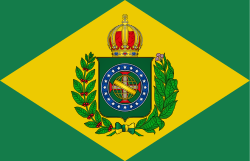
In 1830, the new Penal Code of the Brazilian Empire did not repeat title XIII of the fifth book of the 'Ordenações Philipinas', which had made sodomy a crime, effectively ending its criminalization in Brazil.
Image source: Empire of Brazil
1885
% complete
In 1885, the Labouchere Amendment was included in the Criminal Law Amendment Act, criminalizing 'any act of gross indecency with another male person'; a charge successfully invoked to convict playwright Oscar Wilde in 1895 with the most severe sentence possible under the Act.
Image source: Labouchere Amendment
1910
% complete
Women only began to join the previously male-dominated sexual reform movement around 1910 when the German government tried to expand Paragraph 175 to outlaw sex between women.
Image source: Paragraph 175
1922
% complete
The USSR's Criminal Code of 1922 decriminalized homosexuality, making it one of the earliest modern states to remove sodomy laws after the Russian Revolution.
Image source: LGBTQ history in Russia
Sep 4, 1957
% complete
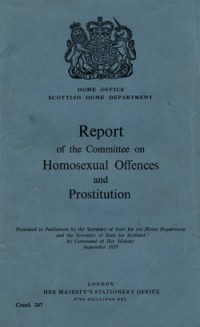
The Wolfenden Report was published in Britain on September 4, 1957, after publicized convictions for homosexuality of well-known men including Lord Montagu. It eventually led to the Sexual Offences Act 1967, supported by Labour Home Secretary Roy Jenkins.
Image source: Wolfenden report
1967
% complete
Following the Wolfenden Report, the Sexual Offences Bill 1967, supported by Labour Home Secretary Roy Jenkins, partially decriminalized homosexuality in England and Wales, though convictions like those of the Bolton 7 persisted as recently as 1998.
Image source: Sexual Offences Act 1967
Apr 12, 1888
% complete
Swann was arrested in police raids numerous times, including on April 12, 1888, in the first documented case of arrests for female impersonation in the United States.
Image source: Anna Haining Bates
1897
% complete
The society was founded in 1897 by George Cecil Ives, one of the earliest gay rights campaigners, who had been working since meeting Oscar Wilde in 1892 for the end of oppression of homosexuals, what he called the 'Cause'.
Image source: George Cecil Ives
1897
% complete
The earliest known LGBTQ rights organization, the Scientific-Humanitarian Committee, was founded in Berlin in 1897 by Magnus Hirschfeld to campaign publicly against 'Paragraph 175', which made sex between men illegal.
Image source: Scientific-Humanitarian Committee
1904
% complete
Anna Rüling, delivering a public speech in 1904 at the request of Magnus Hirschfeld, became the first female Uranian activist, marking women's entry into the sexual reform movement.
Image source: Anna Rüling
1924
% complete
Henry Gerber's Society for Human Rights, formed in Chicago in 1924, was a better-documented early American group explicitly advancing homosexual rights; it was quickly suppressed.
Image source: Society for Human Rights
1933
% complete
The gains made in Germany were drastically reversed with the rise of Nazism, and Hirschfeld's Institute for Sexology, formed in 1919, along with its library, was destroyed in 1933.
Image source: Institut für Sexualwissenschaft
1952
% complete
The transgender rights journal Transvestia: The Journal of the American Society for Equality in Dress published two issues in 1952, an early transgender publication in the United States.
Image source: Virginia Prince
1965
% complete
A 1965 gay march held in front of Independence Hall in Philadelphia, according to some historians, marked the beginning of the modern gay rights movement.
Image source: Annual Reminder
Apr 1966 - Aug 1966
% complete
In San Francisco, the LGBTQ youth organization Vanguard, formed by Adrian Ravarour, protested for equal rights during April–July 1966, followed by the August 1966 Compton's riot, where transgender street prostitutes rioted against police harassment at Gene Compton's Cafeteria in the Tenderloin.
Image source: Compton's Cafeteria riot
1967
% complete
In 1967 Columbia University officially recognized a gay student group, making it the first college in the United States to officially recognize such a group. That year, the Sexual Freedom League in San Francisco, facilitated by Margo Rila and Frank Esposito, also began as one of the earliest bisexual organizations.
Image source: Columbia University
1969
% complete
In 1969, Lee Brewster and Bunny Eisenhower formed the Queens Liberation Front (QLF), partially in protest of the treatment of drag queens at the first Christopher Street Liberation Day March.
Image source: Queens Liberation Front
Jun 28, 1969 - Jul 3, 1969
% complete
The Stonewall riots of 1969 erupted when gay men, lesbians, drag queens and transgender women at a bar in New York City resisted a police raid. This new radicalism inspired the Gay Liberation movement, with Paul Goodman publishing 'The Politics of Being Queer' and the GLF's 'A Gay Manifesto' setting out its aims.
Image source: Stonewall riots
Oct 13, 1970
% complete
In the United Kingdom, the GLF held its first meeting in the basement of the London School of Economics on October 13, 1970. By 1971 it was recognized as a political movement in the national press, holding weekly meetings of 200 to 300 people, and disrupted the opening of the 1971 Festival of Light.
Image source: Gay Liberation Front
1972
% complete
In 1972 a Quaker group, the Committee of Friends on Bisexuality, issued the 'Ithaca Statement on Bisexuality' supporting bisexuals—possibly the first public declaration of the bisexual movement and certainly the first statement on bisexuality issued by an American religious assembly, appearing in the Friends Journal and The Advocate.
Image source: Bisexuality in the United States
1976
% complete
In 1976 the San Francisco Bisexual Center opened, becoming a key hub for bisexual activism and community support in the United States.
Image source: San Francisco Pride
1979
% complete
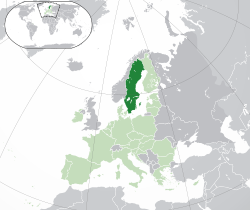
In 1979, a number of people in Sweden called in sick with a case of being homosexual, protesting homosexuality being classified as an illness.
Image source: LGBT rights in Sweden
1987
% complete
This era saw a resurgence of militancy with direct action groups like AIDS Coalition to Unleash Power (ACT UP), formed in 1987, as well as its offshoots Queer Nation (1990) and the Lesbian Avengers (1992).
Image source: ACT UP
1992
% complete
The 1990s saw a rapid push of the transgender movement. In the English-speaking world, Leslie Feinberg published Transgender Liberation: A Movement Whose Time Has Come in 1992.
Image source: Leslie Feinberg
Jun 24, 1994
% complete
On June 24, 1994, the first Gay Pride march in Asia was celebrated in the Philippines, expanding pride celebrations beyond the Western world.
Image source: Metro Manila Pride March
1972
% complete
In 1972, Sweden became the first country in the world to allow people who were transsexual by legislation to surgically change their sex and provide free hormone replacement therapy.
1974
% complete
In 1974, Maureen Colquhoun came out as the first lesbian Member of Parliament for the Labour Party in the UK.
Image source: Maureen Colquhoun
May 1974
% complete
In May 1974 the American Psychiatric Association, after years of pressure from activists, changed the wording concerning homosexuality in the Diagnostic and Statistical Manual of Mental Disorders from a 'mental disorder' to a 'sexual orientation disturbance', removing gay people from automatic classification as mentally ill.
1977
% complete
In 1977, former Miss America contestant and orange juice spokesperson Anita Bryant began the 'Save Our Children' campaign in Dade County, Florida, which proved to be a major setback in the Gay Liberation movement.
Image source: Save Our Children
1977
% complete
In 1977, Harvey Milk was elected to the San Francisco Board of Supervisors, becoming the first openly gay man in California elected to public office. He was assassinated by former city supervisor Dan White in 1978.
Image source: Harvey Milk
1985
% complete
In Canada, the coming into effect of Section 15 of the Canadian Charter of Rights and Freedoms in 1985 saw Canadian gays and lesbians move from liberation strategies to litigious strategies in pursuing equality rights.
Image source: Section 15 of the Canadian Charter of Rights and Freedoms
1986
% complete
Another setback in the United States occurred in 1986, when the US Supreme Court upheld a Georgia anti-sodomy law in Bowers v. Hardwick, a decision later overturned by Lawrence v. Texas in 2003.
2003
% complete
In 2003, in the case Lawrence v. Texas, the US Supreme Court overturned Bowers v. Hardwick and invalidated sodomy laws throughout the United States.
Nov 6, 2006 - Nov 9, 2006
% complete
From November 6 to 9, 2006, the Yogyakarta Principles on application of international human rights law in relation to sexual orientation and gender identity were adopted by an international meeting of 29 specialists in Yogyakarta, convened by the International Commission of Jurists and the International Service for Human Rights.
Image source: Yogyakarta Principles
Dec 13, 2008
% complete
The UN declaration on sexual orientation and gender identity gathered 66 signatures in the United Nations General Assembly on December 13, 2008.
Image source: LGBTQI+ rights at the United Nations
2010
% complete
The 1993 'Don't ask, don't tell' law, forbidding homosexual people from serving openly in the United States military, was repealed in 2010.
Image source: Don't ask, don't tell
2012
% complete
In 2012, the United States Department of Housing and Urban Development's Office of Fair Housing and Equal Opportunity issued a regulation prohibiting discrimination based on sexual orientation and gender identity in federally-assisted housing programs.
Image source: Office of Fair Housing and Equal Opportunity
Sep 6, 2018
% complete
On September 6, 2018, consensual gay sex was legalized in India by their Supreme Court, striking down a colonial-era law criminalizing sodomy that dated back roughly 150 years.
Image source: Navtej Singh Johar v. Union of India
Jun 2020
% complete
In June 2020, the United States Supreme Court ruled that the 1964 Civil Rights Act could protect gay and transgender people from workplace discrimination.
Image source: Bostock v. Clayton County
2001
% complete
The Netherlands was the first country to allow same-sex marriage in 2001, followed by Belgium in 2003 and Spain and Canada in 2005.
2006
% complete
South Africa became the first African nation to legalize same-sex marriage in 2006, and remains currently the only African nation where same-sex marriage is legal.
Oct 22, 2009
% complete
On October 22, 2009, the assembly of the Church of Sweden voted strongly in favour of giving its blessing to homosexual couples, including use of the term marriage ('matrimony').
Image source: Church of Sweden
Jun 11, 2010
% complete
Iceland became the first country in the world to legalize same-sex marriage through a unanimous vote: 49–0, on June 11, 2010.
Jun 26, 2015
% complete
On June 26, 2015, in Obergefell v. Hodges, the US Supreme Court ruled that same-sex marriage was legal nationwide, a landmark victory for the marriage equality movement.
Sep 12, 2017 - Nov 7, 2017
% complete
Between September 12 and November 7, 2017, Australia held a national survey on same-sex marriage; 61.6% of respondents supported legally recognizing same-sex marriage nationwide.
Image source: Australian Marriage Law Postal Survey
2019
% complete
In 2019, Taiwan became the first country in Asia to allow same-sex marriage, following the Philippines' first pride march in 1994 and decades of regional activism.
Or browse the full history timeline directory, with more than 2,000 topics.
This Gay Rights Movement timeline was generated with the help of AI, using information found on the internet.
We work hard to keep these timelines accurate, but mistakes do get through. If you spot one, email us at [email protected] and we'll fix it for future visitors.
Generate yours with AI or build it from scratch, for free.
Export your timeline, add your own events, edit or remove AI-generated events, and much more
No credit card required.
Cancel anytime.
Cancel anytime.
You can create an unlimited number of timelines with up to 10 events on each one, customize how they look, export them to PDF, PNG, PowerPoint, CSV, and Excel, and share them with a link. Paid plans raise the event limit and add features like spreadsheet imports and collaborators.
Yes. You can cancel your subscription from your account page at any time, and you will not be charged again. Your subscription stays active for the rest of the period you already paid for.
Yes. We will email you a reminder before the annual renewal, and we will also email you a receipt.
Yes. You can email us within 15 days of any payment, and we will issue you a full refund.
Check out our pricing docs or send us an email anytime: [email protected].