-
Use Cases
-
Resources
-
Pricing
May 10, 1857 - Jun 20, 1858
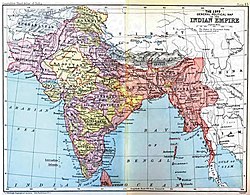
The uprising began at Meerut among Indian soldiers and spread across northern and central India. Rebels restored the Mughal emperor Bahadur Shah Zafar as a symbolic leader, while British forces eventually suppressed the rebellion. Its aftermath ended East India Company rule and brought India directly under the British Crown.
Image source: Indian Rebellion of 1857
Aug 2, 1858
The act transferred governance of India from the East India Company to the British Crown after the 1857 rebellion. It created the office of secretary of state for India and established a new imperial administrative structure.
Image source: Government of India Act 1858
Dec 28, 1885
The Indian National Congress was founded in Bombay with Allan Octavian Hume, Dadabhai Naoroji, and other early nationalists playing central roles. It initially sought constitutional reform and greater Indian participation in government, but later became the principal organization leading the independence movement.
Image source: Indian National Congress
Aug 7, 1905 - 1911
Nationalists urged Indians to boycott British goods and promote locally made products following the partition of Bengal. The movement expanded into protests, national education initiatives, indigenous enterprise, and new forms of political activism.
Image source: Swadeshi movement
Oct 16, 1905 - Dec 12, 1911
Viceroy Lord Curzon divided Bengal, officially for administrative reasons but widely viewed as an effort to weaken emerging nationalism. The decision triggered the Swadeshi and boycott movements and intensified political mobilization across India. The partition was annulled in 1911.
Image source: Partition of Bengal (1905)
Dec 30, 1906
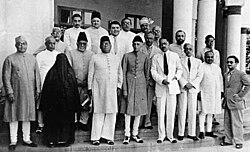
Muslim political leaders founded the All-India Muslim League at Dhaka to represent Muslim interests within colonial India. It later evolved under Muhammad Ali Jinnah into the principal organization demanding a separate Muslim homeland.
Image source: All-India Muslim League
Dec 26, 1907
The Congress divided at its Surat session between moderates seeking gradual constitutional reform and extremists advocating more forceful agitation. The split weakened the organization temporarily and reflected growing debate over methods and goals.
May 25, 1909
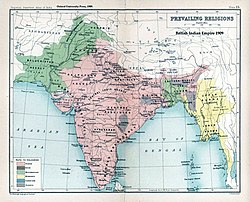
The Indian Councils Act expanded legislative councils and introduced elected representation, but it also established separate electorates for Muslims. The reform increased limited political participation while institutionalizing communal representation.
Image source: Indian Councils Act 1909
1916 - 1918
Bal Gangadhar Tilak and Annie Besant organized campaigns demanding self-government for India within the British Empire. Their leagues popularized nationalist politics and helped prepare the ground for broader mass movements.
Image source: Indian Home Rule movement
Dec 29, 1916
The Congress and the Muslim League reached an agreement at Lucknow on constitutional demands and legislative representation. The pact marked an important moment of Hindu-Muslim political cooperation and brought moderate and nationalist leaders closer together.
Apr 10, 1917 - May 1917
Mahatma Gandhi led an inquiry and campaign in Bihar on behalf of indigo cultivators forced into exploitative contracts. The movement secured concessions for peasants and established satyagraha as an effective method of mass political action.
Image source: Champaran Satyagraha
Feb 22, 1918 - Mar 15, 1918
Gandhi supported textile workers in Ahmedabad seeking a wage increase during a dispute with mill owners. The strike used nonviolent discipline and fasting, contributing to a settlement and broadening Gandhi's labor activism.
Image source: Kheda Satyagraha of 1918
Mar 22, 1918 - Jun 1918
Gandhi, Vallabhbhai Patel, and other organizers supported farmers in Kheda, Gujarat, who sought suspension of land revenue after crop failure. The campaign pressured authorities to grant revenue relief and strengthened local organizing.
1919 - 1924
Indian Muslim leaders campaigned to preserve the Ottoman caliphate after World War I. Gandhi allied the movement with the Congress-led struggle, creating a significant period of joint Hindu-Muslim mobilization.
Image source: Khilafat Movement
Mar 18, 1919
The Rowlatt Act extended emergency wartime powers, allowing detention without trial and restrictions on political activity. Gandhi called for a nationwide hartal, turning opposition to the act into a major national protest.
Image source: Rowlatt Act
Apr 13, 1919
British troops commanded by Brigadier General Reginald Dyer fired on a large unarmed gathering in Amritsar. Hundreds were killed or wounded, provoking outrage throughout India and destroying much remaining faith in British claims of just rule.
Image source: Jallianwala Bagh massacre
Sep 4, 1920 - Feb 12, 1922
Gandhi urged Indians to withdraw from colonial institutions, boycott foreign goods, resign official positions, and promote swadeshi. The campaign became the first truly nationwide mass movement, but Gandhi suspended it after violence at Chauri Chaura.
Image source: Non-cooperation movement
Feb 5, 1922
A protest in Chauri Chaura turned violent when a crowd attacked and burned a police station, killing police officers. Gandhi regarded the incident as a breach of nonviolence and ended the non-cooperation movement shortly afterward.
Image source: Chauri Chaura incident
Jan 1, 1923
Motilal Nehru and Chittaranjan Das founded the Swaraj Party to enter colonial legislative councils and obstruct imperial governance from within. The party reflected strategic disagreements within the Congress after suspension of non-cooperation.
Feb 3, 1928 - 1929
Indians across the political spectrum opposed the all-British Simon Commission because it contained no Indian members. Demonstrations popularized the slogan “Simon Go Back,” and police action against protesters contributed to the death of Lala Lajpat Rai.
Image source: Simon Commission
Aug 28, 1928
A committee led by Motilal Nehru proposed a constitutional framework for self-governing India, including parliamentary institutions and fundamental rights. Disagreements over minority safeguards prevented it from becoming a united constitutional settlement.
Dec 31, 1929
At the Lahore session, the Congress under Jawaharlal Nehru adopted complete independence as its goal rather than dominion status. January 26, 1930, was observed as Independence Day, signaling a decisive shift in nationalist aims.
Image source: Purna Swaraj
Mar 12, 1930 - 1934
The Congress-led campaign defied colonial laws through salt making, refusal to pay taxes, boycotts, and demonstrations. The movement brought millions into politics, particularly women and rural communities, despite extensive repression and repeated arrests.
Image source: Salt March
Mar 12, 1930 - Apr 6, 1930
Gandhi led a march from Sabarmati Ashram to Dandi to challenge the British salt monopoly. By making salt, he launched a powerful act of civil disobedience that inspired protests, boycotts, and arrests throughout India.
Oct 17, 1940 - Dec 1941
Gandhi launched a limited protest against India's involuntary participation in World War II. Vinoba Bhave was the first satyagrahi, followed by Jawaharlal Nehru and thousands of others who asserted the right to free expression without launching a mass uprising.
Aug 8, 1942 - 1944
The Congress adopted the Quit India resolution in Bombay, with Gandhi calling for an immediate end to British rule through mass nonviolent resistance. The leadership was arrested almost immediately, but strikes, demonstrations, underground networks, and sabotage spread across the country.
Image source: Quit India Movement
Nov 12, 1930 - Jan 19, 1931
British officials and representatives of Indian communities met in London to discuss constitutional reform. The Congress did not participate because its leaders were imprisoned, limiting the conference's ability to produce a broadly accepted settlement.
Image source: Round Table Conferences (India)
Mar 5, 1931
Gandhi and Viceroy Lord Irwin agreed to suspend civil disobedience and release many political prisoners. In return, the Congress attended the Second Round Table Conference, while the pact also permitted limited salt production for coastal communities.
Image source: Gandhi–Irwin Pact
Sep 7, 1931 - Dec 1, 1931
Gandhi represented the Congress in London and argued for a unified, democratic India. The conference failed to resolve disagreements over minority representation, princely states, and constitutional safeguards.
Aug 16, 1932
British Prime Minister Ramsay MacDonald announced separate electorates for several communities, including the Depressed Classes. Gandhi opposed separate electorates for Dalits and began a fast, leading to negotiations with B. R. Ambedkar.
Sep 24, 1932
Gandhi and Ambedkar reached an agreement replacing separate electorates for Depressed Classes with reserved seats in joint electorates. The pact expanded representation while preserving a common electoral system.
Aug 2, 1935
The act introduced provincial autonomy, expanded the electorate, and proposed a federation of provinces and princely states. Although the federation was never implemented, provincial elections under the act gave Indian parties significant administrative experience.
Jul 1937 - Nov 1939
The Congress formed ministries in several provinces after the 1937 elections. Its governments pursued education, civil liberties, and social reforms, but resigned in 1939 when Britain declared India at war without consulting Indian leaders.
Image source: 1937 Indian provincial elections
Mar 23, 1940
The Muslim League adopted the Lahore Resolution, calling for geographically contiguous Muslim-majority regions to be organized into independent states. It became the political foundation for the later demand for Pakistan.
Image source: Lahore Resolution
Aug 8, 1940
Viceroy Lord Linlithgow offered expanded consultation and a future constitutional process in exchange for Indian cooperation during World War II. The Congress rejected the proposal as insufficient, while the Muslim League used the moment to press its separate political claims.
Image source: The Offer
Mar 22, 1942 - Apr 12, 1942
Sir Stafford Cripps offered India dominion status after World War II and allowed provinces to opt out of a future union. The Congress rejected the offer because it provided no immediate transfer of power, while the Muslim League found it inadequate.
Image source: Cripps Mission
Jun 25, 1945 - Jul 14, 1945
Viceroy Lord Wavell proposed an executive council with equal representation for caste Hindus and Muslims. Talks failed because the Congress and Muslim League disagreed over who could nominate Muslim representatives.
Image source: Simla Conference
Mar 24, 1946 - Jun 16, 1946
A British cabinet delegation proposed a united India with a weak central government and grouped provinces. Congress and the Muslim League initially accepted parts of the plan but later disagreed over its interpretation and implementation.
Aug 16, 1946 - Aug 20, 1946
The Muslim League called for demonstrations to demand Pakistan after constitutional negotiations broke down. Communal violence in Calcutta and elsewhere caused extensive deaths and deepened the crisis that culminated in partition.
Image source: Direct Action Day
Sep 2, 1946 - Aug 15, 1947
The Congress formed an interim government under Jawaharlal Nehru within the colonial constitutional framework. The Muslim League later joined, but persistent conflict between the parties made a united transfer of power increasingly difficult.
Image source: Interim Government of India
Jun 3, 1947
Viceroy Louis Mountbatten announced a plan to divide British India into India and Pakistan. It provided for provincial votes, partition of Punjab and Bengal, and rapid transfer of power.
Jul 18, 1947
The British Parliament passed the act creating the independent dominions of India and Pakistan. It ended British sovereignty, abolished the office of secretary of state for India, and authorized the partition of British India.
Aug 14, 1947 - Aug 15, 1947
Pakistan became independent on August 14, followed by India on August 15, with Jawaharlal Nehru delivering his “Tryst with Destiny” speech. Independence ended nearly two centuries of British rule but partition caused mass migration, communal violence, and an enormous humanitarian crisis.
Image source: Partition of India
1942 - 1945
Indian prisoners of war and expatriates organized the Indian National Army, later led by Subhas Chandra Bose, to fight British rule with Axis support. Although defeated militarily, the INA trials after the war generated widespread sympathy and weakened confidence in colonial authority.
Image source: Indian National Army
Feb 18, 1946 - Feb 23, 1946
Naval ratings in Bombay mutinied over poor conditions, racial discrimination, and nationalist grievances. The revolt spread to other ports and received civilian support before political leaders urged the sailors to surrender, demonstrating the declining reliability of imperial forces.
Image source: Royal Indian Navy mutiny
Or browse the full history timeline directory, with more than 2,500 topics.
This Indian Independence Movement timeline was generated with the help of AI, using information found on the internet.
We work hard to keep these timelines accurate, but mistakes do get through. If you spot one, email us at [email protected] and we'll fix it for future visitors.
Generate yours with AI or build it from scratch, for free.
Export your timeline, add your own events, edit or remove AI-generated events, and much more
No credit card required.
Cancel anytime.
Cancel anytime.
You can create an unlimited number of timelines with up to 10 events on each one, customize how they look, export them to PDF, PNG, PowerPoint, CSV, and Excel, and share them with a link. Paid plans raise the event limit and add features like spreadsheet imports and collaborators.
Yes. You can cancel your subscription from your account page at any time, and you will not be charged again. Your subscription stays active for the rest of the period you already paid for.
Yes. We will email you a reminder before the annual renewal, and we will also email you a receipt.
Yes. You can email us within 15 days of any payment, and we will issue you a full refund.
Check out our pricing docs or send us an email anytime: [email protected].