
-
Resources
-
Pricing
This timeline examines the passage and implementation of the Indian Removal Act, Native resistance, forced migrations, and the law’s enduring effects on Indigenous nations and United States history. More Less
Build a timeline like this one in minutes, for free. Start Yours →
1700 - 1799
Throughout the seventeenth and eighteenth centuries, during the Beaver Wars and French and Indian Wars, the largest and most powerful tribes often sided with the French, while groups such as the Iroquois supported the British for strategic reasons.
Image source: French and Indian War
1700 - 1899
Many missionaries taught tribal communities to use iron tools, build European-style homes, and improve farming techniques. These teachings formed part of the broader cultural changes surrounding relations between Native peoples and European Americans.
Image source: Native American Church
1700 - 1899
The Wyandot maintained a century-long friendship with French Canadians. Their teachings and practices spread to other tribes as communities relocated toward the Maumee River.
Image source: Wyandot people
1789 - 1797
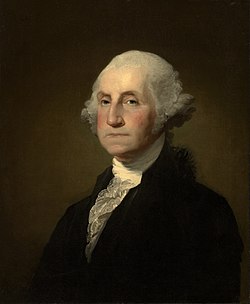
The policy of encouraging American acculturation among Native peoples was originally proposed by first President George Washington.
Image source: George Washington
1800 - 1809
By the beginning of the nineteenth century, American acculturation was well underway among the Cherokee and Choctaw peoples.
Image source: Civilization Fund Act
1802
Dialogue between Georgia and the federal government concerning the possibility of an Indian removal act had been ongoing since 1802.
Image source: Indian Removal Act
1802
Georgia, which later became central to the removal controversy because of its dispute with the Cherokee, was the largest state in 1802.
Image source: Georgia (U.S. state)
1823
In Johnson v. McIntosh, the United States Supreme Court held that Indians could occupy and control lands within the United States but could not hold title to those lands.
Image source: Johnson v. McIntosh
1829 - 1830
The proposed Removal Act was strongly supported in the American South, particularly in Georgia, which was involved in a jurisdictional dispute with the Cherokee.
Dec 8, 1829
In his 1829 State of the Union Address, President Andrew Jackson called for the removal of Native peoples from lands east of the Mississippi River.
Image source: State of the Union
Apr 24, 1830
On April 24, 1830, the United States Senate passed the Indian Removal Act by a vote of 28 to 19.
May 26, 1830
On May 26, 1830, the House of Representatives passed the Indian Removal Act by a vote of 101 to 97.
May 28, 1830
President Andrew Jackson signed the Indian Removal Act into law on May 28, 1830.
May 28, 1830
Under the act, Jackson agreed to divide United States territory west of the Mississippi River into districts where tribes could receive replacement lands for areas from which they were removed.
1832
In a 1832 case, the United States Supreme Court held by a final vote of 5–1 that states did not have the right to impose regulations on Native American land.
Image source: Worcester v. Georgia
1832
Henry Clay extensively campaigned against the Indian Removal Act on the National Republican Party ticket during the 1832 United States presidential election.
Image source: Henry Clay
1829 - 1837
During Andrew Jackson’s presidency, the federal removal policy led to the forced movement of Native peoples west of the Mississippi River.
1829 - 1841
During the presidencies of Jackson and Van Buren, more than 60,000 American Indians from at least 18 tribes were forced to move west of the Mississippi River.
1829 - 1841
The tribes forced west during the Jackson and Van Buren administrations were allocated new lands west of the Mississippi River.
Image source: Indian Territory
1830 - 1840
The Treaty of Dancing Rabbit Creek established the treaty-based pattern of exchanging Choctaw lands east of the Mississippi for lands in the West.
Image source: Choctaw
Sep 27, 1830
The first removal treaty signed was the Treaty of Dancing Rabbit Creek on September 27, 1830.
Image source: Treaty of Dancing Rabbit Creek
Sep 27, 1830
Under the Treaty of Dancing Rabbit Creek, Choctaws in Mississippi ceded land east of the Mississippi River in exchange for payment and land in the West.
1835
The Treaty of New Echota was signed in 1835 and became associated with the removal of the Cherokee.
Image source: Treaty of New Echota
1835 - 1842
The Second Seminole War lasted from 1835 to 1842 and was part of the broader federal effort to remove Native peoples.
Image source: Second Seminole War
1837 - 1841
The removal process continued during the presidency of Martin Van Buren, Jackson’s successor.
1838 - 1839
The Treaty of New Echota resulted in the removal of the Cherokee on the Trail of Tears, the forced resettlement of the population to the West.
Image source: Trail of Tears
1838 - 1839
The Removal Act paved the way for the forced expulsion of tens of thousands of Cherokee in 1838–39.
1842
The Second Seminole War ended with the government allowing the Seminoles to remain in the swamplands of south Florida.
2000 - 2026
Since the twenty-first century, scholars have cited the Indian Removal Act and the subsequent removals as an early example of state-sanctioned ethnic cleansing.
2000 - 2026
Some twenty-first-century scholars have characterized the act and subsequent removals as an early example of genocide.
2000 - 2026
Some scholars have also cited the act and subsequent removals as an early example of settler colonialism, with some viewing the policy as all three: ethnic cleansing, genocide, and settler colonialism.
Image source: Settler colonialism
Build a timeline like this one in minutes, for free. Start Yours →
Or browse the full history timeline directory, with more than 2,500 topics.
This Indian Removal Act timeline was generated with the help of AI, using information found on the internet.
We work hard to keep these timelines accurate, but mistakes do get through. If you spot one, email us at [email protected] and we'll fix it for future visitors.
Generate yours with AI or build it from scratch, for free.
Export your timeline, add your own events, edit or remove AI-generated events, and much more
No credit card required.
15-day money-back guarantee.
You can create an unlimited number of timelines with up to 10 events on each one, customize how they look, export them to PDF, PNG, PowerPoint, CSV, and Excel, and share them with a link. Timelines made with Timeline Maker AI keep every event the generator created, and you can add up to 5 events of your own. Paid plans remove the event limit, add spreadsheet imports and hide Preceden's branding, and the higher-priced plan also adds collaborators, a custom logo and a custom domain.
Yes. You can cancel your subscription from your account page at any time, and you will not be charged again. Your subscription stays active for the rest of the period you already paid for.
Yes. We email you a reminder 15 days before your annual renewal, and we email you a receipt after every payment.
Yes. You can email us within 15 days of any payment, and we will issue you a full refund.
Check out our pricing docs or send us an email anytime: [email protected].