-
Resources
-
Pricing
The Espionage Act of 1917 is a U.S. federal law enacted during World War I to address spying, interference with military operations, and efforts to obstruct the war effort. It has also played a major role in debates over free speech, government secrecy, and the prosecution of whistleblowers. More Less
Build a timeline like this one in minutes, for free. Start Yours →
Jul 28, 1914 - Nov 11, 1918
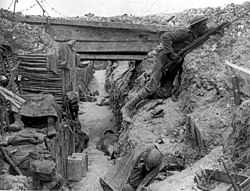
The outbreak of World War I created the international crisis that eventually led the United States to adopt broad federal laws against espionage, interference with military operations, and wartime disclosure of national-defense information.
Image source: World War I
Aug 4, 1914
President Woodrow Wilson announced American neutrality after the European war began. The policy soon faced pressure from foreign agents, competing propaganda campaigns, and disputes over the rights of belligerents in the United States.
Image source: American entry into World War I
1915 - 1916
The Preparedness movement urged the United States to strengthen its military and internal-security institutions. Its arguments helped create a political environment receptive to new federal penalties for espionage and obstruction.
Image source: Preparedness Movement
May 7, 1915
Germany's sinking of the British passenger liner Lusitania, which killed 128 Americans, intensified public concern about German espionage and sabotage and strengthened demands for expanded federal security powers.
Image source: RMS Lusitania
Jun 3, 1916
The National Defense Act of 1916 expanded the Army and National Guard and modernized military administration. It formed part of the broader preparedness program that preceded the Espionage Act.
Image source: National Defense Act of 1916
Feb 3, 1917
Wilson severed diplomatic relations with Germany after Germany resumed unrestricted submarine warfare. The decision made espionage and wartime security legislation an immediate congressional priority.
Image source: Zimmermann Telegram
Mar 1, 1917
Publication of the intercepted Zimmermann Telegram revealed a German proposal for an alliance with Mexico against the United States. The disclosure further shifted public opinion toward war and heightened fears of foreign subversion.
Apr 1917 - May 1917
Congress debated an administration-backed espionage proposal that included severe penalties for obtaining or communicating national-defense information. Civil-liberties objections focused on press censorship and the breadth of the proposed offenses.
Image source: Espionage Act of 1917
Apr 6, 1917
Congress declared war on Germany at Wilson's request. The new wartime mobilization immediately increased pressure for legislation addressing military secrets, interference with recruitment, and suspected enemy activity.
Jun 4, 1917
After extensive controversy, Congress removed the most explicit provisions that would have authorized executive censorship of newspapers. The enacted statute nevertheless retained broad restrictions on defense information and wartime interference.
Jun 15, 1917
The statute empowered the president to designate places connected with national defense and restrict access to them. It also reinforced federal protection for forts, installations, ships, and other defense facilities.
Jun 15, 1917
The act authorized the Postmaster General to refuse or remove from the mails material deemed nonmailable under the statute, including publications advocating treason, insurrection, or forcible resistance to federal law.
Jun 15, 1917
Additional provisions reached conspiracies and forms of assistance to enemies. The statute also authorized prosecution of conduct intended to undermine the United States war effort or aid hostile powers.
Jun 15, 1917
Section 3 made it a crime to willfully obstruct military recruiting or enlistment, encourage mutiny or disloyalty, or willfully interfere with the operation of the armed forces during the national emergency.
Jun 15, 1917
Section 2 addressed the unauthorized transfer or receipt of national-defense information. It covered people who communicated protected information to persons not entitled to receive it, including potential foreign agents.
Jun 15, 1917
Section 1 established the statute's core espionage provisions. It criminalized obtaining, copying, photographing, or communicating information relating to national defense when done with prohibited intent or reason to believe the information could harm the United States or aid a foreign power.
Jun 15, 1917
Wilson signed the Espionage Act of 1917. The law created federal crimes involving gathering or transmitting national-defense information, harmful disclosures, military obstruction, and support for enemies during wartime.
1917 - 1919
Charles Schenck and Elizabeth Baer distributed leaflets opposing the draft. Their convictions under the Espionage Act became the vehicle for the Supreme Court's first major wartime free-speech ruling under the statute.
Image source: Schenck v. United States
1917
The Supreme Court considered the Espionage Act's mailing restrictions and upheld federal authority to exclude certain material from the mails. The decision illustrated the statute's reach beyond classic spying prosecutions.
Mar 3, 1919
The Supreme Court unanimously upheld Charles Schenck's conviction. Justice Oliver Wendell Holmes Jr. introduced the clear-and-present-danger formulation, comparing protected speech in ordinary circumstances with shouting fire in a crowded theater.
Mar 10, 1919
The Supreme Court upheld the conviction of Jacob Frohwerk for publishing articles opposing the war. The decision gave substantial deference to congressional judgments that wartime publications could obstruct recruitment.
Image source: Schenck v. United States
Mar 10, 1919
The Supreme Court upheld Debs's conviction, ruling that his speech could be punished because it had a natural tendency to obstruct recruitment and enlistment. The decision reinforced the narrow wartime protection then afforded to antiwar advocacy.
Nov 10, 1919
The Court upheld the convictions of the Abrams defendants. Holmes and Justice Louis Brandeis dissented, arguing that only speech posing an immediate and serious danger should be punished and emphasizing the value of free competition in ideas.
1941
The Second Circuit addressed the requirement that defendants know or have reason to believe information could injure the United States or aid a foreign power. The decision contributed to later judicial debate over intent under the act.
Jan 7, 1941
The Supreme Court upheld espionage convictions involving information obtained from the University of California. The ruling clarified that the statute's national-defense language was not limited to formally classified information and required proof of prohibited intent.
Jun 30, 1971
The Supreme Court rejected the government's attempt to impose prior restraint on publication of the Pentagon Papers. The decision did not rule that the Espionage Act could never apply to publishers, leaving that question unresolved.
May 11, 1973
Ellsberg and Russo were freed after irregularities in the government's case led to a mistrial.
1917
Labor activist Thomas Mooney was convicted in California in a controversial bombing case. Although his prosecution was not a central federal Espionage Act case, his imprisonment reflected the wider wartime climate of radicalism investigations and repression.
Image source: Thomas Mooney
1917 - 1918
Federal prosecutors began using the act against alleged spies, antiwar activists, draft opponents, and people accused of obstructing recruitment. Enforcement varied widely and often depended on local wartime politics.
May 18, 1917
The Selective Service Act created the legal framework for conscription. Opposition to registration and induction soon became a major source of prosecutions under the Espionage Act's anti-obstruction provisions.
Sep 5, 1917
Federal agents raided Industrial Workers of the World offices across the country, seizing records and publications. The resulting mass prosecution relied heavily on the Espionage Act and targeted alleged conspiracies against wartime production and recruitment.
May 16, 1918
The 1918 amendment, commonly called the Sedition Act, expanded the Espionage Act by criminalizing disloyal, abusive, or profane language about the government, Constitution, flag, or military forces when intended to interfere with the war effort.
Jun 30, 1918
Socialist leader Eugene V. Debs was arrested after a speech in Canton, Ohio, criticized capitalism, war, and the draft. He was prosecuted under the amended Espionage Act for attempting to obstruct recruitment.
Image source: Eugene V. Debs
Sep 12, 1918
A federal jury convicted Debs of violating the Espionage Act, and he received a ten-year sentence. His case became one of the best-known examples of wartime suppression of antiwar political speech.
Oct 1918
Russian immigrant radicals were convicted after distributing leaflets condemning American intervention in revolutionary Russia and calling for strikes. Their case later produced Justice Oliver Wendell Holmes Jr.'s famous dissent on free expression.
Nov 11, 1918
The armistice ended active fighting between the Allies and Germany. Although the emergency war context changed, prosecutions and imprisonment under the Espionage Act continued after the fighting stopped.
Image source: Armistice of 11 November 1918
Mar 3, 1921
The temporary 1918 Sedition Act amendments expired after the wartime emergency. The underlying Espionage Act remained in force, preserving federal penalties for espionage and obstruction-related conduct.
Dec 23, 1921 - 1923
President Warren G. Harding commuted or pardoned many people imprisoned for wartime antiwar speech, including Eugene V. Debs. The actions reduced the immediate legacy of wartime prosecutions without repealing the Espionage Act.
Image source: Warren G. Harding
1950 - 1951
Julius and Ethel Rosenberg were arrested and prosecuted under the Espionage Act for allegedly passing atomic secrets to the Soviet Union. Their case became one of the most prominent Cold War espionage controversies.
Image source: Julius and Ethel Rosenberg
Mar 29, 1951
A federal jury convicted the Rosenbergs of conspiracy to commit espionage. Julius was accused of organizing a spy network, while the extent of Ethel's participation remained disputed for decades.
Jun 19, 1953
Julius and Ethel Rosenberg were executed at Sing Sing Prison after their convictions and appeals failed. Their case remains a defining example of the Espionage Act's use in Cold War national-security prosecutions.
1969 - 1971
Daniel Ellsberg and Anthony Russo copied a classified Defense Department study of United States policy in Vietnam. The study later became known as the Pentagon Papers and triggered one of the most important press-freedom conflicts involving the Espionage Act.
Image source: Pentagon Papers
Jun 13, 1971
The New York Times began publishing excerpts from the Pentagon Papers. The Nixon administration sought to stop publication and considered Espionage Act charges, but the legal battle ultimately centered on prior restraint.
Dec 29, 1971
Ellsberg and Russo were indicted under the Espionage Act and other laws for copying and disclosing the Pentagon Papers. Prosecutors alleged unauthorized possession and transmission of national-defense information.
Jun 5, 2013
Documents disclosed by Edward Snowden revealed extensive United States and allied electronic-surveillance programs. Snowden was charged under the Espionage Act, whose disclosure provisions do not provide a general public-interest defense.
Image source: Edward Snowden
Jul 30, 2013
A military court convicted Chelsea Manning of multiple offenses, including Espionage Act violations, for providing classified military and diplomatic materials to WikiLeaks. The case demonstrated the statute's continued use against unauthorized disclosures in the digital era.
Image source: Chelsea Manning
Aug 23, 2018
Former intelligence contractor Reality Winner pleaded guilty to transmitting a classified report about Russian election interference to the media. She received the longest sentence for an unauthorized disclosure to the press at that time.
Image source: Reality Winner
May 23, 2019
The United States charged WikiLeaks publisher Julian Assange with multiple Espionage Act counts alleging conspiracy to obtain and disclose classified defense information. The case raised unprecedented questions about applying the statute to a publisher outside government.
Image source: Julian Assange
Apr 14, 2023
Air National Guardsman Jack Teixeira was charged under the Espionage Act after allegedly removing and transmitting classified defense documents through an online chat group. The prosecution highlighted continuing concerns about insider access and digital dissemination.
Image source: Discord Leaks
Build a timeline like this one in minutes, for free. Start Yours →
Or browse the full history timeline directory, with more than 2,500 topics.
This Espionage Act of 1917 timeline was generated with the help of AI, using information found on the internet.
We work hard to keep these timelines accurate, but mistakes do get through. If you spot one, email us at [email protected] and we'll fix it for future visitors.
Generate yours with AI or build it from scratch, for free.
Export your timeline, add your own events, edit or remove AI-generated events, and much more
No credit card required.
15-day money-back guarantee.
You can create an unlimited number of timelines with up to 10 events on each one, customize how they look, export them to PDF, PNG, PowerPoint, CSV, and Excel, and share them with a link. Timelines made with Timeline Maker AI keep every event the generator created, and you can add up to 5 events of your own. Paid plans remove the event limit, add spreadsheet imports and hide Preceden's branding, and the higher-priced plan also adds collaborators, a custom logo and a custom domain.
Yes. You can cancel your subscription from your account page at any time, and you will not be charged again. Your subscription stays active for the rest of the period you already paid for.
Yes. We email you a reminder 15 days before your annual renewal, and we email you a receipt after every payment.
Yes. You can email us within 15 days of any payment, and we will issue you a full refund.
Check out our pricing docs or send us an email anytime: [email protected].