
-
Resources
-
Pricing
The Quartering Acts were British laws requiring American colonies to provide housing and supplies for British troops, contributing to colonial unrest before the American Revolution. More Less
Build a timeline like this one in minutes, for free. Start Yours →
1723
The Mutiny Act passed by the British Parliament in 1723 prohibited the stationing of regular troops in private residences, establishing an important legal background to later colonial disputes over military quartering.
Image source: Mutiny Acts
1750 - Jan 2, 1764
The Province of New York served as a British headquarters and had an assembly act providing for the quartering of British regulars. That act expired on 2 January 1764.
1754
A 1754 Mutiny Act continued the prohibition on stationing regular troops in private residences, although officers in North America frequently ignored the restriction.
1756
The British Parliament passed another Mutiny Act in 1756. Like earlier measures, it prohibited regular troops from being stationed in private residences, contributing to colonial opposition to later quartering requirements.
Dec 1756
In December 1756, commander in chief Lord Loudoun ordered Colonel Henry Bouquet to take whatever quarters he needed from colonists by force, intensifying tensions over the military accommodation of British troops.
Image source: John Campbell, 4th Earl of Loudoun
1764
Colonial opinion mostly opposed expanded quartering obligations because earlier Mutiny Acts prohibited regular troops from being stationed in private residences, even though officers in North America often disregarded that rule.
Jan 2, 1764
New York's existing act for providing quarters for British regulars expired on 2 January 1764. Its expiration preceded Parliament's enactment of a broader imperial quartering law.
1765
The Quartering Act of 1765 went substantially farther than what General Thomas Gage had requested for accommodating British troops in the American colonies.
Image source: Thomas Gage
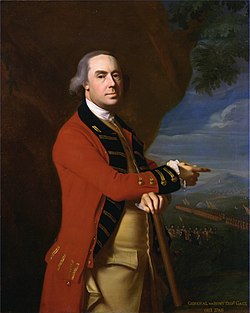
May 3, 1765
On 3 May 1765, the British Parliament met and finally passed a Quartering Act specifically for the American colonies.
Image source: Quartering Acts
May 15, 1765
The first Quartering Act received royal assent on 15 May 1765, becoming the principal legal framework for providing accommodations and supplies to British troops in the colonies.
May 15, 1765
The 1765 act required colonial authorities to arrange for British troops to be housed in local barracks and public houses, following the general approach associated with the Mutiny Act of 1765.
May 15, 1765
When available housing was insufficient, the act authorized quartering troops in inns, livery stables, alehouses, victualing houses, and establishments selling alcoholic drinks.
May 15, 1765
If troop numbers still exceeded available accommodations, the 1765 act provided for use of uninhabited houses, outhouses, barns, or other buildings.
May 15, 1765
Colonial authorities were required to pay the costs of housing and feeding British soldiers under the Quartering Act of 1765.
May 15, 1765
The enacted measure extended quartering obligations considerably beyond the provisions requested by General Gage, making it a more contentious assertion of parliamentary authority.
1766
New York's refusal to provide billeting represented a direct conflict between a colonial assembly and Parliament's quartering requirements.
1766
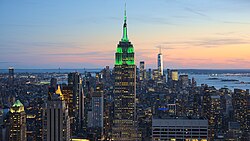
The arrival of 1,500 British troops in New York City created an immediate test of the Quartering Act and exposed the provincial assembly's refusal to supply the required accommodations.
Image source: New York City
1766
When 1,500 British troops arrived in New York City in 1766, the New York Provincial Assembly refused to comply with the Quartering Act and did not provide billeting for them.
1767
Because New York failed to comply with the Quartering Act, Parliament suspended the province's governor in 1767.
1767
Parliament also suspended the New York legislature in 1767 as punishment for the province's failure to provide quarters for British troops.
1767
Although Parliament authorized suspension of New York's governor and legislature in response to noncompliance, the measure was never carried out because the assembly soon agreed to contribute money toward quartering troops.
1767
The New York Assembly's agreement to contribute money toward quartering British troops prevented the threatened parliamentary suspensions from being implemented.
1767
After the 1765 act expired on 24 March 1767, the unresolved dispute over colonial funding and accommodation of British troops continued to generate parliamentary pressure on New York.
Mar 24, 1767
The first Quartering Act expired on 24 March 1767, ending the formal duration of the measure enacted in 1765.
1769
Parliament again suspended or threatened to suspend New York's governor and legislature in 1769 for failure to comply with quartering requirements, but the action was not carried out.
1771
The New York Assembly allocated funds for the quartering of British troops in 1771, resolving the immediate compliance dispute through a financial contribution.
1774
A new Quartering Act was enacted in 1774. It addressed the accommodation of British troops in the colonies during the escalating imperial crisis.
1774
In Great Britain, the 1774 Quartering Act was known as one of the Coercive Acts, linking it to Parliament's punitive response to colonial resistance.
1774
In the American colonies, the 1774 measure was treated as part of the Intolerable Acts and became a prominent source of colonial opposition.
Mar 24, 1776
The Quartering Act of 1774 expired on 24 March 1776, during the opening phase of the American Revolution.
1974
Historian David Ammerman's 1974 study argued that the commonly repeated claim that the Quartering Act allowed troops to be billeted in occupied private homes was a myth.
1974
According to David Ammerman's 1974 interpretation, the act permitted troops to be quartered only in unoccupied buildings, not in occupied private residences.
1982
Engblom v. Carey in 1982 became the only case in more than 200 years to address the Third Amendment's quartering issue, illustrating the limited modern litigation surrounding the subject.
Image source: Engblom v. Carey
1982
The relevance of the Quartering Acts and the Third Amendment greatly declined after the era of the American Revolution, with Engblom v. Carey remaining the only case on the issue in over two centuries.
Image source: Third Amendment to the United States Constitution
Build a timeline like this one in minutes, for free. Start Yours →
Or browse the full history timeline directory, with more than 2,500 topics.
This Quartering Acts timeline was generated with the help of AI, using information found on the internet.
We work hard to keep these timelines accurate, but mistakes do get through. If you spot one, email us at [email protected] and we'll fix it for future visitors.
Generate yours with AI or build it from scratch, for free.
Export your timeline, add your own events, edit or remove AI-generated events, and much more
No credit card required.
15-day money-back guarantee.
You can create an unlimited number of timelines with up to 10 events on each one, customize how they look, export them to PDF, PNG, PowerPoint, CSV, and Excel, and share them with a link. Timelines made with Timeline Maker AI keep every event the generator created, and you can add up to 5 events of your own. Paid plans remove the event limit, add spreadsheet imports and hide Preceden's branding, and the higher-priced plan also adds collaborators, a custom logo and a custom domain.
Yes. You can cancel your subscription from your account page at any time, and you will not be charged again. Your subscription stays active for the rest of the period you already paid for.
Yes. We email you a reminder 15 days before your annual renewal, and we email you a receipt after every payment.
Yes. You can email us within 15 days of any payment, and we will issue you a full refund.
Check out our pricing docs or send us an email anytime: [email protected].