-
Resources
-
Pricing
The Meat Inspection Act of 1906 established federal standards for inspecting meat and regulating slaughterhouses, marking a major expansion of the U.S. government's role in protecting public health and ensuring safer food production. More Less
Build a timeline like this one in minutes, for free. Start Yours →
May 15, 1862
President Abraham Lincoln signed legislation creating the United States Department of Agriculture as an executive department. The department later became central to federal meat inspection, agricultural research, livestock regulation, and enforcement of the Meat Inspection Act.
Image source: United States Department of Agriculture
1906
Major meatpacking companies generally accepted federal inspection because it improved consumer confidence and protected access to domestic and foreign markets. The program also standardized practices across an industry that had previously faced uneven state and local oversight.
Image source: Federal Meat Inspection Act
1906
President Theodore Roosevelt directed federal investigators to examine conditions in the Chicago meatpacking industry. The resulting investigation confirmed major sanitation and inspection problems and provided political momentum for new legislation.
Feb 26, 1906
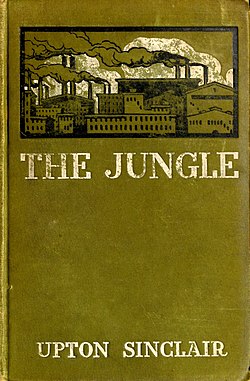
Upton Sinclair's novel The Jungle was published in book form after appearing in serialized form. Its descriptions of Chicago stockyards, dangerous working conditions, and unsanitary meatpacking practices intensified public pressure for federal food and meat regulation.
Jun 4, 1906
Labor commissioner Charles P. Neill and social investigator James Bronson Reynolds submitted a report describing filthy conditions in Chicago slaughterhouses and packing plants. The report helped persuade President Roosevelt and Congress that stronger federal inspection was necessary.
Image source: The Jungle
1960 - 1969
The consumer movement of the 1960s increased public scrutiny of food safety, industrial processing, and federal enforcement. Consumer advocates argued that inspection needed to address not only visible disease but also chemical, microbial, and manufacturing hazards.
Image source: Ralph Nader
Mar 2, 1890
Congress enacted an early federal meat inspection law requiring inspection of certain livestock and meat products prepared for export. The measure established an important, though limited, precedent for broader federal inspection authority.
Aug 30, 1890
Congress expanded federal inspection requirements for meat intended for interstate and foreign commerce. The law reflected growing concern that existing safeguards were insufficient to protect consumers from adulterated or diseased products.
1906
Congress provided funding for implementation of the expanded inspection program. The financing was significant because the law required a large federal workforce of veterinarians, inspectors, and other personnel at slaughterhouses and processing establishments.
Jun 1906
Congress approved the Federal Meat Inspection Act, creating a stronger and more systematic federal inspection program. It authorized inspection before and after slaughter, required sanitary conditions in federally inspected establishments, and prohibited the sale of adulterated or misbranded meat in interstate and foreign commerce.
Jun 1906
The United States House of Representatives passed legislation requiring comprehensive federal inspection of livestock slaughtered and meat processed for interstate or foreign commerce. The bill moved toward reconciliation with Senate provisions.
Jun 1906
Senator Albert J. Beveridge introduced and promoted legislation to strengthen federal inspection of meat and livestock. The proposal became a major vehicle for responding to the public controversy generated by The Jungle and the Neill–Reynolds report.
Jun 30, 1906
President Theodore Roosevelt signed the Federal Meat Inspection Act into law. The statute is commonly associated with The Jungle, although the administration's investigation and earlier regulatory efforts were also important causes of its enactment.
Jun 30, 1906
On the same day as the Meat Inspection Act, Congress enacted the Pure Food and Drug Act. Together, the two laws formed the foundation of the modern federal food regulatory system by addressing adulteration, misbranding, and unsafe products.
1911
Early twentieth-century Supreme Court doctrine broadly affirmed Congress's authority to regulate interstate commerce, including industries connected to national food distribution. This constitutional framework supported federal enforcement of meat inspection and related food laws.
Jun 15, 1929
The Agricultural Marketing Act created new federal programs for agricultural marketing and research. Although not a replacement for the Meat Inspection Act, it contributed to the broader institutional development of federal livestock and food oversight.
Jun 25, 1938
Congress enacted the Federal Food, Drug, and Cosmetic Act after a deadly drug-safety crisis. The statute modernized general food regulation while the Meat Inspection Act remained the principal federal law governing inspected meat and poultry products.
1940 - 1949
Congress amended and supplemented the 1906 framework as processing methods, distribution networks, and public-health knowledge changed. The amendments strengthened the government's ability to regulate meat products and enforce inspection requirements.
1957
USDA inspection of poultry was added by the Poultry Products Inspection Act of 1957.
Dec 15, 1967
Congress passed the Wholesome Meat Act to strengthen and modernize federal meat regulation. It required states with meat inspection programs to maintain standards at least equal to federal requirements and expanded oversight of meat products and establishments.
Image source: Wholesome Meat Act
Dec 15, 1967
Public Law 90-201 amended the Federal Meat Inspection Act and is commonly known as the Wholesome Meat Act. It extended federal controls to more products, improved sanitation and inspection authority, and addressed gaps in the earlier statute.
Dec 29, 1970
Congress enacted the Egg Products Inspection Act, expanding federal inspection responsibilities beyond meat and poultry. The law illustrated the growing role of the Department of Agriculture in regulating animal-derived foods through related inspection statutes.
Image source: Food Safety and Inspection Service
1906
Federal inspection created an official system for identifying inspected meat products. Inspection marks and certificates helped distinguish products produced under federal oversight and supported enforcement in interstate and export markets.
1906
Federally inspected slaughterhouses and processing facilities became subject to sanitation requirements under the new law. The requirements addressed cleanliness, equipment, handling practices, and conditions that could contaminate meat.
1906
Federal inspectors examined carcasses and parts after slaughter. This post-mortem process allowed inspectors to condemn diseased, contaminated, or otherwise unwholesome meat before it could be distributed in interstate or foreign commerce.
1906
The act required inspection of livestock before slaughter, known as ante-mortem inspection. Inspectors could identify animals showing signs of disease or abnormality and prevent unsuitable animals from entering the human food supply.
1906
The 1906 act made federal inspection a central requirement for meat products moving through interstate and international commerce. Federal inspectors began examining animals and carcasses and enforcing sanitary and labeling requirements in regulated establishments.
1907
Implementation of the 1906 statute extended federal oversight to meat moving in interstate commerce, not only meat intended for export. This substantially increased the law's effect on national food distribution and the operations of packing companies.
1907
The Department of Agriculture developed detailed administrative rules for inspection, sanitation, condemnation, labeling, and facility operations. These rules translated the broad statutory requirements into day-to-day procedures for inspectors and establishments.
1907
The inspection program provided official certification for meat shipped to foreign markets. Export certification helped reassure trading partners that American meat met federally established standards and helped preserve the competitiveness of U.S. meat exporters.
1910 - 1919
Federal oversight increasingly covered processed and canned meat products as preservation and distribution technologies developed. Inspection was no longer limited to freshly slaughtered carcasses and became part of a wider system controlling processed meat production.
1967
The Wholesome Meat Act created a cooperative federal-state framework. State-inspected establishments could continue operating in intrastate commerce, but their inspection systems had to meet standards equal to those administered federally.
1967
The strengthened statutory framework required imported meat products to meet standards comparable to those applied to domestic products. Federal controls over imports helped prevent foreign products from bypassing domestic sanitation and inspection requirements.
1920 - 1929
Federal meat regulation gradually expanded to concerns about chemical residues, preservatives, and processing substances. Scientific testing and evolving standards supplemented visual inspection as new hazards became understood.
1950 - 1959
Growing concern about the treatment of livestock led to federal consideration of humane slaughter standards. These concerns eventually became linked to inspection oversight and produced separate federal humane-slaughter legislation.
Aug 27, 1958
Congress enacted the Humane Methods of Slaughter Act, requiring covered slaughter operations to use approved humane methods. The law was administered alongside federal meat inspection and broadened the public responsibilities associated with slaughterhouse oversight.
1970 - 1979
Federal inspection increasingly incorporated microbiology, laboratory testing, and controls for pathogens such as Salmonella and Clostridium botulinum. This represented a shift from relying primarily on visual examination toward science-based process controls.
Dec 2, 1970
The Environmental Protection Agency was established to coordinate federal environmental protection, including regulation of pesticides and other chemicals. Its work complemented meat inspection by affecting the standards for residues that could occur in livestock and meat.
Image source: United States Environmental Protection Agency
1977
The Food Safety and Inspection Service became the United States Department of Agriculture agency responsible for administering federal meat, poultry, and egg-product inspection. Its creation gave the inspection mission a distinct institutional identity.
1990 - 1999
The Food Safety and Inspection Service began requiring establishments to use Hazard Analysis and Critical Control Point systems. HACCP shifted inspection toward identifying hazards and controlling critical production points instead of relying solely on end-product examination.
Image source: Hazard Analysis Critical Control Point
1994
Following major foodborne illness outbreaks, the USDA declared E. coli O157:H7 in raw ground beef an adulterant under the Federal Meat Inspection Act. The decision strengthened the government's ability to seize contaminated products and require preventive controls.
Image source: Escherichia coli O157:H7
1996
The modern inspection system began using pathogen-reduction performance standards to measure whether establishments controlled contamination. These standards supplemented traditional inspection and made public-health outcomes a central enforcement objective.
Jul 25, 1996
The USDA issued its Pathogen Reduction and Hazard Analysis and Critical Control Point Systems final rule. It required sanitation standard operating procedures, microbial testing, and HACCP plans for federally inspected meat and poultry establishments.
2001
After the September 11 attacks, federal meat oversight incorporated stronger food-defense planning against intentional contamination. Establishments were encouraged or required to assess vulnerabilities, control access, and prepare response procedures.
Jun 12, 2002
Congress enacted the Public Health Security and Bioterrorism Preparedness and Response Act. Although administered largely through the Food and Drug Administration and other agencies, it influenced national food-defense expectations relevant to meat establishments.
2020
More than a century after enactment, the Federal Meat Inspection Act remained a principal legal foundation for USDA inspection of meat and meat products. Its requirements operated together with later amendments, regulations, HACCP systems, and related food-safety statutes.
Build a timeline like this one in minutes, for free. Start Yours →
Or browse the full history timeline directory, with more than 2,500 topics.
This Meat Inspection Act timeline was generated with the help of AI, using information found on the internet.
We work hard to keep these timelines accurate, but mistakes do get through. If you spot one, email us at [email protected] and we'll fix it for future visitors.
Generate yours with AI or build it from scratch, for free.
Export your timeline, add your own events, edit or remove AI-generated events, and much more
No credit card required.
15-day money-back guarantee.
You can create an unlimited number of timelines with up to 10 events on each one, customize how they look, export them to PDF, PNG, PowerPoint, CSV, and Excel, and share them with a link. Timelines made with Timeline Maker AI keep every event the generator created, and you can add up to 5 events of your own. Paid plans remove the event limit, add spreadsheet imports and hide Preceden's branding, and the higher-priced plan also adds collaborators, a custom logo and a custom domain.
Yes. You can cancel your subscription from your account page at any time, and you will not be charged again. Your subscription stays active for the rest of the period you already paid for.
Yes. We email you a reminder 15 days before your annual renewal, and we email you a receipt after every payment.
Yes. You can email us within 15 days of any payment, and we will issue you a full refund.
Check out our pricing docs or send us an email anytime: [email protected].