-
Use Cases
-
Resources
-
Pricing
1905
% complete
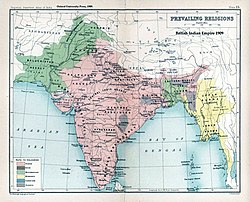
Viceroy Lord Curzon partitioned Bengal. Muslims generally favored the arrangement because it created a Muslim-majority eastern half.
Image source: Partition of Bengal (1905)
1909
% complete
Lord Minto met a Muslim delegation led by Aga Khan III and agreed to an arrangement connected with the Council Act, marking an important stage in Muslim constitutional politics.
1930
% complete
Muhammad Iqbal delivered his famous address at the Allahabad annual session. It is commonly regarded as sowing the seeds for a separate Muslim state later known as Pakistan.
1906
% complete
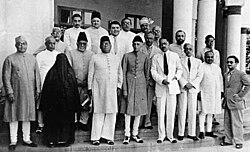
The All-India Muslim League was established in Dhaka with support associated with Syed Ahmad Khan’s Aligarh Movement. Dhaka was the birthplace of the organization.
Image source: All-India Muslim League
1923 - 1937
% complete
The Unionist Party prevailed in the 1923 and 1934 Indian general elections and the 1937 provincial elections, drawing support from Hindus, Muslims, and Sikhs in Punjab.
1930 - 1937
% complete
Until 1937, the Muslim League remained primarily an organization of elite Indian Muslims rather than a mass movement.
1937
% complete
Congress won in seven of the eleven provinces in the 1937 elections, while the Muslim League failed to obtain a majority in any province.
Image source: 1937 Indian provincial elections
1937 - 1947
% complete
From 1937 onward, the Muslim League and Muhammad Ali Jinnah attracted large crowds across India through processions and strikes.
Image source: Pakistan Movement
1937
% complete
The Sind United Party promoted communal harmony between Hindus and Muslims and won 22 of 33 seats in the 1937 provincial elections.
1939
% complete
After the British declaration of war, Congress leaders resigned from the British Indian government positions to which they had been elected.
Sep 3, 1939
% complete
British Prime Minister Neville Chamberlain declared the commencement of war with Germany, changing the political context in British India.
Image source: Neville Chamberlain
1940
% complete
The British government pledged that it would not transfer power to an independent India unless its constitution was first approved by Indian Muslims, a promise it later failed to keep.
Mar 23, 1940
% complete
Moved by Bengal Chief Minister A. K. Fazlul Huq, the Lahore Resolution was adopted on 23 March 1940. It called for Muslim-majority regions to be grouped into autonomous and sovereign independent states.
Image source: Lahore Resolution
Apr 1940
% complete
The All-India Azad Muslim Conference gathered in Delhi to support a united India in opposition to the Lahore Resolution. It included several Islamic organizations and about 1,400 nationalist Muslim delegates.
1942 - 1946
% complete
Seeking to overcome its poor 1937 performance, the Muslim League intensified its campaign in rural and urban Punjab and worked to attract landlords, religious leaders, and different Muslim constituencies.
1942
% complete
The death of Sir Sikander Hayat Khan removed a major Unionist leader and helped create conditions for intensified Muslim League campaigning in Punjab.
1942
% complete
Mahatma Gandhi called for the Quit India Movement against the United Kingdom, adding to the unrest and political pressure surrounding India’s constitutional future.
Image source: Quit India Movement
1944
% complete
Negotiations between Gandhi and Viceroy Wavell failed, contributing to the continuing deadlock over India’s constitutional and political future.
Image source: Simla Conference
1944
% complete
Muhammad Ali Jinnah and Mahatma Gandhi held talks in 1944, but negotiations failed to resolve their disagreement over the future political structure of India.
1944
% complete
The breakdown of talks between Punjab Premier Malik Khizar Hayat Tiwana and Jinnah in late 1944 forced many Muslims to choose between the Unionists and the Muslim League in the approaching election.
1944 - 1946
% complete
The Muslim League attempted to replicate the Unionists’ successful cultivation of pirs, whose inherited religious authority and influence among Punjabi Muslims gave them considerable political power. Most landlords and pirs shifted allegiance only after 1944.
1945
% complete
The death of Sir Chhotu Ram in early 1945 dealt a further blow to the Unionist Party, which had been a major force in Punjab.
1945
% complete
Amid American and Russian dominance in world politics and growing unrest in India, Viceroy Wavell called for general elections in 1945.
1945
% complete
Muslim League student activists were trained to appeal to voters on communal lines. During the Christmas holidays, 250 students from Aligarh joined 1,550 Punjab Muslim Student Federation members in campaigning.
1945
% complete
In the elections for the Constituent Assembly of the British Indian Empire, the Muslim League won 434 of 496 seats reserved for Muslims and about 87.5 percent of Muslim votes on a policy of creating Pakistan.
1946
% complete
Although the Muslim League had performed poorly in Sind in 1937, its cultivation of support from the province’s pirs and saiyids in 1946 helped it establish a foothold.
1946
% complete
The Cabinet Mission Plan recommended a decentralized but united India. The Muslim League accepted it, while Congress rejected it, helping clear the way for partition.
1946
% complete
The Muslim League won the majority of Muslim votes and reserved Muslim seats in central and provincial assemblies, performing strongly in Muslim-minority provinces such as Uttar Pradesh and Bihar. The result was treated as a plebiscite on Pakistan.
Image source: 1946 Indian provincial elections
1946
% complete
During the 1946 campaign, the Muslim League drew on Islamic scholars and Sufis and used the rallying cry “Islam in danger” to mobilize Muslim voters.
1946
% complete
The Muslim League held a special Gujjar conference to appeal to Muslim Gujjars and reversed its expulsion of Jahanara Shahnawaz in hopes of attracting Arain constituencies.
1947
% complete
The Punjab Assembly voted in favor of Pakistan by a supermajority. Many minority Hindus and Sikhs then migrated to India, while Muslim refugees from India settled in western Punjab and elsewhere in Pakistan.
1947 - Jan 1948
% complete
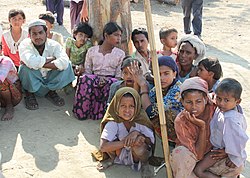
Before Burma’s independence in January 1948, Muslim leaders from Arakan appealed to Jinnah for assistance in annexing the Mayu region to the Pakistan that was being formed.
Image source: Rohingya people
Jun 22, 1947
% complete
Members of the Shahi Jirga and sardars from Baluchistan’s leased areas wrote to the Khan of Kalat, arguing that they were part of the Kalat State and should be treated as such if Baluchistan’s accession to Pakistan was considered.
Jun 29, 1947
% complete
The Shahi Jirga of British Baluchistan and the non-official members of the Quetta Municipality unanimously agreed to join Pakistan, although representatives of the Kalat State were excluded from the vote.
Jul 2, 1947 - Jul 20, 1947
% complete
Britain held a referendum in the North-West Frontier Province on whether to join Pakistan or India. Polling began on 6 July, and the results were announced on 20 July.
Jul 20, 1947
% complete
Official results recorded 289,244 votes, or 99.02 percent of votes cast, for Pakistan and 2,874 votes, or 0.98 percent, for India. The reported turnout was only 15 percent below that of the 1946 elections.
Aug 14, 1947
% complete
The Pakistan Movement’s central objective was achieved with the partition of British India. The Radcliffe Line demarcated Pakistan across two non-contiguous regions, later known as East Pakistan and West Pakistan.
Image source: Partition of India
Mar 27, 1948
% complete
After negotiations and bureaucratic proceedings, Kalat acceded to Pakistan, with the process also involving the help of All India Radio.
1947
% complete
After independence, Pakistan continued to face violence and upheaval as Liaquat Ali Khan became the country’s prime minister.
Image source: History of Pakistan
Jul 1948 - 1950
% complete
After Ahmad Yar Khan signed the Instrument of Accession, his brother Prince Abdul Karim revolted against the decision. Princes Agha Abdul Karim Baloch and Muhammad Rahim continued unconventional attacks until 1950.
1958 - 1969
% complete
A military takeover in 1958 was followed by rapid industrialization during the 1960s, forming part of Pakistan’s post-independence political and economic development.
1971
% complete
The Bangladesh Liberation War resulted in the dissolution of East Pakistan. It seceded from West Pakistan and became present-day Bangladesh.
Image source: Bangladesh Liberation War
1971
% complete
Economic grievances, unequal financial arrangements, provincialism, and ethnic nationalism led to armed struggle in East Pakistan, ultimately producing Bangladesh.
1997 - 2010
% complete
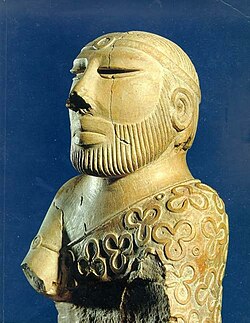
The Thirteenth Amendment of 1997 and the Eighteenth Amendment of 2010 helped transform Pakistan into a parliamentary republic; Pakistan also became a nuclear power in the subcontinent.
Image source: Constitution of Pakistan
Or browse the full history timeline directory, with more than 2,000 topics.
This Pakistan Movement timeline was generated with the help of AI, using information found on the internet.
We work hard to keep these timelines accurate, but mistakes do get through. If you spot one, email us at [email protected] and we'll fix it for future visitors.
Generate yours with AI or build it from scratch, for free.
Export your timeline, add your own events, edit or remove AI-generated events, and much more
No credit card required.
Cancel anytime.
Cancel anytime.
You can create an unlimited number of timelines with up to 10 events on each one, customize how they look, export them to PDF, PNG, PowerPoint, CSV, and Excel, and share them with a link. Paid plans raise the event limit and add features like spreadsheet imports and collaborators.
Yes. You can cancel your subscription from your account page at any time, and you will not be charged again. Your subscription stays active for the rest of the period you already paid for.
Yes. We will email you a reminder before the annual renewal, and we will also email you a receipt.
Yes. You can email us within 15 days of any payment, and we will issue you a full refund.
Check out our pricing docs or send us an email anytime: [email protected].