-
Use Cases
-
Resources
-
Pricing
1860 - 1914
% complete
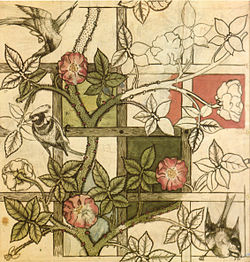
The Arts and Crafts movement developed in Britain as a reaction against industrial mass production and poor-quality decorative goods. Influenced by John Ruskin and led in practice by figures such as William Morris, it promoted craftsmanship, functional construction, natural materials, and the social value of making.
Image source: Arts and Crafts movement
1860 - 1895
% complete
The Aesthetic movement argued that art and design should be valued for beauty and formal pleasure rather than moral instruction or utility. Its emphasis on stylized interiors, Japanese influence, and artistic lifestyle helped prepare the way for Art Nouveau.
Image source: Aestheticism
1861
% complete
William Morris and his partners established Morris, Marshall, Faulkner & Co., later known as Morris & Co., in London. The firm transformed interior decoration through hand-printed wallpapers, textiles, furniture, stained glass, and an influential revival of medieval-inspired ornament.
Image source: Morris & Co.
1880 - 1910
% complete
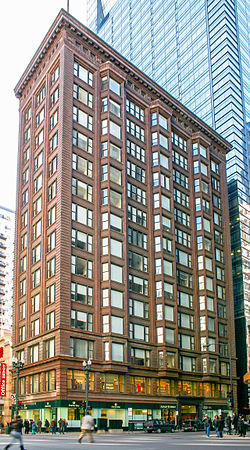
Architects in Chicago developed steel-frame construction, elevators, and large plate-glass windows for the rapidly growing American city. The Chicago School helped establish the skyscraper and advanced the principle that a building's structure could determine its design.
Image source: Chicago school (architecture)
1890 - 1914
% complete
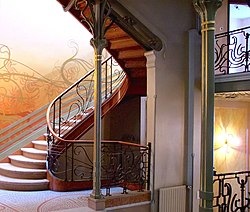
Art Nouveau spread across Europe and the United States through architecture, furniture, graphics, jewelry, and product design. Its flowing lines, botanical forms, integrated ornament, and rejection of historical imitation created a visually unified modern style.
Image source: Art Nouveau
1890 - 1914
% complete
The Glasgow School, associated especially with Charles Rennie Mackintosh, Margaret Macdonald, Frances Macdonald, and Herbert MacNair, developed an austere variant of Art Nouveau. Its elongated figures, geometric forms, and restrained decoration influenced European modernism.
Image source: Glasgow School
Apr 3, 1897
% complete
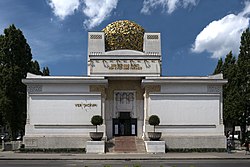
Gustav Klimt, Koloman Moser, Josef Hoffmann, and other artists founded the Vienna Secession after breaking with the conservative Austrian artistic establishment. The group promoted total design, geometric ornament, and contemporary art independent of academic tradition.
Image source: Vienna Secession
Oct 5, 1907
% complete
Architects, designers, artists, and industrialists founded the Deutscher Werkbund in Munich to improve the quality of German manufactured goods. It sought cooperation between art and industry and became a crucial institutional precursor to modern industrial design.
Image source: Deutscher Werkbund
Feb 20, 1909
% complete
Filippo Tommaso Marinetti's Futurist manifesto celebrated speed, machinery, urban energy, technology, and violent rupture with the past. Futurism influenced typography, architecture, furniture, product concepts, and visual communication despite its political and ideological extremism.
Image source: Futurism
1915 - 1932
% complete
Russian Constructivism treated art as a tool for social and political transformation and embraced industrial materials, geometric abstraction, photomontage, and mass communication. Designers such as Alexander Rodchenko and El Lissitzky reshaped posters, typography, exhibition design, and architecture.
Oct 16, 1917 - 1931
% complete
Theo van Doesburg, Piet Mondrian, and their colleagues formed De Stijl around abstract compositions of lines, rectangles, primary colors, black, white, and gray. The movement pursued a universal visual language and influenced architecture, furniture, graphics, and interior design.
Image source: De Stijl
Apr 12, 1919 - Jul 20, 1933
% complete
Walter Gropius founded the Bauhaus in Weimar by combining an art academy and a crafts school. Its workshops united art, architecture, and industrial production, creating a model of design education that shaped modern typography, furniture, architecture, and visual culture worldwide.
Image source: Bauhaus
1923
% complete
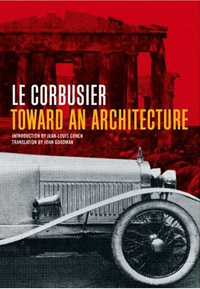
Le Corbusier's book Towards a New Architecture argued for architecture based on rational planning, standardized production, structural efficiency, and the aesthetic power of engineering. Its ideas became among the most influential statements of twentieth-century modernist design.
Image source: Toward an Architecture
1923 - 1939
% complete
The New Typography rejected ornate typefaces and symmetrical composition in favor of sans-serif lettering, asymmetrical layouts, photography, visual hierarchy, and functional communication. Jan Tschichold's writings and practice made the movement central to modern graphic design.
Image source: Typography
1925 - 1939
% complete
Art Deco became an international decorative style characterized by streamlined geometry, symmetry, rich materials, machine-age motifs, and vivid color. Its influence extended from architecture and ocean liners to furniture, jewelry, fashion, posters, and consumer products.
Image source: Art Deco
1925 - 1932
% complete
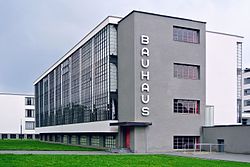
After political pressure forced the Bauhaus out of Weimar, the school relocated to Dessau and Walter Gropius designed its celebrated building. The transparent workshops, curtain walls, and functional organization became an emblem of modern architecture and design education.
1927 - 1950
% complete
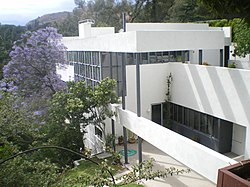
The 1927 Weissenhof Estate exhibition in Stuttgart presented buildings by leading European modernists, including Le Corbusier, Ludwig Mies van der Rohe, and Walter Gropius. The project popularized white volumes, flat roofs, open plans, and industrial construction as an international architectural language.
Image source: International Style
1930 - 1945
% complete
During the 1930s, industrial design became a recognizable profession in the United States as companies hired specialists to shape the appearance, usability, and market appeal of mass-produced goods. Designers such as Raymond Loewy, Norman Bel Geddes, and Henry Dreyfuss helped define the field.
Image source: Industrial design
1930 - 1945
% complete
Streamline Moderne adapted aerodynamic imagery to buildings, transportation, household appliances, and graphics during the interwar period. Rounded corners, horizontal bands, chrome accents, and nautical forms communicated speed, cleanliness, and technological progress.
Image source: Streamline Moderne
1945 - 1969
% complete
Mid-century modern design brought modernist principles into postwar homes through economical production, organic forms, molded plywood, plastics, and new metal technologies. It encompassed architecture, furniture, lighting, appliances, and corporate graphics across Europe and North America.
Image source: Mid-century modern
1950 - 1970
% complete
The International Typographic Style, often called Swiss Style, developed in Switzerland through schools and studios associated with designers such as Josef Müller-Brockmann and Armin Hofmann. Grids, sans-serif type, objective photography, and restrained composition prioritized clarity and universality.
Image source: International Typographic Style
1950 - 1970
% complete
Scandinavian design became internationally admired for its combination of functional simplicity, natural materials, democratic affordability, and careful craftsmanship. Designers including Alvar Aalto, Arne Jacobsen, Hans Wegner, and Marimekko shaped furniture, interiors, textiles, and household products.
Image source: Scandinavian design
1953 - 1968
% complete
The Hochschule für Gestaltung Ulm expanded design education beyond formal styling into systems thinking, ergonomics, information theory, and social responsibility. Its faculty and graduates, including Otl Aicher and Hans Gugelot, strongly influenced postwar product and graphic design.
Image source: Ulm School of Design
1958 - 1975
% complete
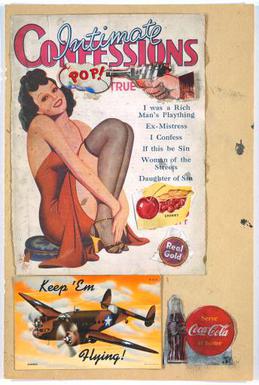
Pop art drew on advertising, comics, celebrity culture, packaging, and mass media, challenging distinctions between fine art and commercial design. Its bold colors, repetition, irony, and accessible imagery transformed posters, fashion, interiors, and product graphics.
Image source: Pop art
1960 - 1990
% complete
Postmodern architecture rejected the idea that one universal modernist language should govern all buildings. Architects reintroduced historical references, ornament, symbolism, irony, and contextual complexity, producing a pluralistic approach that became especially visible from the 1970s through the 1980s.
Image source: Postmodern architecture
1970 - 1990
% complete
High-tech architecture expressed structure, services, and industrial technology rather than concealing them. Buildings by Richard Rogers, Norman Foster, Renzo Piano, and others used exposed frameworks, ducts, flexible interiors, and prefabricated components as visible design elements.
Image source: High-tech architecture
1976 - 1985
% complete
Punk visual culture used collage, photocopying, ransom-note lettering, hand lettering, distressed imagery, and confrontational symbols to communicate opposition to commercial and social conventions. Its DIY methods influenced record sleeves, posters, fashion, magazines, and later independent graphic design.
1978 - 1988
% complete
New Wave graphic design loosened the strict grid systems of Swiss modernism through layered type, disrupted hierarchy, expressive imagery, and experimental spacing. Wolfgang Weingart and designers influenced by him helped connect modernist typography with postmodern visual experimentation.
1980 - 1995
% complete
Designers associated with Cranbrook Academy of Art, including Michael and Katherine McCoy, explored deconstruction, ambiguity, layered meaning, and the relationship between objects and information. The school's teaching influenced experimental typography, furniture, and postmodern design theory.
Dec 11, 1980 - 1988
% complete
Ettore Sottsass and other designers founded the Memphis Group in Milan to challenge the seriousness and functional austerity of modernism. Their furniture and interiors used bright colors, geometric forms, laminate surfaces, and deliberately unconventional combinations.
Image source: Memphis Group
1980 - 2000
% complete
Personal computers, desktop publishing, digital imaging, and computer-aided design transformed graphic, product, architectural, and interaction design. Designers gained new tools for editing, modeling, type composition, and image production, while digital aesthetics became a recognizable visual language.
Image source: Digital art
1980 - 2010
% complete
User-centered design placed people's needs, abilities, behaviors, and contexts at the center of research and development. Usability testing, iterative prototyping, accessibility, and participatory methods became central to software, products, services, and digital interfaces.
1987 - 2020
% complete
Growing environmental awareness encouraged designers to address energy use, material extraction, waste, durability, repair, and life-cycle impact. Sustainable design expanded from ecological architecture into product design, packaging, fashion, service design, and circular-economy strategies.
Image source: Sustainable design
2005 - 2020
% complete
Affordable digital fabrication, 3D printing, maker spaces, and open-source hardware enabled individuals and communities to design, modify, and share physical objects. The movement challenged proprietary production models and connected design with collaborative experimentation and repair.
Image source: Open-source hardware
May 25, 2010
% complete
Ethan Marcotte coined the term responsive web design in an influential article, describing flexible grids, fluid images, and media queries that allow websites to adapt to different screens. The approach became essential as smartphones and tablets diversified how people accessed the web.
Image source: Responsive web design
Jun 25, 2014
% complete
Google introduced Material Design as a cross-platform visual and interaction system for digital products. Drawing on paper, ink, motion, depth, and responsive feedback, it provided shared principles and components for creating coherent interfaces across devices.
Image source: Material Design
Or browse the full history timeline directory, with more than 2,000 topics.
This Design Movements timeline was generated with the help of AI, using information found on the internet.
We work hard to keep these timelines accurate, but mistakes do get through. If you spot one, email us at [email protected] and we'll fix it for future visitors.
Generate yours with AI or build it from scratch, for free.
Export your timeline, add your own events, edit or remove AI-generated events, and much more
No credit card required.
Cancel anytime.
Cancel anytime.
You can create an unlimited number of timelines with up to 10 events on each one, customize how they look, export them to PDF, PNG, PowerPoint, CSV, and Excel, and share them with a link. Paid plans raise the event limit and add features like spreadsheet imports and collaborators.
Yes. You can cancel your subscription from your account page at any time, and you will not be charged again. Your subscription stays active for the rest of the period you already paid for.
Yes. We will email you a reminder before the annual renewal, and we will also email you a receipt.
Yes. You can email us within 15 days of any payment, and we will issue you a full refund.
Check out our pricing docs or send us an email anytime: [email protected].